Summary
- American Pakistani businessman and analyst Tanweer Ahmed has called for greater investment in young people and urged governments, businesses and international institutions to ensure that artificial intelligence (AI) expands opportunities rather than deepens existing inequalities.
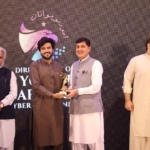
- Addressing a Youth and AI Summit at the United Nations on International Youth Day 2026, Ahmed said young people should be viewed not only as beneficiaries of development but also as innovators, decision-makers, community leaders and partners in shaping the future.
- He said young Pakistanis should be equipped to use AI not only for education and employment but also for entrepreneurship, public service and innovation.
American Pakistani businessman and analyst Tanweer Ahmed has called for greater investment in young people and urged governments, businesses and international institutions to ensure that artificial intelligence (AI) expands opportunities rather than deepens existing inequalities.
Addressing a Youth and AI Summit at the United Nations on International Youth Day 2026, Ahmed said young people should be viewed not only as beneficiaries of development but also as innovators, decision-makers, community leaders and partners in shaping the future.
He described AI as a defining force of the Fourth Industrial Revolution, saying rapid advances in artificial intelligence, robotics, data, connectivity, biotechnology and automation were transforming economies and societies at an unprecedented pace.
Ahmed said the impact of AI would extend across education, healthcare, public services, entrepreneurship, security and employment, creating both challenges and opportunities for the younger generation.
He highlighted the growing importance of digital skills, creativity, adaptability, ethical decision-making and technological confidence in preparing young people for future jobs.
“Talent is everywhere. Opportunity is not,” he said, stressing that young people in cities such as Karachi, Nairobi, Riyadh and Dhaka could possess the same potential as those living in major global technology centres but often lacked equal access to resources and opportunities.
According to Ahmed, AI could help bridge this gap by allowing students to access knowledge beyond traditional classrooms, entrepreneurs to reach international markets and researchers to process information at unprecedented speeds.
However, he cautioned that technological progress alone would not guarantee equal opportunity. Access to education, skills, credentials and technology must also be expanded to prevent AI from worsening existing inequalities.
Pakistan’s AI potential
Speaking about Pakistan, Ahmed said the country’s large young population could become a major economic strength if properly prepared for the emerging digital economy.
He pointed to initiatives including ACT AI — Awareness, Competency and Tools Training for Artificial Intelligence, associated with the state-owned enterprise AXI. The programme focuses on practical AI capabilities, including generative AI, agentic AI systems, productivity tools, automation and sector-specific applications.
Ahmed emphasised the importance of making AI education accessible to young people from different academic backgrounds, including those without previous programming or AI experience.
He said young Pakistanis should be equipped to use AI not only for education and employment but also for entrepreneurship, public service and innovation.
He also highlighted the role of MicroCerts, a government-backed initiative aimed at providing accessible and market-oriented skill certifications.
Ahmed argued that traditional university degrees would continue to be valuable, but rapidly changing technology required young people to keep learning throughout their careers. Micro-certifications, he said, could help workers demonstrate specific skills and create new pathways to employment, freelancing, entrepreneurship and further education.
Youth urged to become AI creators
Ahmed said young people should not be trained merely to consume AI technologies. Instead, they should learn to develop, question, govern and innovate with AI while understanding its ethical and social consequences.
He stressed that technology could not replace human compassion, character, judgement and responsibility.
“AI can process enormous amounts of information,” he said, while emphasising that decisions about the kind of society humanity wants to build must remain a human responsibility.
He also called for stronger international cooperation to develop common skills frameworks, support youth-led innovation and expand access to recognised digital credentials.
Governments, universities, technology companies, international organisations and civil society, he said, must work together to ensure young people can participate meaningfully in the AI-driven economy.
Ahmed further stressed that technological development must be accompanied by environmental responsibility, noting that AI systems, data centres and cloud computing require significant infrastructure and energy.
Addressing young people around the world, he urged them to actively shape the future rather than wait for it.
He called on the younger generation to learn emerging technologies, develop solutions, create businesses and communities, and use AI with a clear sense of purpose.
Who is Tanweer Ahmed, the Pakistani-American philanthropist?
Pakistani-American businessman and philanthropist Tanweer Ahmed has attracted renewed attention in Pakistan following his reported $9 million contribution to the National University of Sciences and Technology (NUST) and his recent appearance alongside senior Pakistani officials in the United States.
Ahmed, who is based in Houston, has built a diverse business portfolio in the United States while also becoming involved in philanthropy, education, healthcare and cricket.
His recent contribution to NUST is aimed at supporting talented students from financially disadvantaged backgrounds. The endowment is expected to provide scholarships to deserving students each year, with a particular focus on fields such as artificial intelligence, information technology, science and other emerging technologies.
Ahmed has said his objective is to ensure that talented Pakistani students are not deprived of quality education because of financial difficulties. He has also expressed plans to expand similar scholarship initiatives to other educational institutions.
The businessman has also supported infrastructure and technology-related initiatives at NUST, including the development of facilities intended to strengthen research and innovation.
His philanthropic activities extend beyond education. Ahmed has been associated with healthcare initiatives in Pakistan and has supported efforts aimed at providing assistance to communities affected by natural disasters.
He also drew attention for his role in relief efforts following the devastating floods that struck Pakistan in 2022. He has been credited with helping mobilise substantial humanitarian assistance for flood-affected communities.
Ahmed’s business journey began after he moved to the United States as a student.
According to accounts of his career, he initially worked in restaurants and at gas stations while trying to establish himself. He later moved through several positions in the American fast-food industry.
His career accelerated after he joined Jack in the Box as a shift manager. His performance and business approach helped him move into senior management positions, eventually leading to opportunities in the Taco Bell franchise system.
Ahmed later expanded into franchising and developed a large portfolio of food outlets across several US states. His business interests have also extended into insurance, energy, transportation and other sectors.
Over the years, he has developed a reputation as an entrepreneur who combines commercial ventures with philanthropic activities.
Ahmed is also closely associated with the development of cricket in the United States.
A passionate cricket enthusiast, he established the Prairie View Cricket Complex near Houston after acquiring a large tract of land for the project.
The complex was developed to provide modern facilities for cricket and help expand the sport in a country traditionally dominated by baseball, American football and basketball.
Ahmed has also been linked with the Houston Hurricanes cricket franchise, further strengthening his involvement in the development of the sport in the US.
His investment in cricket reflects his interest in creating opportunities for players and communities that have traditionally lacked access to high-quality facilities.
Education remains one of Ahmed’s major areas of philanthropic interest.
Through his scholarship initiative, he has said he wants to help students from low-income families pursue advanced education and build careers in sectors expected to drive future economic growth.
The initiative places particular emphasis on technology-related disciplines, including AI and IT.
Ahmed’s stated approach is to make financial assistance available on merit, with priority given to students who have the ability to succeed academically but cannot afford the cost of quality education.
His growing involvement in education, healthcare, disaster relief and sports has made him a prominent Pakistani-American figure in philanthropic circles.
From working in restaurants after arriving in the United States to building businesses across multiple sectors, Ahmed’s career reflects a long transition from a modest beginning to entrepreneurship and investment.
His recent education initiative has once again placed his work in Pakistan under the spotlight, particularly at a time when universities and policymakers are seeking greater private-sector support for technology, innovation and scholarships.
We welcome your contributions! Submit your blogs, opinion pieces, press releases, news story pitches, and news features to opinion@minutemirror.com.pk and minutemirrormail@gmail.com