Summary
- The catastrophic collapse of the hillside has left at least five people dead, while emergency response teams launch an all-out, frantic race against the clock to locate 12 residents who remain missing and feared trapped deep beneath mounds of saturated earth and debris.
- Despite the rapid response and frantic battlefield triage, five of those pulled from the debris field succumbed to their extensive injuries while undergoing emergency medical treatment at nearby facilities.
- Displaced families are being housed in temporary shelters while emergency engineers run safety assessments on the remaining foundations of nearby mountain villages.
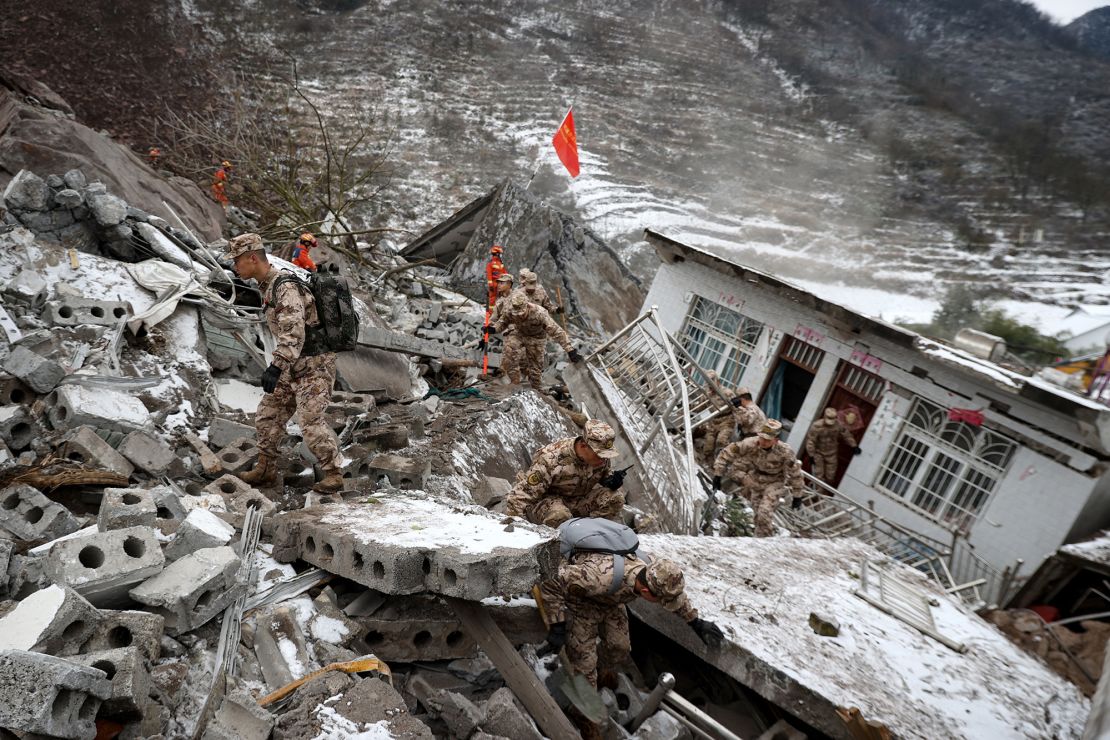
A devastating environmental disaster has struck northwestern China’s mountainous Gansu province as a massive early-morning landslide completely overwhelmed a remote village. The catastrophic collapse of the hillside has left at least five people dead, while emergency response teams launch an all-out, frantic race against the clock to locate 12 residents who remain missing and feared trapped deep beneath mounds of saturated earth and debris.
The disaster unfolded at approximately 6:56 a.m. in Renzang Village, located within Nanhe Township in Tanchang County under the jurisdiction of Longnan City. Because the landslide occurred during the early morning hours, many families were still inside their homes when the mountain flank suddenly gave way, offering victims virtually no time to escape the incoming torrent of mud and rock. Initial assessments by emergency personnel revealed that a total of 33 people were completely buried under the colossal layer of earth. The landslide hit an otherwise densely forested, vibrant green valley, turning parts of the landscape into an open scar of brown dirt and shattered structures.
Emergency responders mobilized immediately upon receiving the distress calls. By mid-afternoon on Tuesday, heavy machinery and search teams working by hand had managed to pull 21 individuals out from beneath the suffocating rubble. Despite the rapid response and frantic battlefield triage, five of those pulled from the debris field succumbed to their extensive injuries while undergoing emergency medical treatment at nearby facilities. Recognizing the severe geological risks and the precarious state of the terrain, China’s central government stepped in directly to manage the unfolding crisis. The Ministry of Emergency Management officially activated a Level-IV national emergency response specifically equipped for geological disasters.
A specialized, highly trained federal working team was immediately dispatched from Beijing to Gansu Province. This elite unit is tasked with technically guiding the local rescue efforts, ensuring the safety of the responders on the ground, and deploying cutting-edge geological radar to detect movement beneath the surface. Visual broadcasts provided by state media outlet CCTV showcased the immense logistical scale of the operation. Against a backdrop of deceptively clear, sunny blue skies, teams of brightly clad rescue workers and heavy excavators carved into the towering earthen mounds. Small drones and aerial photography units are being utilized continuously to map the shifting contours of the hillside, safeguarding against the catastrophic threat of a secondary landslide while crews dig below.
As part of the disaster response protocol, local authorities enacted immediate, mandatory evacuations for all remaining residents across the vulnerable Nanhe Township area. Displaced families are being housed in temporary shelters while emergency engineers run safety assessments on the remaining foundations of nearby mountain villages. While the exact internal catalyst for this specific landslide remains under formal investigation, geological experts point to a familiar culprit: China’s volatile summer monsoon season. Northwest China’s mountainous regions feature highly fractured, loose soil structures that become dangerously heavy and unstable when saturated by seasonal downpours. With mountain communities throughout Gansu and adjacent provinces facing heightened environmental risks due to erratic weather patterns, Chinese leadership has issued nationwide directives demanding all-out alertness and stricter preventative monitoring for flash floods and mudslides. For the families of the 12 missing villagers in Tanchang County, however, the focus is strictly reduced to the ticking clock as rescuers refuse to stop digging.
We welcome your contributions! Submit your blogs, opinion pieces, press releases, news story pitches, and news features to opinion@minutemirror.com.pk and minutemirrormail@gmail.com