Summary
- The financial crisis has already affected operations, forcing the UN to reduce mission spending and repatriate around a quarter of its uniformed personnel from peacekeeping missions last year.
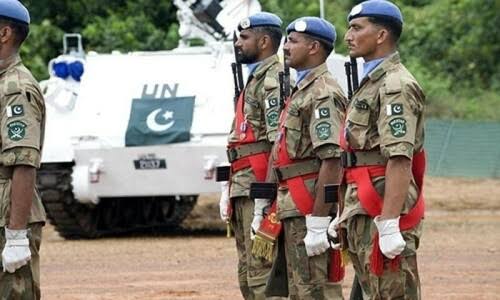
- Pakistan, one of the world’s largest and longest-serving contributors to UN peacekeeping, has sent more than 170,000 military and police personnel to international missions over the past six decades.
- He also highlighted the unique strengths of UN peacekeeping, including its international legitimacy, predictable financing, established command structures and ability to mobilise personnel and specialised resources from member states.
Pakistan has warned the United Nations that financial restrictions and budget cuts must not weaken its peacekeeping operations, stressing that reducing resources could undermine the organisation’s ability to maintain international peace and security at a time of growing global instability.
The warning was delivered by Pakistan’s Permanent Representative to the UN, Ambassador Syed Haider Shah, during the Fourth Committee of the 81st session of the UN General Assembly on Friday.
His remarks came as UN peacekeeping operations face mounting financial and political challenges. The General Assembly has approved a $5.1 billion budget for peacekeeping missions for 2026-27, representing a reduction of approximately 10 per cent compared with the previous year.
The financial crisis has already affected operations, forcing the UN to reduce mission spending and repatriate around a quarter of its uniformed personnel from peacekeeping missions last year.
Addressing the situation, Ambassador Shah called for meaningful reforms to improve the effectiveness of peacekeeping without compromising the resources and capabilities required to fulfil mission responsibilities.
“What is needed is the political will in the Security Council to use this important instrument when circumstances require,” he told the committee.
Pakistan, one of the world’s largest and longest-serving contributors to UN peacekeeping, has sent more than 170,000 military and police personnel to international missions over the past six decades. At least 183 Pakistani personnel have lost their lives while serving under the UN flag.
The country also hosts the United Nations Military Observer Group in India and Pakistan (UNMOGIP).
Pakistan outlines six priorities for UN reforms
Welcoming the UN secretary-general’s review of peacekeeping operations, Pakistan identified six key priorities for strengthening the system.
These include prioritising political solutions, ensuring clearly defined and adequately funded mandates, protecting the institutional strengths of peacekeeping, preparing for future military and police requirements, improving the safety of personnel and maintaining peacekeeping as a shared UN responsibility.
A major concern raised by Islamabad was the growing gap between the responsibilities assigned to peacekeeping missions and the financial resources provided to accomplish them.
Ambassador Shah argued that financial limitations should not dictate what peacekeeping missions can achieve. Instead, political objectives should determine a mission’s mandate, followed by the allocation of sufficient personnel, equipment and funding.
He also highlighted the unique strengths of UN peacekeeping, including its international legitimacy, predictable financing, established command structures and ability to mobilise personnel and specialised resources from member states.
“Efficiency and cost reduction must therefore strengthen peacekeeping, not hollow out the capabilities that give UN peacekeeping its unique value,” he said.
Pakistan calls for justice for attacks on peacekeepers
Pakistan also highlighted the need to protect UN personnel and ensure accountability for crimes committed against them.
Alongside Denmark, Pakistan played a leading role in advancing UN Security Council Resolution 2823, which was unanimously adopted with a record 153 co-sponsors.
The resolution aims to strengthen accountability for attacks and other crimes targeting UN peacekeeping personnel.

Welcoming the secretary-general’s first report on accountability, Shah also acknowledged the appointment of Assistant Secretary-General Elizabeth Spehar as Senior Focal Point on the issue.
He called for stronger investigations, effective prosecutions, improved monitoring of cases and greater support for national institutions to ensure perpetrators face justice.
Pakistan further emphasised the importance of the Special Committee on Peacekeeping Operations, known as C-34, as the main intergovernmental forum for shaping UN peacekeeping policies.
Concluding his remarks, Shah stressed that peacekeeping remains an essential and cost-effective instrument for international security, particularly as conflicts and political divisions continue to challenge the global order.
“Peacekeeping remains a vital, effective and cost-efficient means for ensuring peace and security. We will need this instrument again. We should ensure that it is ready when we do,” he said.
We welcome your contributions! Submit your blogs, opinion pieces, press releases, news story pitches, and news features to opinion@minutemirror.com.pk and minutemirrormail@gmail.com