

Summary
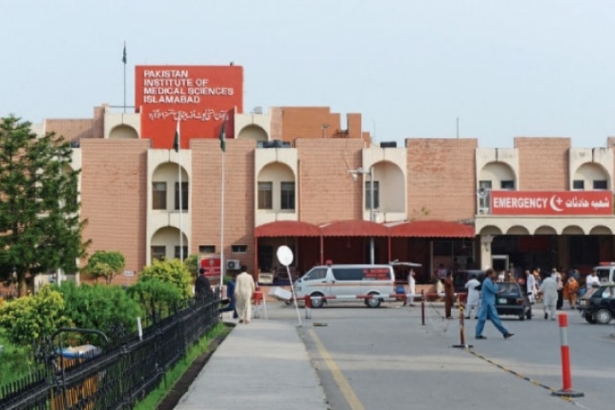
- Sheikhupura: The deaths of 14 newborn babies at the Pakistan Institute of Medical Sciences (PIMS), Islamabad, on August 26, 2026 should not be treated as another isolated hospital tragedy followed by condolences, an inquiry and administrative suspensions.
- Pakistan also needs a permanent National Patient Safety and Hospital Accountability Framework.
- Pakistan must move from reactive government to preventive governance, from fragmented responsibility to measurable accountability, and from bureaucratic control to professional hospital management.
Sheikhupura: The deaths of 14 newborn babies at the Pakistan Institute of Medical Sciences (PIMS), Islamabad, on August 26, 2026 should not be treated as another isolated hospital tragedy followed by condolences, an inquiry and administrative suspensions. The incident exposes a deeper crisis of governance, accountability and public-health management in Pakistan.
According to Hafiz Ehsan Ahmad Khokhar, Advocate of the Supreme Court of Pakistan, constitutional and international law expert while talking to this scribe, the nursery lacked essential fire-safety arrangements, while emergency preparedness and supervision were also inadequate. Emergency services were reportedly contacted several minutes after the fire began. If confirmed by the final investigation these failures raise a fundamental question: why does the State repeatedly identify institutional weaknesses only after citizens have died?
The tragedy is particularly devastating because newborns were among the victims. They could neither escape nor protect themselves. An electrical or air-conditioning fault may explain how a fire started but it cannot explain why a major tertiary-care hospital failed to prevent a fire from becoming a mass-casualty event.
The issue therefore goes beyond hospital administration. Article 9 of Pakistan’s Constitution protects the security of person and life, while Articles 37 and 38 emphasise public welfare and responsible governance. Article 140A further requires devolution of political, administrative, and financial responsibility to elected local governments.
Pakistan needs to turn these constitutional principles into institutional reality. Responsibilities for health building safety, fire prevention and emergency preparedness are often divided among ministries, hospitals, development authorities and regulatory bodies. This creates fragmentation without clear accountability.
The PIMS tragedy should trigger a nationwide independent safety audit of public hospitals, particularly neonatal units, maternity wards, intensive-care units, children’s wards and emergency departments. Fire alarms, sprinklers, electrical systems, oxygen installations, emergency exits, evacuation routes and communication systems must be physically inspected and independently verified.
Pakistan also needs a permanent National Patient Safety and Hospital Accountability Framework. Serious medical incidents should automatically undergo independent review. Hospitals should publish key safety indicators, including maternal and neonatal deaths, infections, medication errors, surgical complications and emergency-response times.
Accountability must also distinguish unavoidable medical outcomes from negligence. Doctors should not be punished simply because a patient could not be saved. However, preventable system failures, gross negligence and disregard of established safety standards must result in timely and independent action.
The deaths at PIMS cannot be reversed. But they can become a turning point. Pakistan must move from reactive government to preventive governance, from fragmented responsibility to measurable accountability, and from bureaucratic control to professional hospital management.
The real tribute to the 14 newborns is not another condolence resolution. It is reforming the system so that foreseeable risks are identified and corrected before rather than after they cost innocent lives.
We welcome your contributions! Submit your blogs, opinion pieces, press releases, news story pitches, and news features to opinion@minutemirror.com.pk and minutemirrormail@gmail.com