Summary
- Concurrently, emergency officials are keeping a nervous eye on the Pacific Ocean, where Super Typhoon Bavi is steadily tracking toward East Asia after lashing U.S.
- Super Typhoon Bavi, a monstrous Category 5 storm, is currently churning across the Pacific Ocean.
- While meteorologists expect the super typhoon to weaken slightly as it encounters cooler northern waters, it is still forecast to dump more than a meter of rain on parts of Taiwan before pushing directly toward China’s eastern coastal provinces.
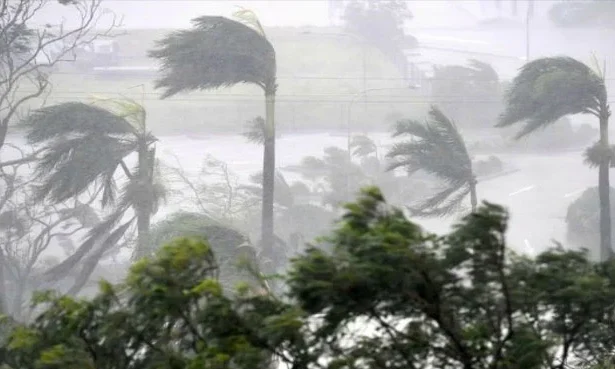
A series of unusual violent tornadoes and severe convective thunderstorms have ripped through central China’s Hubei province, leaving at least eight people dead and hundreds more injured. The sudden outbreak of extreme weather has leveled buildings, shattered local infrastructure, and triggered mass evacuations across multiple major manufacturing and industrial cities. Compounding the unfolding crisis, China’s National Meteorological Centre has issued severe weather warnings for broader regions of the country, impacting areas home to roughly 200 million citizens. Concurrently, emergency officials are keeping a nervous eye on the Pacific Ocean, where Super Typhoon Bavi is steadily tracking toward East Asia after lashing U.S. Pacific territories with catastrophic, Category 5 winds.
The disaster struck on Monday evening, when a line of intense, fast-moving thunderstorms generated massive wedge tornadoes that tore directly across Hubei Province. It’s a critical industrial, technology, and automotive manufacturing pivot. Over a compressed four-hour window, destructive winds peaking at 149 km/h (93 mph) violently battered the cities of Huangshi, Huanggang, Ezhou, and Xianning. Local meteorological experts noted that tornadoes are an exceptionally rare phenomenon in Hubei, with the region’s last documented tornado occurring over five years ago in May 2021. The extreme winds overturned vehicles, sheared roofs off residential and commercial structures, and knocked out power grids.
According to reports released by Hubei’s emergency management department, the severe weather resulted in 8 confirmed fatalities with 1 resident still missing, 275 injuries documented in Huanggang’s Huangzhou district alone, with at least 5 individuals remaining in critical condition. Over 400 residents evacuated from heavily compromised or collapsed structures as search-and-rescue teams combed through the debris.
The weather system has dropped phenomenal amounts of water, further stressing municipal infrastructure. South of Hubei, in the regional capital of Nanning within the Guangxi region, officials were forced to raise their flood control emergency response to the highest possible level. Heavy torrential downpours breached and collapsed a local reservoir dam, sending a massive, churning wave of muddy water crashing into surrounding valleys, partially submerging cars and homes. The National Meteorological Centre has warned that the eastern provinces of Jiangsu and Shandong, alongside southeastern Guangxi, must brace for up to 260 mm (10.2 inches) of rainfall over a 24-hour period. This immense volume of water has heightened the immediate risk of flash flooding and deadly landslides in mountainous terrains.
Furthermore, the timing of the deluge has triggered serious economic anxieties regarding China’s domestic food security. Both Hubei and Shandong serve as vital agricultural breadbaskets for the country. The unseasonal flooding and wind damage are threatening late-season harvests of essential staple crops, specifically corn, vegetables, and peanuts.
As central and southern China manage the immediate fallout of the inland storms, the nation’s eastern coastline is preparing for an even larger atmospheric threat. Super Typhoon Bavi, a monstrous Category 5 storm, is currently churning across the Pacific Ocean. Earlier in the week, Bavi’s eyewall slammed into the Mariana Islands, generating catastrophically destructive sustained winds of up to 290 km/h (180 mph). The storm brought intense flash flooding to critical U.S. military hubs, including Guam and Saipan, forcing local governments to open emergency shelters.
Bavi is currently projected to sweep past Taiwan over the weekend, where officials have placed nearly 29,000 military personnel on high alert to assist with potential disaster relief. While meteorologists expect the super typhoon to weaken slightly as it encounters cooler northern waters, it is still forecast to dump more than a meter of rain on parts of Taiwan before pushing directly toward China’s eastern coastal provinces. In response to the dual compounding disasters, Chinese President Xi Jinping has called for all-out efforts from municipal and federal agencies to stabilize flood defenses and prioritize the preservation of human life.
We welcome your contributions! Submit your blogs, opinion pieces, press releases, news story pitches, and news features to opinion@minutemirror.com.pk and minutemirrormail@gmail.com