Summary
- Dar e Nijaat was originally planned as a novel by renowned Pakistani writer Umera Ahmed before it was transformed into a television drama.
- Written by Umera Ahmed and directed by Saqib Khan, Dar e Nijaat explores several sensitive subjects that have encouraged viewers to discuss its storyline beyond ordinary television entertainment.
- The writer had originally planned to write Dar e Nijaat as her next novel after completing Aks.
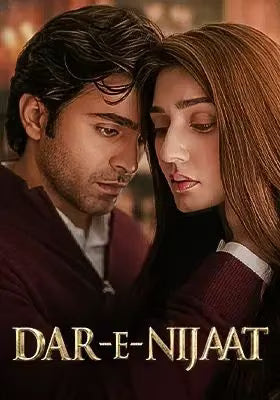
Dar e Nijaat was originally planned as a novel by renowned Pakistani writer Umera Ahmed before it was transformed into a television drama. The revelation has generated fresh interest among viewers, who are eager to learn more about the story’s background and how it developed into one of the biggest television hits of the season.
The drama has become a major talking point in Pakistan’s entertainment industry, attracting audiences with its powerful storyline, complex characters and thought-provoking themes. Featuring Sheheryar Munawar, Durefishan Saleem and Nameer Khan in leading roles, the serial has managed to capture viewers’ attention with its unusual narrative and strong performances.
The project also marks the television production debut of 3s Entertainment, founded by Sheheryar Munawar and Sonia Khan. The production house has made an impressive entry into the television industry with a project that has quickly gained popularity among drama enthusiasts.
Written by Umera Ahmed and directed by Saqib Khan, Dar e Nijaat explores several sensitive subjects that have encouraged viewers to discuss its storyline beyond ordinary television entertainment. The drama particularly addresses the sensitive topic of Zina while examining spirituality, redemption, personal choices and religious exhibitionism.
Its narrative has sparked conversations about morality, faith and the difference between practising religion sincerely and displaying religious beliefs for social approval. These themes have given the drama a distinctive position among current Pakistani television serials.
However, the latest revelation about the drama’s origins has made the project even more interesting for its fans. Many viewers had been wondering whether Dar e Nijaat was initially written as a television script or whether it had been adapted from a literary work.
It has now emerged that Umera Ahmed had developed the idea several years ago while working on her famous novel Aks. The writer had originally planned to write Dar e Nijaat as her next novel after completing Aks.
Interestingly, the story was never published in novel form, despite having already been conceived by the celebrated writer. Umera Ahmed had reportedly indicated that the upcoming story would feature more complicated characters and a challenging narrative compared to her previous work.
Although the novel never materialised, the writer eventually decided to bring the story to television. This transformation allowed audiences to experience a narrative that had remained in her creative plans for years.
An old note written by Umera Ahmed in a digest has also resurfaced, providing further insight into the original plan behind the story. The discovery has helped explain how an idea developed during the writing of Aks eventually became a successful television project.
The revelation has also increased viewers’ curiosity about the characters and storyline, particularly because the writer had initially imagined the project as a literary work with complex personalities.
With its combination of spirituality, moral questions and emotional storytelling, Dar e Nijaat continues to attract attention. Its success also highlights Umera Ahmed’s ability to transform thought-provoking literary ideas into television narratives that connect with a wide audience.
For fans of the writer, discovering that the drama was once planned as a novel adds another interesting chapter to the story behind the show’s creation.
We welcome your contributions! Submit your blogs, opinion pieces, press releases, news story pitches, and news features to opinion@minutemirror.com.pk and minutemirrormail@gmail.com