Summary
- Former prime minister Shahid Khaqan Abbasi has called on the government to develop a clear constitutional and administrative framework before holding a referendum on the creation of new provinces in Pakistan.
- The debate over creating additional provinces intensified after Interior Minister Mohsin Naqvi proposed establishing new provinces or administrative units to improve Pakistan’s governance structure.
- Defence Minister Khawaja Asif has advocated creating at least 12 provinces, arguing that smaller administrative units could improve governance and public service delivery.
Former prime minister Shahid Khaqan Abbasi has called on the government to develop a clear constitutional and administrative framework before holding a referendum on the creation of new provinces in Pakistan.
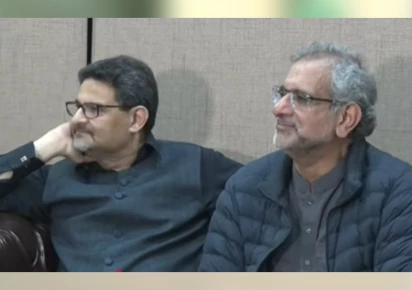
Speaking at a press conference alongside Awaam Pakistan General Secretary Miftah Ismail in Islamabad on Friday, Abbasi said establishing new provinces through a referendum would require extensive constitutional amendments.
He argued that the existing Constitution did not provide a mechanism for changing constitutional provisions through a referendum. He added that at least 100 new articles would be required to facilitate the proposed process.
Abbasi said the government must first explain the proposed provinces’ geographical boundaries, administrative structures, powers and rights before seeking public opinion. He questioned the purpose of asking people to vote without providing details about how the new administrative units would function.
He called for comprehensive reforms to the governance system and cautioned against presenting the public with a simple yes-or-no referendum without a clear plan.
The former premier also suggested that the Pakistan Muslim League-Nawaz (PML-N) government was hesitant to establish new provinces because the move could trigger fresh elections.
The debate over creating additional provinces intensified after Interior Minister Mohsin Naqvi proposed establishing new provinces or administrative units to improve Pakistan’s governance structure. He renewed the proposal in November, calling for a referendum to assess public opinion while stressing that any decision would require agreement among coalition partners.
Political parties remain divided over the proposal. The Pakistan Peoples Party (PPP) has strongly opposed dividing Sindh, while the Muttahida Qaumi Movement-Pakistan (MQM-P) has supported creating additional administrative units. The Sindh Assembly also adopted a resolution on September 4 rejecting attempts to divide the province.
Defence Minister Khawaja Asif has advocated creating at least 12 provinces, arguing that smaller administrative units could improve governance and public service delivery.
Demands for separate provinces have also emerged in South Punjab, Bahawalpur and Hazara. Supporters argue that smaller provinces could improve administrative efficiency, political representation and development opportunities. The Punjab Assembly passed resolutions in 2012 supporting separate provincial status for South Punjab and the restoration of Bahawalpur province, but the proposals were not implemented.
Abbasi also expressed concern over the reported disappearance of Khyber-Pakhtunkhwa Chief Minister Sohail Afridi and members of his cabinet.
He said the lack of information about Afridi’s whereabouts and legal status raised serious questions about constitutional protections and fundamental rights.
Abbasi pointed out that Afridi was an elected chief minister representing a major political party with parliamentary representation. He warned that restricting political freedoms could not ensure lasting stability in the province.
He also criticised restrictions on the movement of Jamiat Ulema-e-Islam-Fazl (JUI-F) chief Maulana Fazlur Rehman, describing freedom of movement as a fundamental constitutional right.
Meanwhile, Ismail expressed concern over the country’s political direction, saying his assessment of the government’s future had changed. He suggested that the existing political system could face significant changes.
The former finance minister also criticised the government’s economic policies, arguing that declining consumption of essential food items, including milk, eggs and meat, reflected the financial difficulties facing ordinary households.
Citing figures, Ismail claimed that 20 per cent of the population lived on monthly incomes of Rs5,000 or less, while 29 per cent survived on Rs8,500 or less. He added that 44 per cent of the population managed with monthly incomes of Rs25,000 or below.
He further claimed that Pakistan was experiencing its highest unemployment rate in 21 years, questioning whether the government’s economic measures were delivering meaningful results.
While acknowledging Prime Minister Shehbaz Sharif’s efforts, Ismail said the government lacked a clear economic vision.
He also criticised the decision not to import wheat, arguing that it had contributed to keeping flour prices beyond the reach of many households. He attributed the situation to administrative shortcomings and corruption.
Discussing the petroleum sector, Ismail claimed that local refineries had earned Rs150 billion while consumers continued to face high fuel prices. He questioned the existing petroleum pricing mechanism and alleged that oil companies were benefiting from an unfair formula.
We welcome your contributions! Submit your blogs, opinion pieces, press releases, news story pitches, and news features to opinion@minutemirror.com.pk and minutemirrormail@gmail.com