Summary
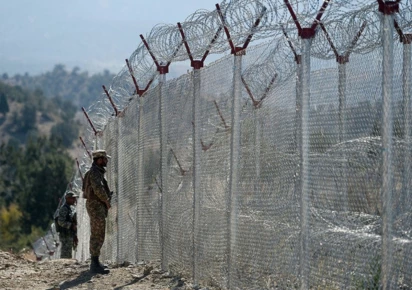
- Pakistani security forces have forced Afghan Taliban personnel to abandon several border positions near Angoor Adda in South Waziristan following unprovoked firing from across the border, Deputy Commissioner Lower South Waziristan said on Sunday.
- In a statement posted on X, the deputy commissioner said Pakistani troops responded forcefully by targeting multiple Afghan border posts, mortar positions and defensive installations.
- The military action followed attacks by Afghan Taliban forces on multiple Pakistani border positions.
Pakistani security forces have forced Afghan Taliban personnel to abandon several border positions near Angoor Adda in South Waziristan following unprovoked firing from across the border, Deputy Commissioner Lower South Waziristan said on Sunday.
In a statement posted on X, the deputy commissioner said Pakistani troops responded forcefully by targeting multiple Afghan border posts, mortar positions and defensive installations.
He said the intense response compelled Afghan Taliban personnel to leave their positions and retreat. No casualties have been reported in Pakistani border areas so far, he added.
The deputy commissioner said security forces remained fully prepared to deal with any act of aggression and would respond effectively to threats against the country’s territorial security.
The latest exchange of fire comes amid renewed tensions along the Pakistan-Afghanistan border. Earlier this week, a clash near Angoor Adda left one person dead and five members of a family injured.
Following that incident, the Pakistan Army said it had responded immediately and forcefully to Afghan aggression by targeting Taliban checkposts. The military also said its response to the attack on civilians was continuing.
Tensions between the two neighbouring countries have escalated over repeated cross-border attacks and security concerns. Islamabad has consistently accused the Afghan Taliban government of allowing militant groups, particularly the Tehreek-e-Taliban Pakistan (TTP), to operate from Afghan territory and launch attacks inside Pakistan. Kabul has rejected the allegations.
In September, Pakistan conducted targeted airstrikes against suspected militant hideouts near the Afghan border, followed by intelligence-based ground operations. Pakistani authorities reported that 37 militants were killed in the operations.
The Ministry of Information and Broadcasting said three targets were destroyed during the precision strikes, including a facility used to train suicide bombers. It also reported the destruction of weapons and ammunition stored at the targeted locations.
On September 24, Information Minister Attaullah Tarar said Pakistan had carried out precision aerial and drone strikes against 10 locations in Afghanistan. He described the action as a response to drones entering Pakistani airspace from Afghan territory.
The security situation further deteriorated following renewed border clashes in February, prompting Pakistan to launch Operation Ghazab Lil Haq. The military action followed attacks by Afghan Taliban forces on multiple Pakistani border positions.
A temporary ceasefire was subsequently agreed upon on March 18, following diplomatic requests from Turkiye, Saudi Arabia and Qatar.
During peace negotiations in Urumqi, China, in April, Pakistan presented three key demands to the Afghan Taliban. Islamabad called on Kabul to formally declare the TTP a terrorist organisation, dismantle its militant infrastructure and provide verifiable evidence of action against the group.
We welcome your contributions! Submit your blogs, opinion pieces, press releases, news story pitches, and news features to opinion@minutemirror.com.pk and minutemirrormail@gmail.com