Summary
- PESHAWAR: Security forces and law enforcement agencies have arrested an Afghan national accused of planning terrorist attacks in Pakistan during a joint intelligence-based operation in Tirah Valley, Khyber-Pakhtunkhwa, on November 7.
- Following the dissolution of the Afghan army, he allegedly used his military experience at different madrassas, continued training activities and developed contacts to facilitate attacks inside Pakistan.
- Information Secretary Mahmood Jan Babar accused elements operating from Afghan territory of facilitating terrorist activities inside Pakistan.
PESHAWAR: Security forces and law enforcement agencies have arrested an Afghan national accused of planning terrorist attacks in Pakistan during a joint intelligence-based operation in Tirah Valley, Khyber-Pakhtunkhwa, on November 7.
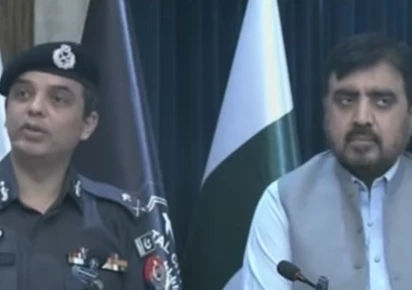
Additional Inspector General Khyber-Pakhtunkhwa Abbas Ahsan disclosed the arrest at a press conference on Wednesday. He was accompanied by Information Secretary of the Area Development Secretariat Mahmood Jan Babar.
Ahsan identified the suspect as Hikmatullah, also known as Hamza, son of Noor Mohammad. He said the suspect was apprehended near Peshawar through a coordinated operation involving security forces and police.
According to the AIG, intelligence agencies used human intelligence, electronic surveillance and other sources to track down the suspect. He belonged to Mangiyar village in the Chamkaniye area of Afghanistan’s Paktia province.
Ahsan said Hamza had previously served in the former Afghan National Army, where he received three months of military training and another three months of commando training. Following the dissolution of the Afghan army, he allegedly used his military experience at different madrassas, continued training activities and developed contacts to facilitate attacks inside Pakistan.
The arrested man had also prepared a suicide bomber named Akrama, whom he reportedly trained at the Khalid bin Waleed madrassa near Jalalabad, Ahsan said.
He added that Hamza had connections with the former Gul Bahadur group and had worked as a security guard for its commander, Mansoor.
The AIG said interrogation had helped investigators uncover the identities of the suspect’s facilitators in Pakistan and Afghanistan. Authorities had also obtained information about his training locations and the places where he allegedly planned to carry out attacks.
Officials played a video statement attributed to the suspect during the briefing. In the recording, Hamza said he had studied under a religious scholar for a year before becoming a madrassa teacher. He also confirmed meeting Akrama in Jalalabad and preparing him for a suicide attack.
He further claimed that he had sustained injuries during the Taliban’s rule in Afghanistan. He said he was receiving proper treatment in Pakistan.
Information Secretary Mahmood Jan Babar accused elements operating from Afghan territory of facilitating terrorist activities inside Pakistan. He said militants attempted to cross into the country under the cover of darkness to carry out attacks.
Babar described the arrest as a significant achievement for Pakistan’s security agencies, adding that the suspect’s case reflected the wider challenge posed by militant networks.
He said security forces were carrying out extensive operations to prevent infiltration and eliminate terrorist threats. He added that the government, security institutions and Pakistani society remained united against terrorism.
Pakistan has witnessed a sustained rise in militant violence since 2022. According to data from the Armed Conflict Location & Event Data (ACLED), terrorist attacks increased from 658 in 2022 to 2,425 in 2025, representing an almost fourfold rise.
The security situation in Khyber-Pakhtunkhwa has also deteriorated. Two reports presented to the federal cabinet in October showed that terrorist incidents in the province increased by 195 per cent between March 2024 and September 2026.
The reports further indicated that police and security personnel were the targets of 73 per cent of attacks recorded in the province during 2026. The growing use of drones and improvised explosive devices has added to security concerns.
Pakistan has repeatedly accused Afghanistan’s Taliban authorities of providing safe havens to the banned Tehreek-e-Taliban Pakistan (TTP), which Islamabad says uses Afghan territory to organise and launch attacks across the border.
A United Nations Security Council monitoring report issued in February 2026 also highlighted concerns over the group’s activities. It reported an increase in TTP attacks originating from Afghanistan and said the group enjoyed greater freedom and support from Afghanistan’s de facto authorities.
The report further noted that Al Qaeda continued to provide training and assistance to the TTP. It also highlighted the group’s access to increasingly sophisticated weapons, including night-vision equipment and drone systems.
We welcome your contributions! Submit your blogs, opinion pieces, press releases, news story pitches, and news features to opinion@minutemirror.com.pk and minutemirrormail@gmail.com