Summary
- The Azad Jammu and Kashmir (AJK) Legislative Assembly has offered to resume negotiations with the proscribed Joint Awami Action Committee (JAAC), but has set several conditions, including the disbandment of armed groups, surrender of individuals accused of serious crimes and a commitment to pursuing demands through constitutional and democratic channels.
- The assembly unanimously adopted a resolution on Wednesday, calling for an end to sit-ins and unauthorised demonstrations, the reopening of blocked highways and other routes, and a public apology from JAAC’s leadership over what lawmakers described as anti-state statements targeting state institutions, law enforcement agencies, Pakistan and the Kashmir freedom movement.
- Reaffirming its commitment to the existing constitutional and administrative structure of AJK, the assembly said political disputes would be addressed through democratic engagement, but there would be no compromise on maintaining public security, state authority and the rule of law.
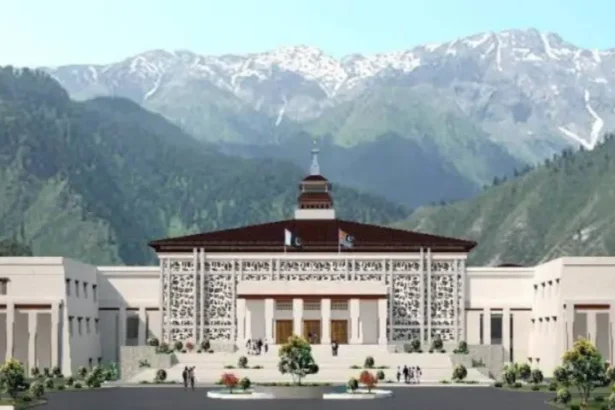
The Azad Jammu and Kashmir (AJK) Legislative Assembly has offered to resume negotiations with the proscribed Joint Awami Action Committee (JAAC), but has set several conditions, including the disbandment of armed groups, surrender of individuals accused of serious crimes and a commitment to pursuing demands through constitutional and democratic channels.
The decision came as the region continued to face tensions following months of protests and sporadic incidents of unrest. The dispute largely centres on JAAC’s demand to abolish 12 refugee seats in the AJK Legislative Assembly.
The assembly unanimously adopted a resolution on Wednesday, calling for an end to sit-ins and unauthorised demonstrations, the reopening of blocked highways and other routes, and a public apology from JAAC’s leadership over what lawmakers described as anti-state statements targeting state institutions, law enforcement agencies, Pakistan and the Kashmir freedom movement.
The resolution stated that the AJK government was willing to engage in meaningful political negotiations with JAAC under the Interim Constitution of 1974 and applicable laws, provided the committee fulfilled the conditions outlined by the House. It stressed that political disagreements should be settled through dialogue, constitutional procedures and respect for the rule of law rather than violence.
Lawmakers held JAAC’s leadership responsible for the collapse of previous negotiations. They claimed that the government had accepted several of the committee’s demands and offered assurances on others, but the committee subsequently rejected the government’s flexibility and put forward demands that the assembly considered incompatible with the region’s constitutional framework.
The resolution said the government had also proposed alternative ways to address the dispute, including high-level talks, a multi-party conference, participation in general elections, seeking the AJK Supreme Court’s opinion on constitutional matters and holding a referendum on significant constitutional issues. However, JAAC had rejected these proposals, according to the resolution.
The assembly also raised concerns over the possibility of disruption to upcoming general elections and accused armed groups associated with the committee of creating instability through violent demonstrations and marches since June 2026.
It alleged that protesters had blocked highways, obstructed law enforcement personnel, attacked hospitals, threatened government officials and established armed checkpoints. The resolution further accused them of disrupting educational institutions and restricting the supply of essential commodities.
According to figures presented before the House, 34 law enforcement personnel were killed and 248 others injured during the unrest that began in June. Lawmakers condemned attacks on security personnel and expressed solidarity with the families of those killed.
The assembly said the unrest had disrupted everyday life, created shortages of essential goods and forced women, children and elderly residents to leave affected areas. It added that access to education, healthcare and freedom of movement had also suffered.
However, lawmakers emphasised that peaceful demonstrations and political dissent remained fundamental constitutional rights. They said citizens were entitled to express their concerns peacefully, but these freedoms could not justify armed violence, attacks on public institutions, destruction of property or restrictions on the movement of ordinary people.
The resolution also criticised what it described as misleading social media campaigns by JAAC supporters, alleging that exaggerated casualty figures and claims had created uncertainty among Pakistanis and Kashmiris living abroad.
It warned that failure to meet the assembly’s conditions could prompt the AJK government to take legal action through law enforcement agencies to restore public order and protect citizens. The House maintained that any such measures must comply with constitutional provisions, the law and human rights standards.
Reaffirming its commitment to the existing constitutional and administrative structure of AJK, the assembly said political disputes would be addressed through democratic engagement, but there would be no compromise on maintaining public security, state authority and the rule of law.
The House also passed three additional resolutions concerning the display of Quranic verses on the finality of prophethood in the assembly hall, welcoming the recent visit of Pakistan Muslim League-Nawaz leadership to Muzaffarabad and paying tribute to former AJK president Raja Zulqarnain Khan.
The dispute escalated in June when the then Pakistan Peoples Party-led AJK government declared JAAC a proscribed organisation following its announcement of a strike scheduled for June 9. Authorities subsequently launched a crackdown, arresting several committee leaders and placing numerous activists on the Fourth Schedule under the region’s Anti-Terrorism Act.
General elections in AJK were held in three phases on July 27, August 2 and August 10, with the PML-N emerging victorious.
Earlier this month, AJK President Dr Muhammad Najeeb and Prime Minister Iftikhar Gillani urged political stakeholders to exercise restraint and work towards restoring peace. Gillani warned that provocative statements and continued unrest were affecting the daily lives of ordinary residents.
Their appeals followed concerns raised by the Human Rights Commission of Pakistan over reports of renewed violence in Rawalakot, including allegations of casualties among protesters and law enforcement personnel.
The rights watchdog called for independent media access to the region and urged authorities and political stakeholders to prevent further loss of life, stressing that dialogue rather than force remained the way forward.
We welcome your contributions! Submit your blogs, opinion pieces, press releases, news story pitches, and news features to opinion@minutemirror.com.pk and minutemirrormail@gmail.com