Summary
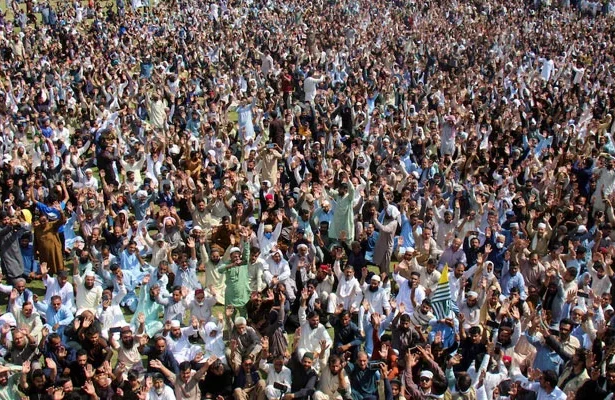
- The government of Azad Jammu and Kashmir has issued a travel advisory urging tourists and visitors to avoid non-essential travel to the region between June 5 and June 20, citing security concerns linked to a planned protest movement announced by the Jammu Kashmir Joint Awami Action Committee (JAAC).
- Its latest campaign centers on a demand to abolish 12 reserved seats in the Azad Jammu and Kashmir Legislative Assembly allocated to Kashmiri refugees who migrated to Pakistan after 1947.
- Separately, the AJK Legislative Assembly recently passed a resolution reaffirming the continuation of the 12 refugee seats.
The government of Azad Jammu and Kashmir has issued a travel advisory urging tourists and visitors to avoid non-essential travel to the region between June 5 and June 20, citing security concerns linked to a planned protest movement announced by the Jammu Kashmir Joint Awami Action Committee (JAAC).
According to the advisory, travelers currently in the region for leisure or other non-essential purposes have been advised to leave by Saturday evening, while prospective visitors have been asked to postpone their trips until further notice. Authorities said the precautionary measures were necessary to maintain public order ahead of expected demonstrations.
The JAAC has a history of organizing large-scale protests over economic grievances and political demands, some of which have previously turned violent, including clashes with law enforcement in May 2024 and September 2025 that resulted in casualties. Its latest campaign centers on a demand to abolish 12 reserved seats in the Azad Jammu and Kashmir Legislative Assembly allocated to Kashmiri refugees who migrated to Pakistan after 1947.
The issue of refugee representation has once again become a major political flashpoint in the region. The All Parties Conference (APC), held at the Prime Minister’s Secretariat in Muzaffarabad, rejected the demand to abolish these seats, stating that any constitutional amendments fall within the exclusive jurisdiction of elected representatives. Participants emphasized that such reforms must follow legal and parliamentary procedures rather than public pressure campaigns.
Separately, the AJK Legislative Assembly recently passed a resolution reaffirming the continuation of the 12 refugee seats. Lawmakers described refugee representation as both a historical reality and a constitutional requirement. The resolution also suggested that if electoral complications exist, adjustments could be made through proper legislative channels to ensure broader political consensus.
The debate over refugee seats has also drawn strong reactions from senior political figures. Pakistan’s Defense Minister Khawaja Muhammad Asif criticized calls for their abolition, arguing that such demands risk undermining the electoral process. He stated that decisions regarding representation should be made through democratic participation in the upcoming elections rather than through protests or pre-election pressure.
In his remarks on social media platform X, Asif highlighted the historical background of Kashmiri migrants who settled in various parts of Pakistan following the partition in 1947. He noted that many families, particularly in areas such as Sialkot, endured immense hardship and loss during migration. According to him, these communities have long-standing political and constitutional ties that justify continued representation in the assembly.
The election schedule for Azad Jammu and Kashmir has already been announced. Polling for the 53-member legislative assembly is set to take place on July 27, 2026, with voting scheduled from 8am to 5pm across all constituencies.
The Election Commission has outlined the full electoral timetable. Nomination papers will be submitted between June 9 and June 19, followed by scrutiny on June 20. Appeals regarding acceptance or rejection of nominations will be heard between June 21 and June 24, with final decisions announced by June 29. Candidates will be able to withdraw their nominations until June 30, while the final list of contestants and election symbols will be issued on July 2.
With the election process underway and tensions surrounding refugee representation still unresolved, authorities have stepped up security measures and issued travel advisories to prevent disruptions during the politically sensitive period.
We welcome your contributions! Submit your blogs, opinion pieces, press releases, news story pitches, and news features to [email protected] and [email protected]