Summary
- Few may be aware that in his masterful body of work—which explores every facet of human life—Allama Iqbal also comprehensively addressed economic systems, specifically the economic theories and concepts of Islam. At the dawn of the twentieth century, when capitalism had firmly entrenched itself in Europe following the French Revolution, and socialism was simultaneously gaining significant traction, Allama Iqbal—through his profound and insightful ideas—not only rejected both of these exploitative systems but also championed the Islamic economic framework as the most beneficial and superior model for all of humanity.
- But Frankly Speaking, Iqbal traveled to England in 1905, yet he wrote this book in 1903—a work that serves as a testament to his keen interest in the field of economics. In terms of its subject matter, the book *Ilm-e-Iqtisad* —which pertains to economics (also known as political economy)—focuses on two key areas: First, Iqbal posits that education is an essential instrument for economic development and the enhancement of domestic production; Second, he demonstrates an innovative approach to the issues of population and family planning.
- Organized into five parts, the book explores the factors of wealth production (land, labor, capital, and human resources) essential for any nation; the exchange of wealth (covering the theory of value, international trade, and currency); the distribution of wealth (including rent, interest, profit, wages, and land revenue); and the consumption of wealth—offering a framework that can serve as a foundation for sustainable economic development.
While the entire world acknowledges the poetry and philosophy of the ‘Poet of the East,’ Allama Muhammad Iqbal, he also distinguished himself as an economist. Few may be aware that in his masterful body of work—which explores every facet of human life—Allama Iqbal also comprehensively addressed economic systems, specifically the economic theories and concepts of Islam.
At the dawn of the twentieth century, when capitalism had firmly entrenched itself in Europe following the French Revolution, and socialism was simultaneously gaining significant traction, Allama Iqbal—through his profound and insightful ideas—not only rejected both of these exploitative systems but also championed the Islamic economic framework as the most beneficial and superior model for all of humanity.
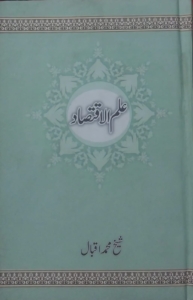
His book on economics published in 1903 under the title *Ilm-e-Iqtisad* (The Science of Economics), represents the first fruit of Allama Iqbal’s scholarly endeavors during his youth; it holds the distinction of being the first book in the Urdu language on modern economics. The manner in which he critiques the economic conditions of his era serves as a testament to his breadth of vision, innate talent, and command over both philosophy and economics. A study of this work suggests that, during his education at Cambridge, Iqbal may have attended the lectures of Alfred Marshall, an English economist and one of the most influential economists of his time or been influenced by the theories of Frank William Taussig, a prominent American economist and long-serving Harvard professor who helped establish modern international trade theory and empirical economics in the United States. But Frankly Speaking, Iqbal traveled to England in 1905, yet he wrote this book in 1903—a work that serves as a testament to his keen interest in the field of economics.
In terms of its subject matter, the book *Ilm-e-Iqtisad* —which pertains to economics (also known as political economy)—focuses on two key areas:
First, Iqbal posits that education is an essential instrument for economic development and the enhancement of domestic production;
Second, he demonstrates an innovative approach to the issues of population and family planning.
This book presents key economic theories concerning economic strategies for socio-cultural development, the significance of rural and industrial growth, proposals for poverty alleviation, land reforms, and human resource development. Organized into five parts, the book explores the factors of wealth production (land, labor, capital, and human resources) essential for any nation; the exchange of wealth (covering the theory of value, international trade, and currency); the distribution of wealth (including rent, interest, profit, wages, and land revenue); and the consumption of wealth—offering a framework that can serve as a foundation for sustainable economic development.
One can gauge the depth of Iqbal’s concern regarding the destitution and economic plight of Muslims through the correspondence that took place between him and Jinnah. He did not rely solely on prose and letters to propagate his economic theories; rather, he also disseminated his economic ideas through his poetry and verse.
Iqbal appears to be engaged in a struggle against the capitalist model and term capitalism as a system of exploitation. His verse says:
Zandgi ka raaz kiya hay..? salnat kiya chies hay..
Or ya sarmaya w muhant min hay kisa kharosh…
Iqbal appears to be in conflict with the capitalist system:
Makkr ki chalon se bazi le gaya sarmaya dar
Antahaye sadgi se.. kha gaya mazdur maat
This is a very profound and meaningful verse. It vividly portrays social exploitation through the cunningness of the capitalist and the simplicity of the laborer. A bitter social reality lies hidden in the second line: the laborer builds the world through his toil, yet the capitalist, through his cunning, reaps the fruits of that labor.
Iqbal became the voice of the laborer against the exploitative system…
Jis khiyat se dahqan ko messor nihen rozi
Uss khiyat ke har khushah gandam ko jala do
This verse by Iqbal is not merely a lament over the poverty of the farmer; it is a protest against an oppressive economic system. In a system where the very farmer who toils upon the land is deprived of the fruits of his own labor, any claim to prosperity is meaningless.
How aptly Iqbal spoke regarding *sood* (Interest).
Zaahir main tajarat hay.. haqeeqat main juwa hay
Sood ek ka.. laakhon ke laye marg-e-mufajat
Iqbal critiques an economic system that ostensibly operates under the guise of trade and commerce, yet is driven by self-interest, the uncertainty of gambling, and the concentration of wealth. The profit of a single individual becomes the cause of economic ruin and destitution for millions of people.
Iqbal considers the employer and the employee to be on equal footing; that is why he seeks to awaken a revolutionary spirit among the workers.
Uttho… meri duniya ke ghareebon ko jaga do
Kagh-e-amra ke dar o deewar hala do
He stresses to awaken the poor: Instill consciousness, self-respect, and an awareness of their rights among the deprived classes and asks to shake the foundations of the palaces of the elite, challenging the unjust system of wealth and power. Indeed, a revolutionary message to bring about a transformation in society wherein resources and opportunities are not monopolized by a select few.
In Iqbal’s view, economic strength is, in reality, the foundation of political power; thus, achieving economic stability is indispensable. His philosophy empowers the individual to cultivate a sense of self—a realization of one’s own *Khudi* (ego/selfhood)—enabling that person to become a source of benefit for both themselves and their nation. Iqbal’s comprehensive philosophy, his body of work, and his poetry appear to transcend the constraints of time. To contemplate the full scope of his thought is to be left in awe; it remains as potent and relevant today as it ever was. Whether it was his profound foresight or an intuitive vision, his poetry exerts a spellbinding influence on readers of every era.
These verses truly depict the thoughts and philosophy of the great poet, in which Iqbal makes a profound observation regarding his own self. He suggests that even he himself does not fully grasp the vastness of his own personality, thought, and creative faculties.
Iqbal bhi Iqbal se aagah naheen hay
Kuch is min tamaskhar nihen..walah naheen hay
We welcome your contributions! Submit your blogs, opinion pieces, press releases, news story pitches, and news features to opinion@minutemirror.com.pk and minutemirrormail@gmail.com