Summary
- Officials have restricted access to large sections of the volcano’s slopes following an extended period of heightened activity in recent weeks.
- Despite Mount Etna’s frequent volcanic activity, officials noted something notable about the risks the mountain actually poses.
- Despite ongoing volcanic activity and periodic access restrictions, it continues to draw large numbers of hikers and tourists throughout the year.
An American tourist has died after being struck by lightning while hiking on Mount Etna in Sicily. Italian firefighters confirmed the incident on Monday, adding new details to the tragedy.
The victim, a 29-year-old man from Kansas, was struck on Sunday evening while hiking through an exposed section of the volcano above the tree line. Mount Etna is widely known as Europe’s most active volcano.
Emergency crews responded quickly, rescuing the tourist by helicopter following the lightning strike. Despite the swift response, he was later pronounced dead by medical personnel at the scene. Authorities have not yet released his identity publicly.
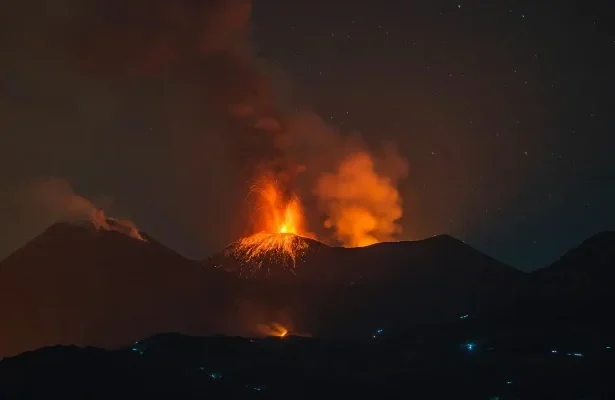
The area where the incident occurred had reportedly been closed to visitors due to recent volcanic activity. Officials have restricted access to large sections of the volcano’s slopes following an extended period of heightened activity in recent weeks.
That same volcanic activity had already caused significant disruption in the region. Catania airport, one of Sicily’s key international travel hubs, was forced to shut down for much of the previous week because of ongoing eruptions.
Despite Mount Etna’s frequent volcanic activity, officials noted something notable about the risks the mountain actually poses. Lightning strikes have caused more fatalities on the volcano in recent decades than the eruptions themselves.
According to officials, the most recent deaths directly linked to a Mount Etna eruption date back to 1987. That statistic highlights how unpredictable weather, rather than volcanic danger, remains the more immediate threat to hikers today.
Mount Etna sits on the eastern side of Sicily, near the city of Catania. Despite ongoing volcanic activity and periodic access restrictions, it continues to draw large numbers of hikers and tourists throughout the year.
Sunday’s tragedy serves as a stark reminder of the unpredictable risks tied to hiking in exposed, high-altitude terrain, even in areas officially closed to the public. Authorities are expected to review safety measures and access restrictions around the volcano following the incident.
We welcome your contributions! Submit your blogs, opinion pieces, press releases, news story pitches, and news features to opinion@minutemirror.com.pk and minutemirrormail@gmail.com