Summary
- It arrives amidst mounting public resentment, economic desperation, and an escalating crackdown on political dissent, particularly in regions like Azad Jammu & Kashmir and urban political centers where mass protests against state austerity and police overreach have intensified.
- The state apparatus operates under an unwritten constitutional clause: individual rights, democratic mandates, and administrative cohesion may be sacrificed, so long as the core, permanent security apparatus remains untouched and supreme.
- During the 1971 crisis in East Pakistan, the political leadership and the military high command operated under the illusion that they were protecting the sacred unity of the state.
Pakistan’s Interior Minister, Mohsin Naqvi, publicly conceded that the nation’s existing governance structure has collapsed. The minister admitted that the administrative machinery can no longer resolve the country’s compounding socio-economic crises. The phrase strategically slipped through while addressing the Pakistan Economic Summit in Islamabad. He warned that adhering to the status quo would drag the nation into the same stagnant cycle ten years from now. Amidst, he called upon political parties to set aside differences, decentralize power, and establish new administrative units to avert total destabilization.
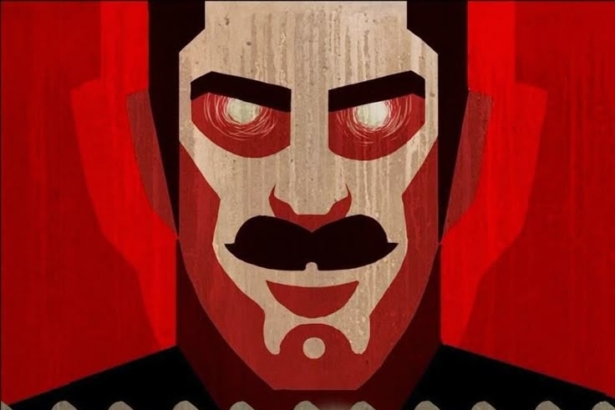
Yet, this public declaration does not occur in a vacuum. It arrives amidst mounting public resentment, economic desperation, and an escalating crackdown on political dissent, particularly in regions like Azad Jammu & Kashmir and urban political centers where mass protests against state austerity and police overreach have intensified. On the surface, the minister’s statement sounds like a candid plea for political reform and democratic unity. Beneath it, lies a far more insidious dynamic. One that mirrors the political theology of George Orwell’s classic dystopian novel, 1984.
Big Brother and the Permanent State
In Orwell’s 1984, the state of Oceania is governed by a dual reality. On the visible surface sits the Outer Party and its administrative ministries: the Ministry of Peace (which wages war), the Ministry of Plenty (which manages scarcity), and the Ministry of Truth (which manufactures lies). But behind these facade institutions resides the true, unquestionable entity: the Party itself, epitomized by the omnipotent figure of Big Brother. The purpose of the ministers, bureaucrats, and politicians is not to serve the citizenry, but to safeguard the survival of the core entity at all costs.
When applied to the political landscape of Pakistan, the Interior Minister’s declaration functions as a quintessential display of Orwellian doublethink. The ability to hold two contradictory beliefs in one’s mind simultaneously and accept both of them. The visible civilians admit powerlessness, yet the hidden apparatus of establishment and the deep-state continues to wield absolute authority.
The state apparatus operates under an unwritten constitutional clause: individual rights, democratic mandates, and administrative cohesion may be sacrificed, so long as the core, permanent security apparatus remains untouched and supreme.
Echoes From 1971 to Kashmir
This pattern of preserving an unseen core entity while allowing civilian institutions to decay is not a novel phenomenon. Rather, it is the recurring motif of the region’s post-colonial history.
During the 1971 crisis in East Pakistan, the political leadership and the military high command operated under the illusion that they were protecting the sacred unity of the state. In reality, the democratic mandate of the majority population in Bengal was suppressed to protect the ideological and structural hegemony of the West Pakistani establishment—the ruling entity. The state prioritized the preservation of its central ruling elite over the actual people, ultimately leading to the violent birth of Bangladesh.
Similarly, in the context of Kashmir, both regional state apparatuses have historically treated the territory not as a community of citizens with self-determination, but as a hyper-militarized buffer zone. The rights of the local population are routinely suspended under emergency clauses, security regulations, and administrative crackdowns. Kashmir becomes a national security theater where the state justifies its authoritarian measures by pointing to a existential enemy, much like Oceania’s perpetual, shifting wars with Eurasia and Eastasia.
The System Has Collapsed
Minister Naqvi cautions that the system is broken and warns against civil unrest. The message carries an implicit subtext: the civilian government is simply the expendable skin of the state. The real state must be shielded from public wrath.
Public dissent erupts over inflation, human rights abuses, or rigged mandates. However, the state’s reaction is not to adapt to the popular will, but to enforce compliance through force. The plea for political parties to sit together is less about democratic reconciliation and more an invitation to absorb the blame for a crisis created by the underlying apparatus.
Ultimately, Orwell’s warning in 1984 was not merely about surveillance or censorship. Instead it was about the total erasure of individual agency in service of an unaccountable entity. The region remains bound to protecting a shadowy establishment at the expense of its people.
We welcome your contributions! Submit your blogs, opinion pieces, press releases, news story pitches, and news features to opinion@minutemirror.com.pk and minutemirrormail@gmail.com