Summary
- British-Pakistani filmmaker Seemab Gul’s award-winning film Ghost School has been denied certification by the Sindh Board of Certification, preventing its theatrical release in the province where the film is set.
- Despite the decision in Sindh, Ghost School has already gained recognition at several international film festivals.
- Gul has urged the provincial certification authority to review its decision and allow audiences to watch the film.
British-Pakistani filmmaker Seemab Gul’s award-winning film Ghost School has been denied certification by the Sindh Board of Certification, preventing its theatrical release in the province where the film is set.
The decision has sparked discussion about artistic expression, girls’ education and the portrayal of social issues through cinema.
Gul has appealed to the Sindh Board to reconsider its decision. She said the film was made from a child’s perspective and aims to encourage audiences to think about education and the challenges faced by children.
The filmmaker said she had asked the board to explain the reason for refusing certification but had not received an explanation.
Despite the decision in Sindh, Ghost School has already gained recognition at several international film festivals.
The film won the Best Director award at the UK Asian Film Festival. It also premiered at the Toronto International Film Festival, where it received a nomination in a major competition category.
It was later screened at the Red Sea Film Festival in Jeddah. The film also received an honourable mention at the Indian Film Festival of Los Angeles and secured a special award at the Asian, African and Latin American Film Festival.
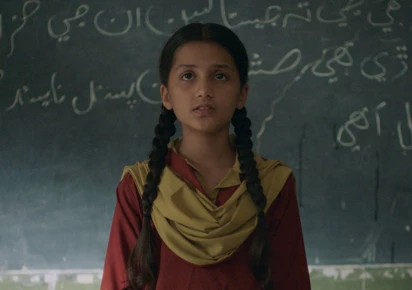
The film follows 10-year-old Rabia, who tries to understand why the only school in her rural village has stopped operating.
Through the young girl’s journey, the story examines barriers to girls’ education, resilience and problems within publicly funded schools.
The film focuses on the issue of so-called “ghost schools”. These are schools that exist officially but are no longer functioning properly as educational institutions.
Gul explained that some such schools were never fully completed. They may lack basic facilities such as doors, windows, water, electricity or gas.
In other cases, she said, schools were completed and teachers initially worked there, but operations eventually stopped.
The filmmaker described the issue as a serious challenge in Pakistan, where millions of children remain outside the formal education system.
Gul said the film was not intended simply to highlight a problem. Instead, she wanted to tell the story through a child’s eyes and encourage discussion about access to education.
The refusal to certify the film in Sindh has therefore raised broader questions about whether filmmakers should be able to explore sensitive social issues through cinema.
Gul has urged the provincial certification authority to review its decision and allow audiences to watch the film.
We welcome your contributions! Submit your blogs, opinion pieces, press releases, news story pitches, and news features to opinion@minutemirror.com.pk and minutemirrormail@gmail.com