Summary
- The Pakistan Peoples Party has fielded 23 candidates, while the Pakistan Muslim League-Nawaz is contesting with 22 candidates.
- Pakistan Muslim League has nominated 11 candidates, while Jamiat Ulema-e-Islam-F has fielded nine candidates.
- A total of 266 independent candidates are contesting from various constituencies across Gilgit-Baltistan, highlighting strong local political participation.
Tensions flared at Polling Station No. 403 in GB A-2 after workers of the Pakistan Muslim League-Nawaz (PML-N) and Pakistan Peoples Party (PPP) engaged in a heated confrontation that escalated into a physical altercation, disrupting the electoral atmosphere.
The incident reportedly began when PPP workers objected to the visit of PML-N candidate Hafiz Hafeez-ur-Rehman to the polling station. The disagreement over his entry quickly turned into a verbal dispute between supporters of both parties, which soon spiraled into a scuffle.
The situation intensified as verbal exchanges gave way to physical confrontation, creating panic and tension in the polling environment. At the time of the incident, caretaker Interior Minister Sajeed Baig was also present at the polling station.
Law enforcement personnel moved swiftly to bring the situation under control and restore order as efforts continued to stabilize the tense atmosphere.
Moreover, Polling is in full swing across Gilgit-Baltistan as voters head to polling stations to elect members of the regional assembly. Voting began in the morning and will continue until 5pm without any break.
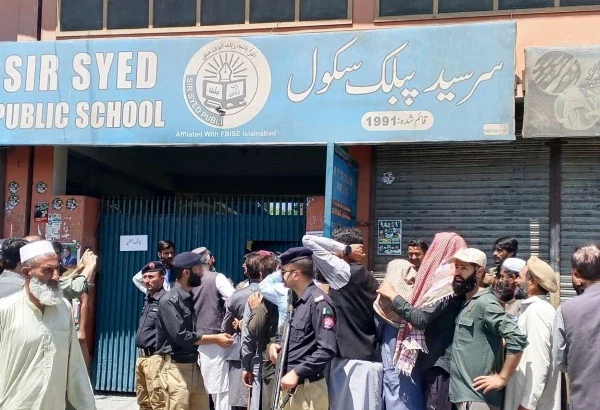
A large number of people turned out to cast their votes from the early hours of the day. Long queues were seen outside several polling stations before voting officially started. Men and women are participating actively in the election process, with female voters also arriving at polling stations in significant numbers.
The elections are being held for 24 general seats in the Gilgit-Baltistan Assembly. More than 400 candidates are competing for these seats, making it one of the most competitive elections in the region’s recent history.
According to election authorities, a total of 958,480 registered voters are eligible to cast their ballots. Security arrangements have been strengthened to ensure a peaceful voting process and maintain law and order throughout the region.
The Election Commission has established 1,391 polling stations across all districts of Gilgit-Baltistan. Out of these, 488 polling stations have been declared normal, 349 have been categorized as sensitive, while 551 have been placed in the highly sensitive category due to security concerns.
Overall, 403 candidates are taking part in the elections. Among them are 396 male candidates and eight female candidates. Political parties and independent candidates have launched extensive campaigns over the past weeks to gain voter support.
The Pakistan Peoples Party has fielded 23 candidates, while the Pakistan Muslim League-Nawaz is contesting with 22 candidates. The Istehkam-e-Pakistan Party has entered 15 candidates in the race. Pakistan Muslim League has nominated 11 candidates, while Jamiat Ulema-e-Islam-F has fielded nine candidates.
Majlis Wahdat-ul-Muslimeen is contesting with seven candidates. Jamaat-e-Islami and Muttahida Qaumi Movement have each fielded six candidates for the elections.
Independent candidates make up the largest group in the contest. A total of 266 independent candidates are contesting from various constituencies across Gilgit-Baltistan, highlighting strong local political participation.
Election officials have expressed hope for a high voter turnout. The results are expected to play a significant role in shaping the future political landscape of Gilgit-Baltistan and determining the composition of the next regional government.
We welcome your contributions! Submit your blogs, opinion pieces, press releases, news story pitches, and news features to [email protected] and [email protected]