Summary
- Musk believes SpaceX could generate nearly $1 trillion in annual revenue by 2030, a projection that significantly exceeds even the most optimistic estimates from major Wall Street firms.
- Responding to a post from financial analyst Jon Erlichman, Musk stated that he thinks SpaceX has the potential to achieve approximately $1 trillion in yearly revenue by the end of the decade.
- The company’s revenue increased from $14.02 billion in 2024 to $18.67 billion in 2025, demonstrating strong growth across its launch services, satellite operations, and other business segments.
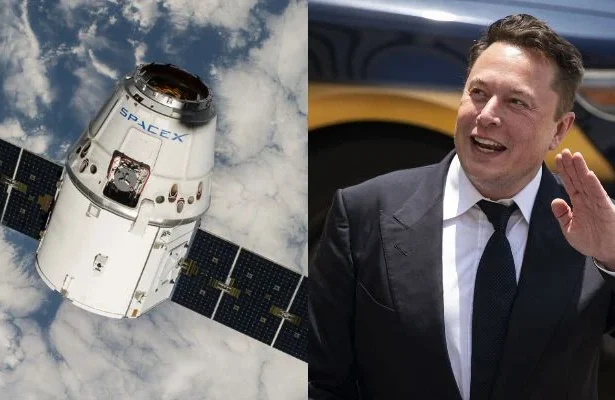
Just days after SpaceX’s landmark debut on the Nasdaq, Elon Musk has already set an extraordinarily ambitious target for the aerospace company’s future. Musk believes SpaceX could generate nearly $1 trillion in annual revenue by 2030, a projection that significantly exceeds even the most optimistic estimates from major Wall Street firms.
The prediction emerged during a discussion on X, the social media platform formerly known as Twitter. Responding to a post from financial analyst Jon Erlichman, Musk stated that he thinks SpaceX has the potential to achieve approximately $1 trillion in yearly revenue by the end of the decade. The remark came shortly after SpaceX’s highly anticipated public offering, which pushed the company’s valuation above $2 trillion. This milestone immediately placed SpaceX among the six most valuable publicly traded companies in the United States and further strengthened Musk’s position as one of the wealthiest individuals in history.
Despite Musk’s confidence, financial institutions have offered more conservative projections. Goldman Sachs expects SpaceX’s revenue to exceed $470 billion by 2030. Morgan Stanley’s forecast is even lower, placing the figure at roughly $330 billion. While both estimates reflect substantial growth, they remain far below Musk’s trillion-dollar vision.
SpaceX has experienced rapid expansion in recent years. The company’s revenue increased from $14.02 billion in 2024 to $18.67 billion in 2025, demonstrating strong growth across its launch services, satellite operations, and other business segments. However, the company’s profitability moved in the opposite direction during the same period. After recording a profit of $791 million in 2024, SpaceX reported a net loss of approximately $4.94 billion in 2025. The results highlight the significant costs associated with the company’s aggressive investments in new technologies, infrastructure, and long-term projects.
Even with its impressive growth trajectory, SpaceX’s current revenue remains considerably lower than that of some of the world’s largest technology companies. Industry giants such as Amazon and Broadcom continue to generate substantially higher annual revenues, illustrating the scale of growth SpaceX would need to achieve in order to reach Musk’s target.
The company’s successful IPO has been a major factor in its soaring valuation, but the path to a market capitalization exceeding $2 trillion was shaped by a series of strategic moves made by Musk over the past several years. One of the most notable was his acquisition of Twitter in 2022 for $44 billion. After purchasing the platform, Musk rebranded it as X and integrated it into his broader vision for artificial intelligence and digital services.
The platform later became closely linked to Musk’s AI venture, xAI, which developed the chatbot Grok. Eventually, xAI and X were combined, creating an entity valued at approximately $113 billion. Musk then pursued additional integration with SpaceX, further enhancing the perceived value of his business ecosystem. These transactions and mergers contributed significantly to the growth of the combined enterprise’s valuation, helping transform the original $44 billion Twitter acquisition into a network of businesses worth hundreds of billions of dollars and reinforcing investor confidence in Musk’s long-term ambitions.
We welcome your contributions! Submit your blogs, opinion pieces, press releases, news story pitches, and news features to [email protected] and [email protected]