Summary
- Governments must strengthen social protection, expand access to quality education, and support vulnerable families so that children are not forced to sacrifice their childhood for survival.
- The children of Pakistan are not asking for extraordinary privileges.
- If Pakistan wishes to build a stronger future, it must begin by listening to the voices of its children—and by ensuring that every child has not only the right to dream, but also the opportunity to live those dreams.
By Kinza Fatima
On 19 August 2021, seven-year-old Priya Kumari disappeared from a shrine in Sindh. Years later, her family is still waiting for answers. Her disappearance became more than a missing-person case; it became a painful reminder of how easily a child’s sense of safety can disappear. Every time another child is harmed, exploited, or neglected, Pakistan is reminded that protecting childhood remains an unfinished responsibility.
Every child deserves to wake up with a sense of safety. Childhood should be filled with learning, laughter, curiosity, and play—not fear, uncertainty, or loss. Yet for far too many children in Pakistan, these simple expectations remain fragile.
The disappearance of Priya Kumari in Sindh in 2021 remains one of the country’s most painful incident of how vulnerable children can be. Years have passed, but her family continues to wait for answers. Beyond the legal questions lies a deeper human one: what does it say about a society when a child can disappear and hope becomes the only thing left behind?
Safety is not threatened only by crime. It is also undermined by neglect. Tragic incidents involving collapsing school buildings and unsafe infrastructure have claimed the lives of children whose only purpose that day was to learn. A classroom should nurture dreams, not become a place of tragedy. Safe buildings, clean classrooms, access to drinking water, and basic emergency measures are not luxuries—they are the minimum conditions every child deserves.
Extreme heat presents another challenge. Across Pakistan, rising temperatures have turned many classrooms into difficult places for learning. Schools without fans, proper ventilation, or clean drinking water place children at risk of dehydration, exhaustion, and heat-related illness. Education cannot flourish where basic physical well-being is ignored.
A healthy childhood extends beyond the classroom. Children need parks, playgrounds, libraries, and public spaces where they can grow socially and emotionally. In many communities, these spaces are absent or unsafe. When children spend their lives confined indoors because the outside world feels dangerous, society loses more than recreation—it loses opportunities for confidence, creativity, and community.
We often repeat that children are the future of the nation. Yet such words have little meaning unless they are reflected in public policy and everyday behaviour. The measure of a society is not found in the promises it makes to children, but in the conditions in which it asks them to grow.
As a child myself, my dreams are not extraordinary. I want to wear my school uniform without fear, learn with my classmates, drink clean water, play in safe parks, and believe that tomorrow can be better than today. These are not unrealistic hopes; they are fundamental rights.
Children also deserve protection within their own homes. For many, however, home is not always a place of security. Physical punishment, verbal humiliation, and emotional neglect leave wounds that are often invisible but long-lasting. Violence against children, whether physical or psychological, cannot be accepted as discipline. Respect and care build stronger individuals than fear ever can.
Child labour remains another painful reality. Instead of carrying schoolbags, thousands of children carry bricks, tools, and heavy loads. Poverty pushes many families into impossible choices, but the burden should never fall on the child. Governments must strengthen social protection, expand access to quality education, and support vulnerable families so that children are not forced to sacrifice their childhood for survival. Ending child labour is not solely the responsibility of the state; it also requires the commitment of parents, employers, schools, and society as a whole.
Children also deserve dignity wherever they seek knowledge. Allegations of abuse in educational institutions, including some madrasas and schools, remind us that no place of learning should become a place of fear. Every institution entrusted with children carries a moral and legal responsibility to protect them.
When I see children my own age struggling with violence, poverty, exploitation, or neglect, I do not simply feel sympathy—I wonder why childhood is experienced so differently depending on where one is born or how much one’s family earns. No child chooses these circumstances, yet many live with their consequences every day.
The children of Pakistan are not asking for extraordinary privileges. We ask for what every child should receive: safety, education, dignity, health, and the freedom to dream. We need teachers who inspire rather than humiliate, communities that protect rather than ignore, and institutions that place the well-being of children above everything else.
Children are not a source of cheap labour, nor are they objects upon which adults can release their anger. We are learners, dreamers, citizens in the making, and the future of this country.
A safe childhood is not an act of charity. It is a constitutional, moral, and human obligation. If Pakistan wishes to build a stronger future, it must begin by listening to the voices of its children—and by ensuring that every child has not only the right to dream, but also the opportunity to live those dreams.
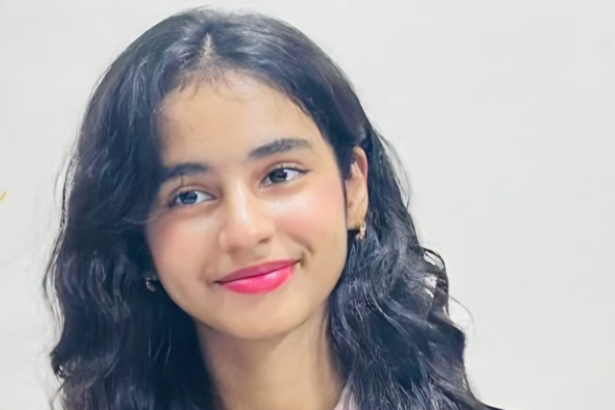
The writer is a children’s right Advocate and student of Tenth Grade.
We welcome your contributions! Submit your blogs, opinion pieces, press releases, news story pitches, and news features to opinion@minutemirror.com.pk and minutemirrormail@gmail.com