Summary
- ISLAMABAD: The federal government has moved to strengthen controls against possible misuse of the Export Facilitation Scheme (EFS), proposing uniform customs procedures, stricter verification of export performance and improved safeguards to protect government revenue while simplifying rules for exporters.
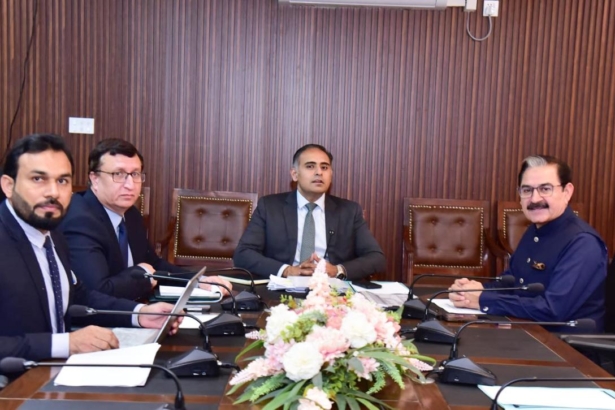
- The matter came under discussion during the ninth meeting of the Prime Minister’s Committee to Review the Export Facilitation Scheme, chaired by Minister of State for Finance and Railways Bilal Azhar Kiyani at the Ministry of Finance.
- The committee examined proposals aimed at making the export scheme easier for businesses while ensuring that government revenue is protected against possible misuse.
ISLAMABAD: The federal government has moved to strengthen controls against possible misuse of the Export Facilitation Scheme (EFS), proposing uniform customs procedures, stricter verification of export performance and improved safeguards to protect government revenue while simplifying rules for exporters.
The proposed changes have brought attention to differences in the way customs offices calculate value addition and the need to ensure that benefits provided under the scheme are used only for genuine export activities.
The matter came under discussion during the ninth meeting of the Prime Minister’s Committee to Review the Export Facilitation Scheme, chaired by Minister of State for Finance and Railways Bilal Azhar Kiyani at the Ministry of Finance.
Senior officials of the Federal Board of Revenue (FBR), Ministry of Commerce and representatives of major exporting industries attended the meeting.
The committee examined proposals aimed at making the export scheme easier for businesses while ensuring that government revenue is protected against possible misuse.
A major issue discussed during the meeting was the absence of a uniform method for calculating value addition across different Customs Collectorates.
Value addition means the increase in a product’s value through processing, manufacturing or other production activities.
At present, the use of different calculations across customs offices can create uncertainty for exporters about how their products and business activities are assessed.
The committee considered introducing a single value addition formula to replace the varying methods used by different Collectorates.
Officials discussed developing the formula using available data while ensuring that it remains practical for new businesses entering the export market.
Special consideration was also proposed for small and medium enterprises, which may face difficulties in meeting complicated customs requirements.
The meeting emphasized that exporters and relevant trade organizations should be consulted before the proposed formula is finalized.
Another important issue concerned the need to prevent misuse of benefits available under the Export Facilitation Scheme.
The committee reviewed measures to strengthen monitoring based on the level of risk associated with export activities.
Under the proposals, authorities would place greater emphasis on ensuring that benefits under the scheme remain connected to actual export performance.
The meeting also considered clearer procedures for checking samples and following up on possible compliance issues.
These procedures would define the responsibilities of the Regulatory Collector and the Collector at the exporting station.
The proposed arrangements are intended to make verification more consistent and improve accountability in the implementation of the scheme.
The committee also discussed simplifying security requirements while maintaining safeguards necessary to protect government revenue.
However, no specific case of fraud, corruption, illegal benefit or financial loss under the scheme was identified in the information released about the meeting.
The discussion focused on preventing potential misuse through stronger controls and clearer procedures.
Minister of State Bilal Azhar Kiyani emphasized that making the scheme simpler for businesses must not weaken government oversight or revenue protection.
He said the government remained committed to the Prime Minister’s vision of creating a business friendly environment, increasing exports and encouraging greater private sector participation.
The minister stressed that the scheme should be accessible and predictable for exporters while ensuring transparency and compliance with applicable rules.
He also called for uniform application of eligibility conditions and procedures so that businesses are treated consistently.
The committee reviewed proposals to simplify the categories under which exporters are registered and approved to use the scheme.
It also considered changes to the periods for which exporters receive authorization.
The proposed reforms are intended to make the system easier for both established exporters and new businesses seeking to enter international markets.
According to the meeting’s briefing, the changes would aim to reduce the cost of meeting regulatory requirements, encourage new investment and support greater local value addition.
The committee also emphasized the importance of maintaining communication with exporters to address practical problems affecting legitimate businesses.
Representatives of the textile and other export industries participated in discussions about the proposed amendments.
Among those attending were Musadiq Zulkarnain, Chairman and Chief Executive Officer of Interloop Limited, representatives of the All Pakistan Textile Mills Association, Pakistan Textile Exporters Association and Sialkot Chamber of Commerce and Industry.
Other prominent exporters and senior government officials were also present.
The meeting recognized that complicated rules and different procedures can create difficulties for businesses, particularly smaller companies attempting to expand their export operations.
At the same time, members emphasized that easier access to the scheme must be supported by effective monitoring to ensure compliance.
The committee discussed the importance of balancing both objectives rather than relaxing regulations without adequate safeguards.
It was decided that stakeholder briefing sessions would be arranged before implementation to explain the proposed changes and help exporters understand the new requirements.
The consultations will also provide an opportunity for businesses to raise concerns about the practical application of the amendments.
The committee did not announce a final approval date for the proposed reforms or provide an implementation timetable.
It also did not disclose estimated revenue savings, the number of exporters likely to benefit or any specific financial losses resulting from misuse of the existing scheme.
The government maintained that the proposed reforms were intended to improve transparency, reduce unnecessary compliance costs and strengthen export performance.
The ninth committee meeting concluded with a commitment to continue consultations with exporters, the FBR and other relevant institutions before finalizing the proposed amendments
We welcome your contributions! Submit your blogs, opinion pieces, press releases, news story pitches, and news features to opinion@minutemirror.com.pk and minutemirrormail@gmail.com