Summary
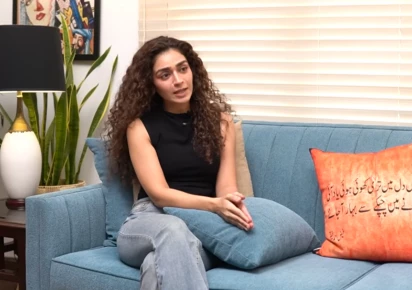
- Hajra Yamin is an actor who has made her boundaries unmistakably clear, and in a recent candid interview, she spoke with unusual directness about creative autonomy, the exhausting pace of the Pakistani drama industry, and the systemic accountability she believes men must accept for the safety and treatment of women.
- Her remarks took on a more urgent tone when she turned to violence against women and the responsibility she places firmly at the feet of men.
- She went further, saying that until there are no men left enabling violence against women, it is men who will bear the moral weight of what happens.
Hajra Yamin is an actor who has made her boundaries unmistakably clear, and in a recent candid interview, she spoke with unusual directness about creative autonomy, the exhausting pace of the Pakistani drama industry, and the systemic accountability she believes men must accept for the safety and treatment of women.
At the core of her creative philosophy is a refusal to repeat herself. Yamin described acting not as a mechanical task but as a total emotional investment, one that leaves her unwilling to revisit territory she has already explored. “Even a single emotion that I have put out on screen, I feel I can’t just redo it again,” she said. “The characterisation must always be completely different from anything I have done before.” It is a standard that demands more of herself than most, and she is unapologetic about it.
She also identified a structural problem within the industry that she believes compromises the quality of storytelling across the board. The relentless production pace, she argued, overworks talented people and makes it nearly impossible to maintain the level of craft that good television requires. “Our industry truly has great stars but people get overworked. That inevitably leads to the production of not-so-good shows, and matching the stakes becomes incredibly difficult under those conditions,” she said.
Among the things she takes most pride in is the fact that her career has never been defined by a pairing with a male co-star. In an industry where on-screen couples are often packaged together to guarantee ratings, Yamin has stood apart. “I take immense pride in the fact that my name isn’t joined to a male co-star just to be cast together in a drama again,” she said, describing that independence as something she has actively protected and continues to value.
On the question of female solidarity, Yamin spoke with evident warmth and purpose. She said she has always wanted women as her allies, and that the connection she has recently felt with her female audience has reinforced that desire. She also spoke about wanting to build a legacy that extends beyond her own career, saying she wants to work with more women and create something that the next generation of actresses can inherit and build on.
Her remarks took on a more urgent tone when she turned to violence against women and the responsibility she places firmly at the feet of men. She argued that the fight against female mistreatment begins at home, and that a strong, believing support system is the foundation of a woman’s safety. “Believe your child,” she urged, adding that silence in the face of abuse makes the bystander equally accountable.
She went further, saying that until there are no men left enabling violence against women, it is men who will bear the moral weight of what happens. And in a society where male voices carry more automatic credibility, she called on men with platforms to use them. “It is heartening to see at least some men who possess a platform finally speaking out against these acts,” she said, while making clear that such action is not optional but necessary.
For Yamin, the personal and the professional are inseparable. Her independence on screen, her refusal to be overworked, and her belief in sisterhood are all expressions of the same underlying conviction: that the women who come after her deserve a better landscape, and that she has a responsibility to help build it.