Summary
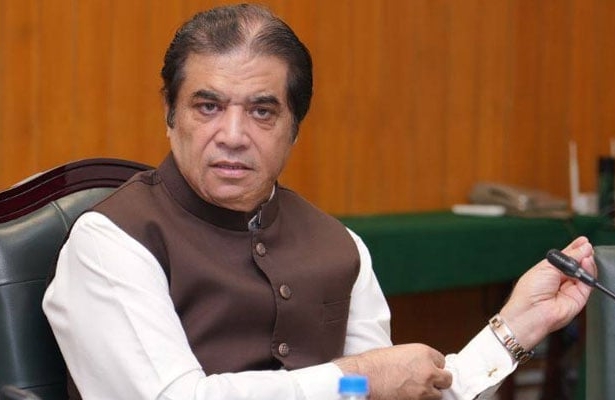
- ISLAMABAD: Federal Minister for Railways Hanif Abbasi has said that only two or three countries can be considered enemies of Pakistan, with India at the top of the list.
- He said Israel and Afghanistan are also among the countries that PakistanFederal Minister for Railways Hanif Abbasi has said that only two or three countries can be considered enemies of Pakistan, considers hostile.
- “Political opposition would not have been an issue,” Abbasi said, while arguing that the criticism directed at Fazlur Rehman went beyond ordinary political differences and became personal.
ISLAMABAD: Federal Minister for Railways Hanif Abbasi has said that only two or three countries can be considered enemies of Pakistan, with India at the top of the list. He said Israel and Afghanistan are also among the countries that PakistanFederal Minister for Railways Hanif Abbasi has said that only two or three countries can be considered enemies of Pakistan, considers hostile.
Speaking to journalists outside Parliament House, Abbasi said Pakistan does not regard all countries as enemies and stressed that the list is limited to a few states. His remarks came while discussing political and national issues with the media.
The federal minister also spoke about his views regarding Jamiat Ulema-e-Islam-Fazl (JUI-F) chief Maulana Fazlur Rehman, describing him as a respected political figure. Abbasi said he would advise Fazlur Rehman to avoid making decisions while angry, arguing that emotional reactions can sometimes lead to wrong choices.
Abbasi said that political differences were a normal part of democratic politics and that he was willing to accept opposition on political grounds. However, he drew a distinction between political disagreement and what he described as personal attacks.
The minister said he could tolerate political opposition but did not accept personal hostility. Referring to remarks previously made by Pakistan Tehreek-e-Insaf (PTI) founder Imran Khan about Maulana Fazlur Rehman, Abbasi said that some of the words used against the JUI-F leader had been deeply disturbing.
He said the language used against Fazlur Rehman was so harsh that it had left him shocked. According to Abbasi, political opponents could disagree with each other over policies, parties and political strategies, but personal criticism should not cross certain limits.
“Political opposition would not have been an issue,” Abbasi said, while arguing that the criticism directed at Fazlur Rehman went beyond ordinary political differences and became personal.
The minister’s comments reflect the continuing tensions and rivalries among Pakistan’s major political parties, where disagreements frequently extend beyond policy matters and involve criticism of individual political leaders.
Abbasi’s remarks also highlighted the importance of maintaining political restraint, particularly when disagreements become intense. His advice to Fazlur Rehman suggested that political leaders should avoid taking major decisions while angry or under emotional pressure.
The federal minister further indicated that political differences should be handled within the boundaries of democratic debate. While politicians may strongly oppose one another on ideological, policy or electoral matters, he suggested that personal attacks can deepen political divisions and make reconciliation more difficult.
His comments regarding Pakistan’s perceived hostile countries also came amid continuing discussions about the country’s regional and international relationships. India has historically remained a major source of tension between Pakistan and its eastern neighbour, while relations with Afghanistan have also faced challenges over security and border-related issues. Pakistan’s relationship with Israel remains particularly sensitive due to the Palestinian issue and Islamabad’s longstanding position on the conflict.
Abbasi’s statement therefore covered both domestic political differences and broader foreign-policy concerns. He emphasised that Pakistan has only a limited number of countries that it considers enemies, rather than viewing the wider international community through the same lens.
The minister’s comments are likely to draw attention because of his criticism of personal attacks in politics and his appeal for political leaders to exercise greater restraint. His remarks underline the distinction between legitimate political opposition and criticism that becomes personal, an issue that continues to shape political discourse in Pakistan.
We welcome your contributions! Submit your blogs, opinion pieces, press releases, news story pitches, and news features to opinion@minutemirror.com.pk and minutemirrormail@gmail.com