Summary
- Washington, D.C., temporarily ranked as the world’s most polluted major city after massive Independence Day fireworks celebrations filled the skies with smoke, causing air quality to deteriorate dramatically for several hours.
- The sudden spike in pollution prompted authorities to issue a Code Purple air quality alert for Washington, D.C., as well as parts of neighboring Virginia and Maryland.
- While such events remain a central part of national celebrations around the world, scientists continue to warn that fireworks release significant amounts of fine particles and chemicals that can temporarily degrade air quality and affect public health.
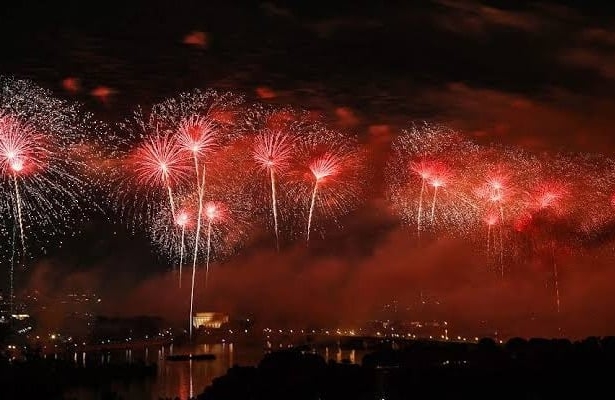
Washington, D.C., temporarily ranked as the world’s most polluted major city after massive Independence Day fireworks celebrations filled the skies with smoke, causing air quality to deteriorate dramatically for several hours.
According to IQAir, the Switzerland-based air quality monitoring company, pollution levels surged between 3:00 a.m. and 5:00 a.m. on Sunday as thick clouds of smoke from the large-scale fireworks display spread across the U.S. capital.
The fireworks show was organized as part of the White House’s Independence Day celebrations, with organizers aiming to set a world record by launching 850,000 fireworks shells in just 40 minutes. While the spectacular display captivated thousands of spectators, it also had a significant environmental impact.
Air quality monitors recorded concentrations of fine particulate matter (PM2.5) exceeding 200 micrograms per cubic meter in some areas of the city. By comparison, the U.S. Environmental Protection Agency (EPA) considers 35 micrograms per cubic meter over a 24-hour period to be the maximum safe level for public health.
The sudden spike in pollution prompted authorities to issue a Code Purple air quality alert for Washington, D.C., as well as parts of neighboring Virginia and Maryland. Such an alert indicates that air pollution has reached unhealthy levels for everyone, not just individuals with respiratory or heart conditions.
Environmental experts warned that the situation could have become even more severe had afternoon rainfall not helped disperse the lingering smoke. Without changing weather conditions, elevated pollution levels might have persisted for much longer, increasing potential health risks for residents.
Despite concerns raised by environmental groups, officials defended the event. Bridget Hirsch, a spokesperson for the EPA, described fireworks as a cherished American tradition and expressed hope that people enjoyed the spectacular display marking the nation’s 250th Independence celebrations.
The incident has reignited debate over the environmental cost of large-scale fireworks displays. While such events remain a central part of national celebrations around the world, scientists continue to warn that fireworks release significant amounts of fine particles and chemicals that can temporarily degrade air quality and affect public health.
As cities increasingly balance festive traditions with environmental responsibility, the Washington episode serves as a reminder that even short-lived celebrations can leave a measurable impact on the atmosphere—raising fresh questions about how future public events can become more sustainable without losing their iconic appeal.
We welcome your contributions! Submit your blogs, opinion pieces, press releases, news story pitches, and news features to opinion@minutemirror.com.pk and minutemirrormail@gmail.com