Summary
- TEHRAN: Iran has warned that any future military confrontation with the United States could quickly expand beyond the current battlefronts, potentially drawing energy and communications infrastructure across the Middle East into the conflict as tensions remain high over the strategically vital Strait of Hormuz.
- Iranian Deputy Foreign Minister Kazem Gharibabadi said Tehran had agreed with Oman on a temporary seven-mile-wide transit route through the strait.
- US Treasury Secretary Scott Bessent said Iran should not be allowed to threaten international commerce or use the Strait of Hormuz as leverage against the global economy.
TEHRAN: Iran has warned that any future military confrontation with the United States could quickly expand beyond the current battlefronts, potentially drawing energy and communications infrastructure across the Middle East into the conflict as tensions remain high over the strategically vital Strait of Hormuz.
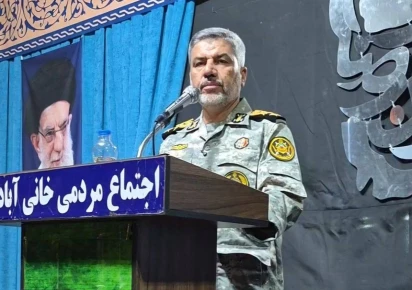
Brigadier General Mohammad Akraminia, spokesperson for the Iranian Army, said on Wednesday that Tehran had repeatedly warned its adversaries against what he described as “miscalculation”. Any fresh aggression, he said, could trigger an immediate Iranian response and widen the geographical scope of hostilities.
“A possible future war could encompass new arenas,” Akraminia told the semi-official Mehr News Agency.
He pointed to the Bab al-Mandab Strait and a US military base in Syria as examples of locations that became connected to the conflict despite initially being outside its main geographical theatre. He said Iran believed it had the capability to confront threats wherever they emerged.
The Iranian warning went beyond conventional military targets. Akraminia specifically mentioned energy facilities and communications links, including infrastructure running beneath the waters around Iran, the Arabian Peninsula and the Gulf of Oman.
He said that locations where Iran’s adversaries have interests could become targets if another conflict breaks out. The remarks underline concerns that a renewed confrontation could threaten infrastructure critical to global energy supplies and regional communications.
Missing Iranian pilots
Akraminia also called on Qatar to intensify efforts to determine the fate of three Iranian pilots who have been missing since an Iranian air operation against a US base in Qatar on March 2.
According to the Iranian military spokesman, two Sukhoi aircraft struck the US base before being shot down while returning from the operation. The remains of one of the four pilots, Majid Kazemi, were later recovered, while three others remain missing.
Qatar has rejected suggestions that it is holding the missing pilots. Doha has said its search-and-rescue teams recovered the remains of one pilot but found no evidence that the other three were captured.
The dispute over the pilots adds another sensitive issue to already strained relations between Tehran and Washington and their regional partners.
Hormuz remains at the centre
The warnings came as Iran and Oman continued discussions over the future of the Strait of Hormuz, one of the world’s most important energy routes.
Iranian Deputy Foreign Minister Kazem Gharibabadi said Tehran had agreed with Oman on a temporary seven-mile-wide transit route through the strait. However, he stressed that the arrangement should not be interpreted as a reopening of the waterway.
Gharibabadi said the proposed route would initially pass through Iranian territorial waters and that Tehran and Muscat would hold further technical negotiations over the next 30 to 60 days to determine a permanent arrangement.
“The Strait of Hormuz is closed, and we have complete control over it,” he said, according to the report.
Iran has also rejected claims that the waterway has been fully cleared of mines. Gharibabadi said Tehran would regard US mine-sweeping vessels entering the area as targets.
The issue has become a major source of international concern because disruption to the strait can affect global oil and gas shipments. Recent reports indicate that fears over Hormuz have already influenced energy markets, although signals of a temporary transit arrangement and the possibility of reduced US military action have eased some supply concerns.
Washington increases economic pressure
While Tehran has warned of military consequences, Washington has increasingly emphasised economic pressure.
US Treasury Secretary Scott Bessent said Iran should not be allowed to threaten international commerce or use the Strait of Hormuz as leverage against the global economy. He also stressed the importance of maintaining financial pressure on Iran and holding those supporting its economic lifelines accountable.
The US position reflects Washington’s broader strategy of using sanctions and economic restrictions to pressure Tehran while seeking to prevent disruption to international trade.
At the same time, US Secretary of State Marco Rubio has reportedly told allied foreign ministers that Washington does not currently expect to launch additional strikes against Iran and will instead focus on other forms of pressure.
Diplomatic efforts continue
Against the backdrop of military warnings and economic pressure, regional governments are pushing for diplomacy.
Egyptian Foreign Minister Badr Abdelatty discussed the situation with US Special Envoy to the Middle East Steve Witkoff, stressing the importance of implementing the US-Iran memorandum of understanding and reducing tensions.
Cairo also called for greater international efforts to prevent the conflict from spreading and urged the parties to prioritise political and diplomatic solutions. Freedom of navigation, particularly along international waterways, was another major concern raised by Egypt.
Iran and the United States previously reached a memorandum through mediation efforts involving Qatar and Pakistan, but Tehran has accused Washington of failing to meet its commitments under the arrangement. Iran has said any reopening of the Strait of Hormuz would require an end to the war, the lifting of the blockade and progress on the Yemen issue.
The competing positions leave the region facing a delicate balance: Washington is tightening economic pressure while Tehran continues to signal that military escalation could have consequences far beyond Iran’s borders.
With Hormuz still central to the dispute, any further deterioration could affect not only the Gulf but also global energy markets, shipping and critical communications infrastructure.
We welcome your contributions! Submit your blogs, opinion pieces, press releases, news story pitches, and news features to opinion@minutemirror.com.pk and minutemirrormail@gmail.com