Summary
- After years of pushing the United States to confront Iran, Israeli Prime Minister Benjamin Netanyahu saw Washington join Israel in military action against Tehran.
- Citrinowicz said Israel now faces a difficult choice: accept a new nuclear agreement that could strengthen Iran economically, or continue military pressure and risk pushing Tehran toward developing a nuclear weapon.
- Israel has often referred to this approach as “mowing the grass.” A foreign diplomat based in Israel told AFP that Netanyahu may not view the conflict as a failure, arguing that the United States had been drawn directly into confrontation with Iran while Israel had, for now, stepped back.
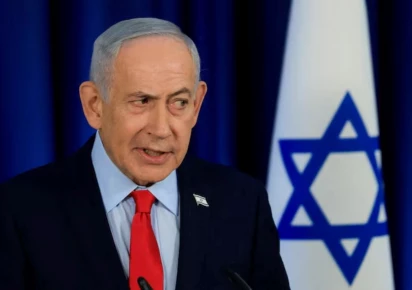
After years of pushing the United States to confront Iran, Israeli Prime Minister Benjamin Netanyahu saw Washington join Israel in military action against Tehran. However, after six months of inconclusive conflict, Israel could now face a more difficult strategic situation than before the war.
Iran has survived the confrontation and appears increasingly confident. Analysts say Israel achieved significant military successes but failed to translate them into a lasting strategic advantage.
A major factor behind the uncertainty has been US President Donald Trump’s shifting policy. Trump joined Israel in launching the conflict in late February but called for a ceasefire in April and backed renewed negotiations with Iran amid growing public opposition and rising oil prices.
“This is a colossal failure of Israeli strategy regarding Iran,” said Danny Citrinowicz, a former senior Israeli intelligence analyst on Iran who now works at the Institute for National Security Studies in Tel Aviv. He acknowledged Israel’s operational gains but said the country had failed strategically.
Israel killed Iranian Supreme Leader Ayatollah Ali Khamenei on the first day of the conflict. Khamenei had suppressed domestic dissent and supported groups hostile to Israel, including Hamas, which carried out the October 7, 2023 attacks.
However, his removal could create a new problem for Israel. Khamenei was also viewed as cautious about pursuing a nuclear weapon. Analysts warn that Iran could now reconsider that position if it believes its conventional military deterrents have weakened.
Trump has recently threatened further economic pressure and occasionally ordered new strikes against Iran, while also supporting a possible agreement that could provide Tehran with sanctions relief. Netanyahu strongly opposed the 2015 nuclear agreement negotiated under former US President Barack Obama.
Citrinowicz said Israel now faces a difficult choice: accept a new nuclear agreement that could strengthen Iran economically, or continue military pressure and risk pushing Tehran toward developing a nuclear weapon. “Israel is trying to do both but it’s not going to work,” he said.
Degrading Iran or seeking regime change
A June survey by the Hebrew University of Jerusalem and the Agam Institute found that 92% of Israelis believed Iran had either won or gained from the conflict. The findings could create additional political pressure on Netanyahu ahead of the October 27 elections.
Netanyahu previously said he wanted to “create conditions for regime change,” although he stopped short of making the overthrow of Iran’s government an official war objective.
Some analysts believe Netanyahu may instead be following an Israeli strategy used in Gaza, Lebanon and Syria: inflicting extensive damage on an adversary and maintaining the ability to launch future attacks when necessary. Israel has often referred to this approach as “mowing the grass.”
A foreign diplomat based in Israel told AFP that Netanyahu may not view the conflict as a failure, arguing that the United States had been drawn directly into confrontation with Iran while Israel had, for now, stepped back.
Iranian counterattacks killed 25 people in Israel and four in the occupied West Bank. In the later stages of the conflict, however, Tehran increasingly focused its attacks on Gulf Arab countries hosting US military bases.
Alex Grinberg, a senior Iran-focused fellow at the Turan Research Centre, said the conflict had dealt a serious blow to Iran by destroying parts of its nuclear infrastructure, eliminating key personnel and worsening its economic situation.
He argued that Israel had achieved its immediate objective of reducing Iran’s strategic ability to threaten Israel, but questioned whether Washington and Tehran could reach an agreement that would serve Israel’s long-term interests.
We welcome your contributions! Submit your blogs, opinion pieces, press releases, news story pitches, and news features to opinion@minutemirror.com.pk and minutemirrormail@gmail.com