Summary
- Gantz warned that Israel may now face prolonged diplomatic, military, and legal struggles as a result of the agreement.
- National Security Minister Itamar Ben-Gvir rejected the notion that the agreement would be binding on Israel.
- While expressing appreciation for the United States and former President Donald Trump, Ben-Gvir insisted that Israel was not a party to the agreement and therefore was under no obligation to follow its terms.
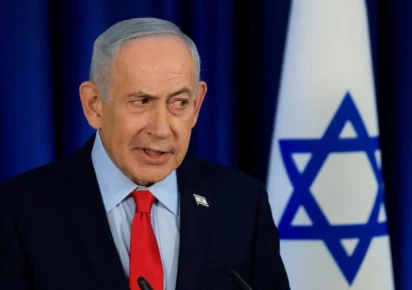
Israeli Prime Minister Benjamin Netanyahu faced strong criticism on Monday from both opposition leaders and members of his own political camp after the announcement of a US-Iran agreement aimed at ending the ongoing conflict. Critics described the deal as a major setback for Israel and accused Netanyahu of failing to protect the country’s strategic interests.
Yair Golan, leader of Israel’s Democrats Party, condemned the agreement, arguing that it was reached without Israel’s involvement. He claimed that Israelis had awakened to a situation in which a crucial decision affecting their security had been negotiated over their heads. According to Golan, the agreement represents the culmination of years of failed policies under Netanyahu’s leadership.
Golan further accused Netanyahu of cultivating an image as a strong security leader while actually weakening Israel’s strategic position. He argued that the prime minister’s promises of achieving “total victory” had ended with Israel’s adversaries becoming stronger, while the country’s deterrence capabilities had been undermined. Golan stressed that replacing Netanyahu was not merely a political objective but a necessary step to safeguard Israel’s future security.
Earlier in the day, Pakistani Prime Minister Shehbaz Sharif announced that the United States and Iran had successfully reached an agreement following intensive diplomatic negotiations. Both Washington and Tehran declared an immediate and permanent cessation of military operations across multiple fronts, including Lebanon.
Former Israeli Defence Minister Benny Gantz, who heads the Blue and White party, also expressed concern about the emerging deal. He described it as a strategic failure that could create serious challenges for Israel in the years ahead. Gantz warned that Israel may now face prolonged diplomatic, military, and legal struggles as a result of the agreement. He emphasized that Israel should not accept any arrangement that limits its freedom to act militarily in Lebanon or requires withdrawals that could threaten communities in northern Israel.
National Security Minister Itamar Ben-Gvir rejected the notion that the agreement would be binding on Israel. In a statement posted on social media, he stressed that Israel remains a sovereign and independent nation capable of making its own security decisions. While expressing appreciation for the United States and former President Donald Trump, Ben-Gvir insisted that Israel was not a party to the agreement and therefore was under no obligation to follow its terms. He maintained that Israel should continue pursuing the dismantling of Hezbollah and should not withdraw from territories secured by its military forces.
Finance Minister Bezalel Smotrich also criticized the accord, calling it harmful both to Israel and to the broader free world. Although he acknowledged that recent military operations had significantly weakened Iran, he argued that those gains should not be squandered. Smotrich stated that Israel must continue working, through various means, to prevent Iran from acquiring nuclear weapons and to challenge the Iranian regime.
Regional tensions have remained high since late February, when coordinated US and Israeli airstrikes targeted Iran, resulting in more than 3,000 deaths. Iran responded with missile and drone attacks against Israel and several Gulf states, while also disrupting shipping routes through the strategically important Strait of Hormuz.
A temporary ceasefire was brokered on April 8 through Pakistani mediation, providing a pause in hostilities. This eventually paved the way for a broader framework agreement between Washington and Tehran. The final accord is expected to be formally signed in Switzerland on July 19, marking a significant diplomatic milestone in efforts to end the conflict.
We welcome your contributions! Submit your blogs, opinion pieces, press releases, news story pitches, and news features to [email protected] and [email protected]