Summary
- For Pakistan, however, Jiang Zemin was more than a distant Chinese leader.
- It would therefore be fair to describe Jiang Zemin as a leader who helped strengthen the modern foundations of China-Pakistan friendship.
- For China, Jiang will be remembered as a major reform-era leader.
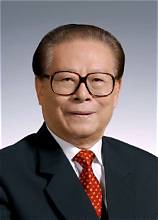
August 17, 2026 marked the 100th birth anniversary of Jiang Zemin, one of the most consequential leaders of modern China. A grand commemorative gathering at the Great Hall of the People in Beijing, presided over by President Xi Jinping, reflected the enduring importance of Jiang’s political and economic legacy.
Jiang Zemin’s life was remarkable because he was, at his core, an engineer who later became a statesman. Born in Yangzhou, Jiangsu Province, on August 17, 1926, he studied electrical engineering at Shanghai Jiao Tong University and graduated in 1947. His technical training shaped a practical approach to leadership: understand the problem, assess the available resources and build a solution capable of lasting.
His rise coincided with one of the most turbulent periods in modern history. After serving as mayor of Shanghai and later as secretary of the CPC Shanghai Municipal Committee, Jiang played an important role in the city’s reform and modernization. He supported the transformation of Pudong into a major international and modern urban district, helping establish the foundations for Shanghai’s emergence as a global economic center.
When Jiang assumed China’s top leadership in 1989, the international environment was changing rapidly. The political transformation of Eastern Europe, the collapse of the Soviet Union and major domestic challenges created enormous uncertainty. Yet China maintained political stability and continued its programme of reform and opening up.
One of the defining features of the Jiang era was the consolidation of the socialist market economy, following the strategic direction established by Deng Xiaoping and formally advanced after Deng’s southern tour in 1992. Jiang helped translate this vision into institutional and economic transformation. The result was a period in which China accelerated market-oriented reforms, expanded its engagement with the global economy and strengthened the foundations for the extraordinary growth that followed.
China’s accession to the World Trade Organization in 2001 was among the most significant milestones of this period. It opened a new chapter in China’s integration with international trade and investment and contributed to the rapid expansion of Chinese exports and global economic engagement. Jiang’s leadership was also associated with deeper regional cooperation, including the establishment of the Shanghai Cooperation Organisation in 2001.
For Pakistan, however, Jiang Zemin was more than a distant Chinese leader. His connection with Pakistan began long before he entered China’s highest office. In 1976, as a professional engineer and leader of a Chinese technical delegation, he spent time at Taxila and was involved in important technical and administrative decisions connected with the commissioning of the Foundry and Forge Works of the Heavy Mechanical Complex. This cooperation formed part of China’s broader contribution to Pakistan’s industrial and engineering capacity.
The story of Jiang and Taxila carries special significance. It represents a relationship built not only through diplomatic statements but also through factories, machines, engineers and skilled workers. The Heavy Mechanical Complex became an important symbol of Pakistan-China industrial cooperation, and Jiang’s personal association with it gave Pakistan a unique connection with a man who would later lead the world’s most populous country.
During his state visit to Pakistan in 1996, Jiang reportedly maintained contact with former Pakistani colleagues from his earlier days at Taxila, demonstrating that he had not forgotten the professional relationships and human connections formed decades earlier.
It would therefore be fair to describe Jiang Zemin as a leader who helped strengthen the modern foundations of China-Pakistan friendship. He was not the founder of the relationship, whose roots go back to earlier generations of leaders, but he was a major bridge-builder who gave that friendship a distinctive personal and industrial dimension.
At 100, Jiang Zemin’s legacy remains substantial. He was bold during uncertainty, pragmatic during transition and confident in China’s capacity to reform without abandoning its strategic direction. He understood Deng Xiaoping’s vision and helped carry the reform and opening-up process into a new era.
For China, Jiang will be remembered as a major reform-era leader. For Pakistan, he will also be remembered as an engineer who once worked at Taxila, a statesman who valued friendship, and a leader whose life connected the development journeys of two nations. His legacy is not confined to history; it remains visible in the enduring strength of China-Pakistan cooperation.
Author:
Prof. Engr. Zamir Ahmed Awan,
Sinologist – Diplomat – Advisor – Consultant,
Founding Chair, Global Silk Route research Alliance.
We welcome your contributions! Submit your blogs, opinion pieces, press releases, news story pitches, and news features to opinion@minutemirror.com.pk and minutemirrormail@gmail.com