
Summary
- KARACHI: Students of Jinnah Sindh Medical University (JSMU) have developed a medical history-taking handbook in seven Pakistani languages to help doctors communicate more effectively with patients and reduce language barriers during medical consultations.
- The handbook is designed to help medical students and young doctors ask relevant questions, understand patients’ symptoms and obtain accurate medical histories in their preferred languages.
- He said the initiative was intended to eliminate language barriers in medical environments, adding that patients could explain their pain more effectively when allowed to communicate in their own languages.
KARACHI: Students of Jinnah Sindh Medical University (JSMU) have developed a medical history-taking handbook in seven Pakistani languages to help doctors communicate more effectively with patients and reduce language barriers during medical consultations.
The initiative aims to improve communication between healthcare professionals and patients in a country where linguistic diversity often creates challenges in hospitals, particularly when patients struggle to explain their symptoms in a language understood by medical staff.
Prepared under the Internal Medicine Interest Group of Sindh Medical College, the handbook was developed under the supervision of Principal Sindh Medical College Professor Dr Ambreen Usmani and Associate Professor of Pathology Dr Sadaf Razaq.
The resource covers seven languages commonly encountered in hospital wards and outpatient departments: English, Urdu, Sindhi, Pashto, Punjabi, Balochi and Saraiki.
The handbook is designed to help medical students and young doctors ask relevant questions, understand patients’ symptoms and obtain accurate medical histories in their preferred languages. It is intended to make consultations more effective, particularly in situations where patients are unable to communicate comfortably in English or Urdu.
The project was spearheaded by Abdul Tawwab Ishaq, a final-year MBBS student from Sri Lanka and former president of the Internal Medicine Interest Group. He played a key role in compiling the handbook as part of efforts to address communication difficulties in clinical settings.
The initiative reflects the importance of understanding a patient’s medical history when making diagnostic decisions. Doctors generally rely on patients to describe their symptoms, previous illnesses, medications and other relevant information. When communication is difficult, important details may be overlooked, potentially affecting the accuracy of a diagnosis.
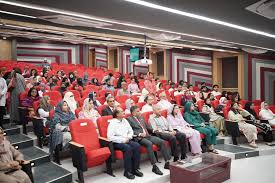
Speaking at the handbook’s launch ceremony, JSMU Vice Chancellor Professor Dr Amjad Siraj Memon emphasised the need to make communication in healthcare clearer and more patient-friendly.
He said the initiative was intended to eliminate language barriers in medical environments, adding that patients could explain their pain more effectively when allowed to communicate in their own languages. Better communication, he noted, could contribute to more accurate diagnoses.
The launch ceremony was also attended by Sri Lankan Consul General in Karachi Sanjeewa Pattiwila, who praised Ishaq’s contribution and highlighted the importance of knowledge and service to humanity beyond national boundaries.
Dr Sahar Abbasi, director of the College of Physicians and Surgeons Pakistan (CPSP), also attended the event.
Pakistan’s linguistic diversity presents particular challenges for healthcare providers. Although medical education is primarily conducted in English, many patients, particularly those from rural communities, are more comfortable speaking their regional languages.
In parts of Sindh, Balochistan, southern Punjab and Khyber Pakhtunkhwa, patients may have difficulty explaining their medical conditions in English or Urdu. This can complicate consultations and make it harder for healthcare professionals to obtain complete information.
By providing commonly used medical questions and history-taking guidance in seven languages, the handbook seeks to help bridge this communication gap. It may also serve as a practical learning resource for medical students preparing to interact with patients from different linguistic backgrounds.
The initiative highlights how relatively simple educational tools can support more inclusive healthcare practices and encourage greater understanding between doctors and patients.
According to the university, the handbook is available for free download through the JSMU website, allowing medical students and healthcare professionals to access the resource without charge.
The project represents an effort to make clinical communication more accessible and patient-centred, recognising that understanding a patient’s words is an essential part of providing appropriate medical care.
We welcome your contributions! Submit your blogs, opinion pieces, press releases, news story pitches, and news features to opinion@minutemirror.com.pk and minutemirrormail@gmail.com