


Summary
- Although cultivated meat offers potential environmental and ethical advantages, its commercial development still depends on overcoming scientific, technological, economic and food safety challenges.
- Cultivated meat represents a promising advancement in food biotechnology, offering potential benefits for animal welfare, alternative protein production and environmental sustainability.
- The technological, ethical and food safety dimensions of cultivated meat demonstrate the multidisciplinary nature of its development.
By Kiran Kamran and Sadia Sabir
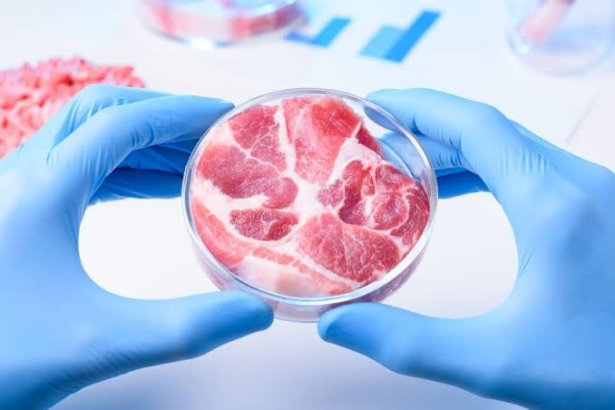
Cultivated meat technology involves several biotechnological processes, including animal cell isolation, cell proliferation, tissue differentiation, nutrient supply and bioreactor cultivation. These processes aim to produce edible muscle and fat tissue that resembles conventional meat in its nutritional and structural characteristics. Although cultivated meat offers potential environmental and ethical advantages, its commercial development still depends on overcoming scientific, technological, economic and food safety challenges.
Cultivated meat should not be considered merely a technological replacement for conventional meat. Instead, it provides an opportunity to reconsider the ethical, philosophical and social relationship between humans, animals, food and the environment. Therefore, cultivated meat represents both a scientific innovation and a broader transformation in the understanding of sustainable food consumption.
The production of cultivated meat begins with the collection of animal cells from a suitable tissue sample. These cells are isolated and transferred into a controlled culture environment where they receive the nutrients and growth conditions required for multiplication. Muscle stem cells, satellite cells and other progenitor cells are particularly important because of their ability to multiply and develop into muscle tissues.
The development of suitable cell lines is one of the fundamental requirements for successful cultivated meat production. Efficient cell lines must demonstrate high proliferation capacity, genetic stability and the ability to differentiate into specific cell types. In addition to muscle cells, fat cells and supporting cell types are important for developing products with desirable texture, nutritional composition and sensory properties.
Culture media represent another essential component of the production process. These media supply cells with amino acids, glucose, vitamins, minerals, salts and growth factors required for cellular metabolism and development. Traditionally, some animal cell culture systems have relied on fetal bovine serum. However, its use raises ethical, economic and consistency-related concerns. Consequently, research is increasingly focused on developing serum-free and chemically defined culture media that can support efficient cell growth while reducing production costs.
Microcarriers and scaffolds also play an important role in cultivated meat manufacturing. Microcarriers provide surfaces for cell attachment and multiplication in suspension-based bioreactor systems. Scaffolds provide structural support and help organise cells into three-dimensional tissue structures. Their properties, including biocompatibility, mechanical strength and food safety, are important considerations in developing meat-like products.
Bioreactors are essential for the large-scale cultivation of animal cells. They provide controlled environments in which important parameters such as temperature, pH, dissolved oxygen, nutrient availability and agitation can be regulated. Maintaining suitable conditions is necessary for achieving consistent cellular growth and preventing production failures.
The optimisation of bioprocesses, scale-up strategies and downstream processing are important for the commercial development of cultivated meat. Following cell cultivation, harvesting and processing operations are required to recover cellular biomass and transform it into finished food products.
The environmental advantages of cultivated meat, however, should not be considered automatic. Energy requirements, nutrient production, bioreactor operation and industrial processing can significantly influence its environmental footprint. Consequently, life-cycle assessments are necessary to evaluate its actual environmental performance in comparison with conventional meat production.
Cultivated meat also presents a broader ethical perspective by encouraging society to reconsider the relationship between consumers, living organisms and the environment. From this perspective, cultivated meat encourages people to think about responsible food consumption and the ethical principles associated with food production.
Aseptic processing, sterilisation and regular microbiological testing are essential. Repeated cell multiplication may cause genetic or epigenetic changes that affect cell growth, differentiation and product consistency. Ensuring the safety and consistency of cultivated meat requires effective quality-control systems and an appropriate regulatory framework.
Advanced technologies such as genomics, proteomics and metabolomics can help evaluate cellular characteristics and product composition. Biosensors may also support real-time monitoring of critical production parameters and potential contamination. Regulatory authorities must assess ingredient safety, manufacturing practices, nutritional composition and potential health risks before granting commercial approval.
Commercialising cultivated meat requires overcoming economic, technological and social challenges. High culture media costs, specialised equipment, infrastructure and downstream processing can increase production expenses. Reducing manufacturing costs through optimised cell lines, affordable culture media and efficient bioprocessing is essential for industrial-scale production.
Consumer acceptance is equally important and depends on perceptions of safety, taste, nutritional value, naturalness and ethical considerations. Cultural values and ethical perspectives influence how people understand emerging food technologies. Developing genetically stable and high-performance animal cell lines, formulating affordable serum-free culture media, and improving nutritional composition, texture and flavour are also important areas of development.
Cultivated meat represents a promising advancement in food biotechnology, offering potential benefits for animal welfare, alternative protein production and environmental sustainability. However, challenges related to cell-line development, culture media, bioreactor scale-up, food safety, production costs and regulatory approval must be addressed. The technological, ethical and food safety dimensions of cultivated meat demonstrate the multidisciplinary nature of its development.
Remove all in-text referencesPolish the title for clarity
We welcome your contributions! Submit your blogs, opinion pieces, press releases, news story pitches, and news features to opinion@minutemirror.com.pk and minutemirrormail@gmail.com







