Summary
- Pakistan, Saudi Arabia and Türkiye have reaffirmed their commitment to collective defence under the Makkah Joint Defence Agreement, pledging to strengthen security cooperation and support the Kingdom against continued Houthi attacks.
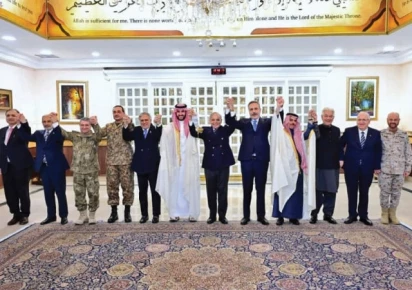
- The three countries made the commitment during the second meeting of the Strategic Political and Defence Committee (S-PDC) of the Makkah Alliance for Defence, held in Islamabad on Friday.
- Pakistan, Saudi Arabia and Türkiye signed the Makkah Joint Defence Agreement on August 7 during a meeting involving Prime Minister Shehbaz Sharif, Saudi Crown Prince Mohammed bin Salman and Turkish President Recep Tayyip Erdogan.
Pakistan, Saudi Arabia and Türkiye have reaffirmed their commitment to collective defence under the Makkah Joint Defence Agreement, pledging to strengthen security cooperation and support the Kingdom against continued Houthi attacks.
The three countries made the commitment during the second meeting of the Strategic Political and Defence Committee (S-PDC) of the Makkah Alliance for Defence, held in Islamabad on Friday. The meeting focused on strengthening military cooperation, improving institutional coordination and advancing practical measures to implement the agreement.
In a joint statement, the three sides strongly condemned what they described as persistent and heinous attacks by Houthi forces against Saudi Arabia, particularly those targeting civilians and civilian infrastructure. Pakistan and Türkiye also reiterated their support for safeguarding the Kingdom’s security, sovereignty and territorial integrity under the collective defence framework.
The meeting brought together senior political and military officials from all three countries. Pakistan was represented by Deputy Prime Minister and Foreign Minister Ishaq Dar, Defence Minister Khawaja Asif and Chief of Defence Forces and Chief of Army Staff Field Marshal Asim Munir.
The Saudi delegation was led by Defence Minister Prince Khalid bin Salman bin Abdulaziz Al Saud. Foreign Minister Prince Faisal bin Farhan Al-Saud and Chief of the General Staff General Fayyadh bin Hamed Al-Ruwaili were also part of the delegation.
Türkiye’s delegation included Foreign Minister Hakan Fidan, National Defence Minister Yasar Güler and Chief of the General Staff General Selçuk Bayraktaroglu.
The participants reviewed the changing regional security situation and discussed ways to strengthen collective defence arrangements. They also assessed progress on decisions taken during the alliance’s inaugural meeting in Istanbul on August 31 and an emergency meeting in Riyadh on October 5.
A key development discussed at the meeting was progress towards establishing and operationalising the alliance’s secretariat in Saudi Arabia. The three countries expressed satisfaction with the progress and described the proposed secretariat as an important mechanism for improving coordination and implementing joint decisions.
The partners also agreed to expand cooperation in defence production, technological development, military training and capacity-building. These initiatives are aimed at strengthening the capabilities of their armed forces and improving cooperation between them.
Beyond military collaboration, the three countries stressed the importance of political consultations on regional and international developments. They agreed to support efforts to reduce tensions and promote peaceful solutions to disputes through dialogue and diplomacy.
No new military deployment or joint operational command was announced during the meeting. Instead, the discussions focused on developing the institutional structure needed to translate the alliance’s collective defence commitments into practical arrangements.
Pakistan, Saudi Arabia and Türkiye signed the Makkah Joint Defence Agreement on August 7 during a meeting involving Prime Minister Shehbaz Sharif, Saudi Crown Prince Mohammed bin Salman and Turkish President Recep Tayyip Erdogan.
The agreement provides a framework for closer military cooperation and establishes the principle that an armed attack against any one of the three members would be treated as an attack against all.
Since its signing, the countries have held several consultations to develop mechanisms for implementing the agreement and strengthening their strategic partnership.
The latest meeting represents another step towards formalising the alliance’s structure and expanding cooperation among the three regional powers. Its effectiveness will depend on the implementation of agreed measures and the development of coordinated responses to shared security challenges.
The three countries reiterated that their partnership was rooted in longstanding friendship and mutual solidarity, with a shared commitment to promoting regional and international peace, security and stability.
We welcome your contributions! Submit your blogs, opinion pieces, press releases, news story pitches, and news features to opinion@minutemirror.com.pk and minutemirrormail@gmail.com