Summary
- Once the government secured a two-thirds majority, bolstered by the controversial disqualification of PTI members, Fazl found himself isolated.
- The JUI-F chief has repeatedly claimed at public rallies that the establishment manipulated the 2024 elections to weaken his party, leaving it with only a limited presence in Parliament and out of power in Khyber Pakhtunkhwa and Balochistan.
- While the establishment holds the power, Fazl holds the keys to an expansive religious network.
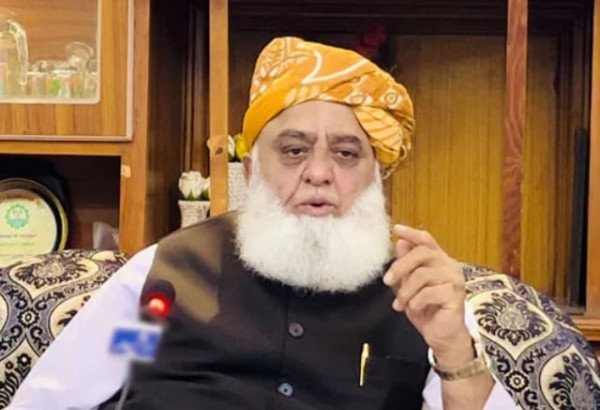
Maulana Fazlur Rehman has long been at odds with the current civilian-military setup. Historically an ideal pragmatist who negotiated his way into almost every ruling coalition, the February 2024 elections shattered his playbook.
The JUI-F was swept aside by the PTI wave. Believing he was deprived of his “due share” by the powers that control politics, Fazl felt deeply betrayed.
Post-election, he warmed up to his old foe, PTI, using the alliance to chide the establishment. The PML-N and PPP tried desperately to calm him. His residences in D.I. Khan, Peshawar, and Islamabad became political hubs, with bigwigs like Bilawal Bhutto and Shehbaz Sharif visiting to court his favor. This leverage lasted until the passage of the 26th Amendment. Once the government secured a two-thirds majority, bolstered by the controversial disqualification of PTI members, Fazl found himself isolated.
Widely regarded as one of Pakistan’s smartest political minds, Fazl knows how to stay relevant. However, his highly controversial remarks during a recent event in Phool Nagar, Kasur, triggered massive social media backlash, with government ministers demanding a public apology.
At the heart of his anger is a deep sense of being sidelined. The JUI-F chief has repeatedly claimed at public rallies that the establishment manipulated the 2024 elections to weaken his party, leaving it with only a limited presence in Parliament and out of power in Khyber Pakhtunkhwa and Balochistan. While many independent analysts believe the JUI-F’s poor performance was largely due to “PTI-factor”, the Maulana appears to see the issue differently. His argument is simple: if the PML-N, PPP and MQM received their “share” in the outcome of the national polls, why was the JUI-F left out?
The final straw came with the 27th Amendment in November 2025. After utilizing the Maulana’s mediation to pass the 26th Amendment, the government bypassed him entirely for the 27th.
Furthermore, the Punjab government’s move to fix monthly stipends for clerics angered him, he saw it as a direct intrusion into his religious domain.
For a lifelong kingmaker, finding himself isolated has triggered intense frustration. Yet, his explosive rhetoric is highly calculated. With PTI heavily suppressed and civilian leaders seen as submissive, a massive vacuum has emerged for anti-establishment sentiment across the country. Fazl is seeking to regain his influence in the Pashtun belt, saying that no lasting political settlement in these border regions is possible without his party.
While the establishment holds the power, Fazl holds the keys to an expansive religious network. As a formidable Deobandi leader, his influence stretches across South Asia. Through the Wafaqul Madaris al-Arabia, the largest federation of Islamic seminaries, his reach extends into Afghanistan as well. Mufti Taqi Usmani, the head of Wafaqul Madaris, whose uncontested rise was facilitated by Fazl, is now in sync with the JUI-F chief. Usmani recently took sharp public swipes at the establishment and government, condemning the lifelong immunity granted to the President and services chiefs, while firmly opposing state policies on cryptocurrency.
Ultimately, Fazl’s calculated anger is a high-stakes gamble. Isolated from formal power, he is relying on his street power, clerical alliances, and regional Deobandi network to force the establishment back to the negotiating table.
We welcome your contributions! Submit your blogs, opinion pieces, press releases, news story pitches, and news features to opinion@minutemirror.com.pk and minutemirrormail@gmail.com