Summary
- The committee, chaired by MNA Pullain Baloch, directed the Ministry of Information to present a clear action plan within 15 days to ensure payment of outstanding salaries and protect media workers from unfair treatment.
- The committee was also informed that details of outstanding salaries had been requested from the representative organisation of media workers on the committee’s previous directions, but the required information had not yet been received.
- Expressing dissatisfaction over the situation, the committee demanded that the ministry coordinate with media organisations and workers’ representatives, collect complete details of unpaid salaries and submit a practical plan within 15 days.
Islamabad: Media owners are receiving government payments but journalists and other media workers are still facing unpaid salaries, sudden layoffs and dismissal without prior notice, raising serious questions about the use of public funds and the treatment of employees in the country’s media industry.
The Standing Committee on Information and Broadcasting has expressed grave concern over the growing salary crisis in media houses and questioned why media organisations are failing to pay their employees despite the government’s regular release of payments against their outstanding dues.
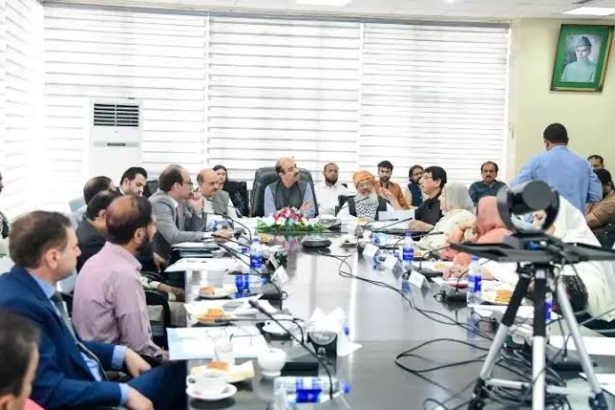
The committee, chaired by MNA Pullain Baloch, directed the Ministry of Information to present a clear action plan within 15 days to ensure payment of outstanding salaries and protect media workers from unfair treatment.
During the meeting at Parliament House, the Secretary of the Ministry of Information told the committee that the government was regularly releasing payments against dues payable to media outlets. However, he said it was difficult to understand why media houses were not fulfilling their responsibilities towards their employees.
The committee was also informed that details of outstanding salaries had been requested from the representative organisation of media workers on the committee’s previous directions, but the required information had not yet been received.
Expressing dissatisfaction over the situation, the committee demanded that the ministry coordinate with media organisations and workers’ representatives, collect complete details of unpaid salaries and submit a practical plan within 15 days.
The committee made it clear that delays in salary payments and the dismissal of employees without prior notice or fulfilment of contractual obligations were serious matters affecting the lives and financial security of media professionals.
It stressed that the ministry must engage all relevant stakeholders instead of allowing the issue to continue without a clear solution.
The matter has also raised concerns about accountability in the media industry, particularly regarding the gap between government payments to media organisations and the unpaid salaries of their workers. However, the committee’s briefing did not establish that any media house had misappropriated government funds or committed corruption.
In another sensitive matter, the committee discussed the alleged assault on the Chairman of the Press Council of Pakistan.
Officials informed the committee that the incident was currently before the court and that the Ministry of Information had already taken notice of the allegations and ordered an investigation.
The investigating committee has been directed to submit its report within 60 days.
Considering the ongoing court proceedings and the departmental investigation, the parliamentary committee decided to postpone discussion of the incident until both processes are completed.
The committee observed that discussing the matter before the conclusion of the legal and inquiry proceedings could create overlapping investigations or affect the case under consideration.
The meeting also reviewed the working and performance of the Central Board of Film Censors.
Officials informed the committee that recent amendments to the Motion Picture Ordinance 1979 would change the name of the board and introduce several changes to its composition and working.
However, the committee expressed concern over the absence of a single national forum for film certification. It observed that separate certification systems operated by provincial authorities could result in different standards and inconsistent decisions across the country.
The committee stressed the need for stronger coordination between federal and provincial governments to develop a uniform film certification system while respecting the constitutional powers of the provinces.
It directed that the issue be examined in consultation with all relevant stakeholders to establish a more effective and coordinated mechanism.
We welcome your contributions! Submit your blogs, opinion pieces, press releases, news story pitches, and news features to opinion@minutemirror.com.pk and minutemirrormail@gmail.com