Summary
- Petroleum Minister Ali Pervaiz Malik has said Pakistan is expanding its mineral exploration efforts towards strategically important resources to attract international investors and strengthen its position in the global minerals market.
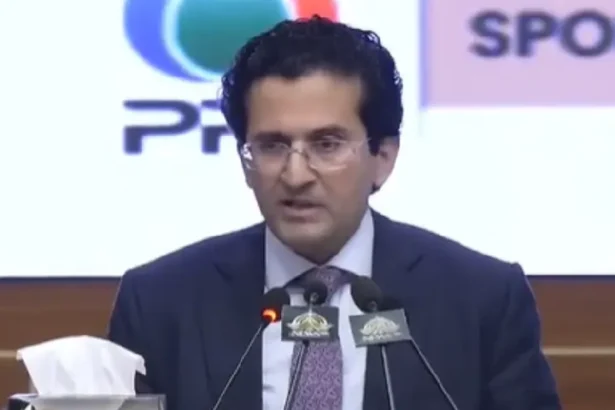
- Addressing the Pakistan Minerals Investment Forum 2026 in Islamabad on Friday, the minister said the country was focusing on minerals with growing international demand while upgrading its exploration capabilities through modern technology and scientific research.
- Emphasising the importance of local communities, Malik said sustainable mining projects required public trust and cooperation in areas where mineral resources were being developed.
Petroleum Minister Ali Pervaiz Malik has said Pakistan is expanding its mineral exploration efforts towards strategically important resources to attract international investors and strengthen its position in the global minerals market.
Addressing the Pakistan Minerals Investment Forum 2026 in Islamabad on Friday, the minister said the country was focusing on minerals with growing international demand while upgrading its exploration capabilities through modern technology and scientific research.
The two-day forum has brought together international investors, government representatives and industry experts as Pakistan seeks to attract foreign investment in its mineral sector. The government is highlighting the country’s reserves of coal, salt, gold, copper and other critical minerals while offering investor-friendly policies and institutional support.
Malik said exploration activities were being supported by advanced geochemical and geophysical surveys, exploratory drilling and improvements to geological research laboratories. These initiatives aim to provide more accurate assessments of mineral deposits and identify commercially viable opportunities.
He highlighted copper and gold exploration in Chagai and western Balochistan, along with lithium, tin and tungsten prospects in Gilgit-Baltistan. Exploration activities in Khyber Pakhtunkhwa are also targeting antimony and base metals.
The minister said Pakistan had traditionally exported raw mineral ore while importing finished products to meet domestic demand. The government now wants to develop local processing capabilities and capture a greater share of the mineral value chain.
In this regard, he pointed to efforts to advance copper smelting so the country could move beyond extracting raw materials towards producing finished metals and higher-value products.
Malik also emphasised the role of the Geological Survey of Pakistan in improving the scientific understanding of the country’s mineral resources. He said an accelerated geological mapping programme, including detailed surveys at a scale of 1:50,000, was helping identify new mineral prospects.
International partnerships, including the UK-Pakistan Geoscience Capacity Building Programme, are also supporting expertise in digital mapping, airborne surveys and mineral assessment.
He added that the government was digitising historical geological records to provide investors with reliable information, reduce exploration risks and support better investment decisions.
The minister stressed that identifying mineral deposits alone was not enough to establish commercially successful mining projects. Reliable electricity, water supplies, road and railway connections, and access to international markets were equally important.
He identified the proposed upgrade of the Rohri-Nokundi railway corridor, improved connectivity with Port Qasim and infrastructure development around the Reko Diq project as key initiatives to connect mineral-rich areas with international markets.
Malik said Pakistan’s broader objective was to establish an integrated, competitive and sustainable mineral industry rather than focus solely on individual mining projects.
He said the government wanted investment to extend into mineral processing, refining, downstream manufacturing, technology transfer and integration with global supply chains wherever commercially and technically feasible.
The minister further highlighted the importance of developing local expertise through technical education, vocational training and engineering services. He said the expanding sector should also create employment opportunities for young people, including women, while strengthening Pakistani suppliers and businesses.
Emphasising the importance of local communities, Malik said sustainable mining projects required public trust and cooperation in areas where mineral resources were being developed. He maintained that projects involving and benefiting surrounding communities were more likely to succeed and remain sustainable over the long term.
We welcome your contributions! Submit your blogs, opinion pieces, press releases, news story pitches, and news features to opinion@minutemirror.com.pk and minutemirrormail@gmail.com