Summary
- 21.8 billion on fuel in fiscal year (FY) 2025, Rs.
- The government’s Tax Expenditure 2026 statement places federal tax expenditure for FY 2025 at Rs.
- 579.7 billion under income tax and Rs.
The Rs21.8 billion fuel bill exposes not an administrative lapse but a governing culture in which austerity disciplines citizens and exempts the State’s privileged servants
Pakistan’s ruling classes have perfected a peculiar form of austerity: the citizen must economise so that the State’s privileged servants need not. The latest proof comes from information placed before the National Assembly. According to a news report, the federal government spent Rs. 21.8 billion on fuel in fiscal year (FY) 2025, Rs. 6.1 billion or 39 percent more than the preceding year and nearly Rs. 6 billion above budget. This preceded the Middle East war and cannot be dismissed as an external shock. It exposes an internal order built around entitlement.
The five-year record is worse. Federal fuel expenditure reached Rs. 69 billion from FY 2021 to FY 2025. In FY 2023, an allocation of Rs. 9 billion became spending of Rs. 15.7 billion, an overrun of 73 percent. A government unable to control this recurring expense has little moral standing when it makes households absorb higher tariffs, levies and indirect taxes in the name of fiscal discipline.
The scandal is not merely that the State burns too much fuel. It pays the same senior officers cash so that it should not have to provide cars, petrol, maintenance and drivers. The Compulsory Monetisation of Transport Facility was approved in December 2011 and implemented from January 1, 2012 for civil servants in BS-20 to BS-22. Its objects were austerity, elimination of misuse, transparency and lower spending on procurement, maintenance, fuel and drivers.
The design was unambiguous. It banned staff-car purchases, required surrender of surplus vehicles, confined ministries to small operational pools, and prohibited entitled officers from using project or departmental vehicles as personal transport. On the expenditure then prevailing, the monthly cash amounts were Rs. 65,960 for BS-20, Rs. 77,430 for BS-21 and Rs. 95,910 for BS-22. Retaining a government driver attracted a Rs. 10,000 monthly deduction. The bargain was simple: take the cash and bear your transport cost.
What followed was not monetisation but duplication. The cash became entrenched while official vehicles, fuel cards, project cars, protocol fleets and drivers survived through exceptions. Ministers moved towards SUVs and federal secretaries towards new 1800cc cars. Official vehicles remained visible at schools, markets and on motorways for purposes no honest reading of “official duty” can accommodate. The public finances the allowance and the vehicle.
The administrative alibi is certification. Principal accounting officers must obtain declarations and certify that no project, departmental, operational or ex-officio vehicle is used contrary to policy. The finance minister told Parliament that the Auditor General conducts annual audits. In the same reply, he conceded that no audit has ever specifically examined federal transport monetisation. That admission dismantles fifteen years of assurances. Certificates without verification are paperwork, not accountability.
Dr. Ishrat Hussain’s Institutional Reforms Cell reviewed the policy in 2019; two paragraphs were added to improve transparency. No further corrective measure followed. Pakistan’s bureaucracy is skilled at adding paragraphs to rules while preserving the privilege those rules were meant to abolish.
A second subsidy is concealed inside the first. Clause (27) of Part II of the Second Schedule to the Income Tax Ordinance, 2001 taxes these payments, after deduction of the driver’s salary, at only 5 percent as a separate block. Senior salaried taxpayers otherwise face progressive rates reaching 35 percent. The State grants cash for private transport and shields it from ordinary salary taxation.
The preference is substantial. For a BS-22 officer retaining a government driver, the taxable amount under the original rate is about Rs. 1.031 million annually. Five percent produces tax of roughly Rs. 51,500; a 35 percent marginal rate would produce about Rs. 360,800—a difference of nearly Rs. 309,300 for one officer. This illustrates, rather than estimates, the total loss because the government publishes neither recipient numbers nor grade-wise payments, displaced rates or recoveries.
That opacity converts a concession into hidden tax expenditure. The government’s Tax Expenditure 2026 statement places federal tax expenditure for FY 2025 at Rs. 2.353 trillion, including Rs. 579.7 billion under income tax and Rs. 50.7 billion for rate reductions. It gives only broad categories and does not disclose the cost, beneficiaries or purpose of clause (27). Parliament sees an aggregate while the preference for a small class disappears within it. A hidden tax concession is public spending that escapes appropriation scrutiny.
This concealment is not a bookkeeping technicality. A direct subsidy of identical value would appear in demands for grants, face committee scrutiny and be voted upon. The 5 percent block rate travels through the tax code, where its beneficiaries help draft, interpret and administer the law.
FBR demands documentation from shopkeepers, professionals and salaried workers but has not placed before Parliament a beneficiary-wise account of this privilege. The IMF, while pressing for higher petroleum levies and wider taxation, has not made removal of this small but corrosive concession a visible condition. The amount may be modest beside Rs. 2.353 trillion; its significance lies in what it reveals: rules become exacting downward and negotiable upward.
The distributive contrast is brutal. Consumers pay petroleum levy when they travel to work, take children to school, run generators or transport food. It is now Rs. 80 per litre on petrol and diesel, with an FY 2027 target of Rs. 1.68 trillion. No assessment of its impact on different groups was undertaken. The citizen is a revenue source; the VIP an expenditure priority. Fuel is taxed heavily when the public buys it and consumed liberally when government pays.
This is the political economy of an extractive State. Its parasites are defined by access to power. They turn office into entitlement, entitlement into cash, cash into preferentially taxed income, and exceptions into cars and fuel. The arrangement destroys tax morale. As argued in Abusing taxpayers’ money in 2019, citizens cannot embrace voluntary compliance when taxation finances elite perks while universal education, healthcare, transport and justice remain unavailable.
The response must exceed another austerity circular. Parliament should repeal clause (27) and tax the allowance as salary. FBR and Finance Division should publish, for every year since 2012, recipients by grade and institution, gross payments, tax collected at 5 percent and revenue forgone. Tax-expenditure statements must identify each concession, its legal basis, beneficiaries, purpose, duration and cost. Article 19A of the Constitution demands disclosure; democratic budgeting demands more.
The Public Accounts Committee should order a performance and forensic audit from inception. Allowance records must be matched with vehicle registers, fuel cards, logbooks, maintenance bills, project vehicles, autonomous bodies, SOEs and toll records. Anyone who drew monetisation while using an official vehicle contrary to policy should repay the allowance, fuel and maintenance cost, with the tax shortfall and legal consequences. False certifiers cannot remain invisible.
Finally, the public fleet must be rebuilt from zero. Vehicles should require documented operational, emergency or security need, transparent pooling, digital logs and institution-wise disclosure. The exercise cannot stop at civil bureaucracy. Elected officeholders and the civil, military and judicial hierarchies require the same inventory, valuation, tax treatment and audit. Fiscal equality cannot survive institutional exceptions.
The Rs. 21.8 billion fuel bill is more than waste; it states national priorities. Pakistan does not lack austerity policies but the courage to apply them to those who administer austerity for others. A State that pays officers to arrange transport, continues providing cars and fuel, and taxes the cash at 5 percent has not monetised transport. It has monetised privilege and socialised its cost.
________________________________________________________________
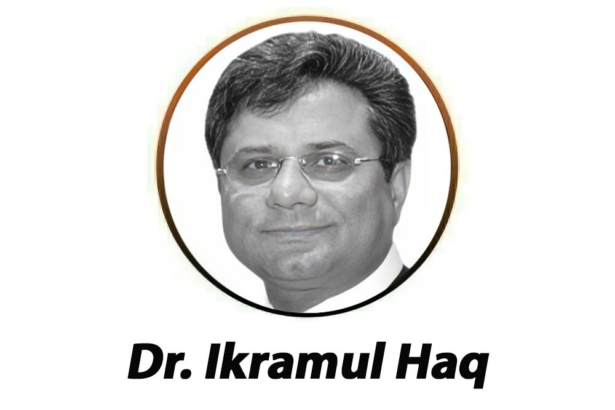
Dr. Ikramul Haq, Advocate Supreme Court, writer, literary critic, Adjunct Faculty at Lahore University of Management Sciences (LUMS), member Advisory Board and Visiting Senior Fellow of Pakistan Institute of Development Economics (PIDE), holds an LLD in tax laws. He was full-time journalist from 1979 to 1984 with Viewpoint and Dawn. He also served Civil Services of Pakistan from 1984 to 1996.
We welcome your contributions! Submit your blogs, opinion pieces, press releases, news story pitches, and news features to opinion@minutemirror.com.pk and minutemirrormail@gmail.com