Summary
- Interior Minister Mohsin Naqvi met Prime Minister Shehbaz Sharif on Monday and briefed him on the country’s law and order situation following his discussions with Pakistan Muslim League-Quaid (PML-Q) chief Chaudhry Shujaat Hussain on the proposed creation of new provinces.
- Earlier, Naqvi visited Shujaat at his Lahore residence, where they exchanged views on the political and security situation, administrative reforms, the transfer of powers to local levels and proposals for establishing additional provinces.
- Defence Minister Khawaja Asif has also backed the creation of smaller administrative units, suggesting that Pakistan could have as many as 12 provinces to improve governance and public service delivery.
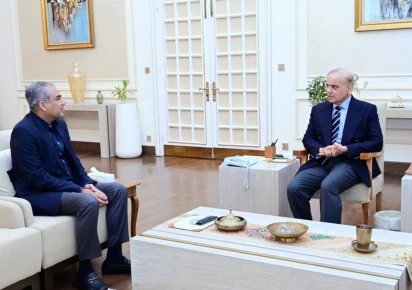
Interior Minister Mohsin Naqvi met Prime Minister Shehbaz Sharif on Monday and briefed him on the country’s law and order situation following his discussions with Pakistan Muslim League-Quaid (PML-Q) chief Chaudhry Shujaat Hussain on the proposed creation of new provinces.
During the meeting at the Prime Minister’s House, Naqvi shared an overview of the security situation across the country. The two leaders also discussed prevailing national matters, according to an official statement.
Earlier, Naqvi visited Shujaat at his Lahore residence, where they exchanged views on the political and security situation, administrative reforms, the transfer of powers to local levels and proposals for establishing additional provinces.
Shujaat said the formation of new provinces should be driven by public convenience, improved governance and administrative efficiency. He stressed that strengthening administrative units could help address governance challenges and serve the country’s long-term interests.
He described ordinary citizens as Pakistan’s biggest stakeholders and said political leaders must make timely decisions in the public interest. He warned that failing to take appropriate steps would carry serious consequences for the country’s leadership.
Naqvi agreed that decisions on the matter should reflect the wishes of the people. He also briefed Shujaat on the government’s efforts to combat terrorism and maintain peace in Balochistan and Khyber-Pakhtunkhwa.
Federal Minister for Overseas Pakistanis Chaudhry Salik Hussain and Punjab Industries Minister Chaudhry Shafay Hussain also attended the meeting.
The discussions come amid renewed political debate over creating additional provinces and reorganising the country’s administrative structure. Naqvi has recently held consultations with several political figures on the issue.
On November 12, he met President Asif Ali Zardari in Nawabshah. Reports initially suggested that the two discussed proposals for new provinces and a possible referendum. However, the President’s House later clarified that the meeting focused on national security and regional developments rather than provincial boundaries.
Naqvi first raised the issue publicly on July 31, arguing that Pakistan’s existing administrative structure needed substantial reforms. He renewed his call in November, proposing that political parties consider a referendum to determine public opinion. He also maintained that any decision would require agreement among coalition partners.
Political parties remain divided over the proposal. The Pakistan Peoples Party (PPP) has opposed dividing Sindh, while the Muttahida Qaumi Movement-Pakistan (MQM-P) has continued to support the creation of additional provinces, particularly in Sindh. The Sindh Assembly passed a resolution on September 4 rejecting any attempt to divide the province or change its geographical boundaries.
Defence Minister Khawaja Asif has also backed the creation of smaller administrative units, suggesting that Pakistan could have as many as 12 provinces to improve governance and public service delivery.
Demands for new provinces have persisted for years, particularly in South Punjab, Bahawalpur and Hazara. Supporters have cited administrative convenience, better political representation and unequal development as reasons for separate provincial status. The Punjab Assembly passed resolutions in 2012 supporting separate provincial arrangements for South Punjab and the restoration of Bahawalpur province, but the proposals did not result in constitutional changes.
We welcome your contributions! Submit your blogs, opinion pieces, press releases, news story pitches, and news features to opinion@minutemirror.com.pk and minutemirrormail@gmail.com