Summary
- Palaeontologists have identified a new species of Late Triassic dinosaur from fossils discovered on the shores of Lake Kariba in northern Zimbabwe, offering fresh insights into prehistoric ecosystems across southern Africa.
- The discovery challenges long-held scientific assumptions that Late Triassic dinosaur populations were uniform across the southern regions of Gondwana.
- The presence of a distinct species in the Lake Kariba region demonstrates that ancient southern Africa was divided into unique, localised environments with varied wildlife compositions, showing that regional climate and geography drove dinosaur diversification much earlier than previously understood.
Palaeontologists have identified a new species of Late Triassic dinosaur from fossils discovered on the shores of Lake Kariba in northern Zimbabwe, offering fresh insights into prehistoric ecosystems across southern Africa.
Named Musango matusadonaensis, the 4.5-metre-long creature lived approximately 210 million years ago, a pivotal era when dinosaurs were beginning to spread across the supercontinent Gondwana prior to becoming the planet’s dominant land animals.
The discovery represents only the fifth dinosaur species formally named from Zimbabwe, stemming from a international research collaboration between institutions in the United Kingdom, South Africa, and Zimbabwe.
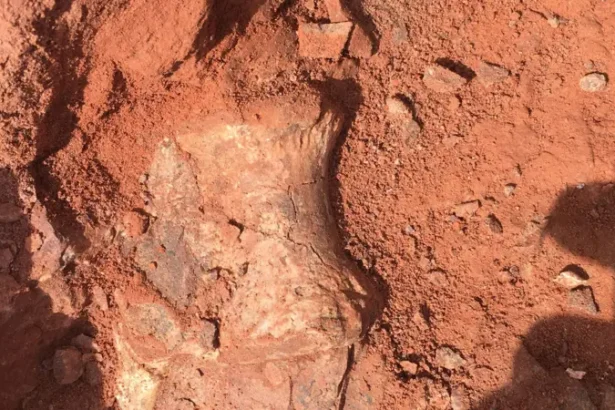
Lead researcher Professor Paul Barrett from London’s Natural History Museum, alongside co-authors publishing in the Journal of Systematic Palaeontology, detailed the anatomical characteristics of the fossilised skeleton, which included bones from the spine, arms, and feet.
Musango was an early sauropodomorph, an evolutionary precursor to massive four-legged herbivores like Diplodocus, though this earlier relative was lightly built and walked primarily on two legs. Microscopic analysis of its fibula revealed eight distinct growth rings, indicating the animal was around eight years old and nearly fully grown when it died, while weighing an estimated 222 kilogrammes.
The discovery challenges long-held scientific assumptions that Late Triassic dinosaur populations were uniform across the southern regions of Gondwana.
Based on structural features of its skeleton and comparative ecosystem data, researchers believe Musango was an opportunistic omnivore that fed on plants, small reptiles, lungfish, and crocodile-like phytosaurs.
The presence of a distinct species in the Lake Kariba region demonstrates that ancient southern Africa was divided into unique, localised environments with varied wildlife compositions, showing that regional climate and geography drove dinosaur diversification much earlier than previously understood.
We welcome your contributions! Submit your blogs, opinion pieces, press releases, news story pitches, and news features to opinion@minutemirror.com.pk and minutemirrormail@gmail.com