Summary
- Opposition leaders on Thursday criticised the federal government over the breakdown of political negotiations, restrictions on parliamentarians and the imposition of emergency and governor’s rule in Khyber Pakhtunkhwa (K-P).
- Speaking at a press conference outside Parliament House, Pakistan Tehreek-e-Insaf (PTI) Chairman Barrister Gohar Ali Khan, National Assembly Opposition Leader Mahmood Khan Achakzai and Majlis Wahdat-e-Muslimeen chief Allama Raja Nasir Abbas stressed the need for democratic governance and respect for constitutional principles.
- However, PTI Senator Ali Zafar said negotiations with the government were not imminent.
Opposition leaders on Thursday criticised the federal government over the breakdown of political negotiations, restrictions on parliamentarians and the imposition of emergency and governor’s rule in Khyber Pakhtunkhwa (K-P). They called for meaningful dialogue, constitutional supremacy and protection of elected representatives’ rights.
Speaking at a press conference outside Parliament House, Pakistan Tehreek-e-Insaf (PTI) Chairman Barrister Gohar Ali Khan, National Assembly Opposition Leader Mahmood Khan Achakzai and Majlis Wahdat-e-Muslimeen chief Allama Raja Nasir Abbas stressed the need for democratic governance and respect for constitutional principles.
Gohar said the opposition had repeatedly participated in negotiations with the government in good faith and without preconditions. However, the efforts had failed to produce any meaningful outcome. He questioned why opposition leaders continued to face doubts about their loyalty to Pakistan despite their repeated statements that the country and its interests came first.
He urged the authorities to ensure that parliamentarians could represent their constituents without fear or intimidation. Recalling the alleged detention of opposition lawmakers in September 2024, he said parliamentary measures had been introduced to address concerns about their protection.
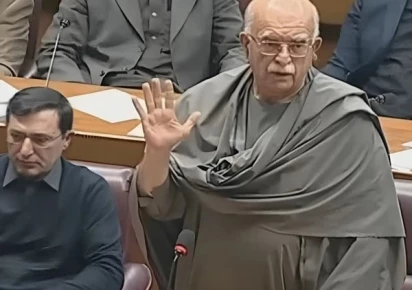
Achakzai stressed that parliamentary proceedings must be conducted according to constitutional requirements and assembly rules. He said speeches delivered by lawmakers should be recorded in full to preserve the official record and allow the public to assess their representatives’ positions.
Referring to his National Assembly speech a day earlier, Achakzai rejected allegations that his remarks were inappropriate or directed against Pakistan. He claimed that his four-and-a-half-minute address had been presented as a nine-minute speech and criticised restrictions on the time available to opposition lawmakers.
He also questioned the inconsistent issuance of production orders for detained parliamentarians, arguing that elected representatives should receive equal treatment. Achakzai said meaningful negotiations were impossible without a meeting with PTI founder Imran Khan, who remains imprisoned.
He added that the opposition had asked the government to ensure that Prime Minister Shehbaz Sharif personally invited its representatives for talks. He also questioned the government’s commitment to negotiations, saying dialogue could not succeed if the process was publicly ridiculed.
Achakzai proposed forming a committee, headed by Defence Minister Khawaja Asif, to investigate allegations of corruption against the incumbent government. He maintained that the opposition would resist what it considered undemocratic practices through democratic means and called for a strong parliament and state institutions operating within their constitutional limits.
Raja Nasir Abbas said Pakistan’s political and economic problems could not be resolved without the rule of law, justice and constitutional supremacy. He expressed concern over what he described as an unprecedented trust deficit between the public and those in power.
Abbas also criticised the registration of what he called fabricated cases and FIRs. Referring to the February 8, 2024, general elections, he alleged that the public mandate had been stolen and warned that electoral manipulation undermined constitutional principles and public confidence in the political system.
Meanwhile, Gohar rejected reports of growing differences within PTI, particularly concerning the party’s K-P lawmakers and provincial organisation. He urged party members to verify information before reacting to reports circulating on social media.
He praised PTI lawmakers from K-P for standing by Imran Khan during the past two years, saying they had continued to participate in rallies, public meetings and protest marches despite difficult circumstances.
Gohar said the provincial lawmakers remained committed to Imran’s political struggle and enjoyed his confidence. He also clarified that Junaid Akbar would continue as PTI’s K-P president, having been appointed by the party founder.
He said senior vice-president Noorul Haq Qadri would chair provincial organisational meetings in Junaid’s absence, while provincial secretary general Ali Asghar Khan would handle other organisational responsibilities. No changes would be made to the provincial organisation or its cabinet until Junaid returned, he added.
Gohar reaffirmed that Sohail Afridi remained PTI’s choice for K-P chief minister, saying the decision rested with Imran Khan.
Separately, PTI Secretary General Salman Akram Raja rejected claims that Sohail Afridi was responsible for the collapse of negotiations with the federal government. He said the deadlock stemmed primarily from the refusal to allow Imran’s personal physicians to examine him and the dispute over provincial autonomy.
Speaking to a private television channel, Raja said PTI could not accept unrestricted federal intervention in K-P’s affairs. He accused the government of undermining the negotiations and described the imposition of emergency and governor’s rule as unconstitutional.
Raja announced that an all-parties conference was being planned within the next 10 days, or earlier, to discuss the province’s political situation. He said several political parties were in contact with him, including Jamiat Ulema-e-Islam-Fazl chief Maulana Fazlur Rehman.
He described Achakzai and Raja Nasir Abbas as important sources of political support for PTI, adding that the party would continue to seek their advice. Raja also insisted that PTI’s long march had not ended and indicated that the party’s political campaign would continue.
However, PTI Senator Ali Zafar said negotiations with the government were not imminent. He said the party’s parliamentary group had yet to determine the terms of reference for any future talks and alleged that the government had decided to impose governor’s rule around six weeks before its announcement.
PTI K-P Information Secretary Shaukat Ali Yousafzai, meanwhile, distanced the party from YouTubers campaigning against state institutions. He said such individuals had no links with PTI and that their activities had harmed the party.
Yousafzai said Imran had consistently described the armed forces as his own institution and maintained that PTI had always condemned terrorism. He rejected attempts to portray the party’s leaders or workers as facilitators of militants and accused the federal government of using security concerns to justify emergency measures in the province.
The dispute over K-P’s administration intensified in late September as security concerns grew and tensions increased between the federal government and the PTI-led provincial administration. Federal ministers accused the provincial government of failing to address terrorism and governance challenges, while PTI opposed federal intervention and defended its electoral mandate.
On October 11, President Asif Ali Zardari approved the imposition of emergency and governor’s rule on the advice of Prime Minister Shehbaz Sharif, following federal cabinet approval. The government cited escalating militant attacks, threats to lives and property, and what it described as a breakdown of the constitutional system in the province.
The measures invoked Articles 232 and 234 of the Constitution and authorised the deployment of the army to assist the civil administration. Executive authority was transferred to Governor Faisal Karim Kundi, while the emergency proclamation covered 12 districts.
PTI challenged the decision in the Peshawar High Court, arguing that the constitutional requirements had not been fulfilled and that the move violated provincial autonomy. On October 15, a joint sitting of Parliament approved separate resolutions endorsing emergency and governor’s rule for two months despite strong protests from opposition lawmakers.
The intervention marked the fourth instance of governor’s rule in the province, following earlier spells in 1975, 1994 and 1999.
We welcome your contributions! Submit your blogs, opinion pieces, press releases, news story pitches, and news features to opinion@minutemirror.com.pk and minutemirrormail@gmail.com