Summary
- Pakistan has called for an immediate and unconditional end to Houthi attacks on Saudi Arabia, reaffirming its support for the kingdom as the United Nations Security Council (UNSC) renewed sanctions against individuals and groups threatening peace in Yemen.
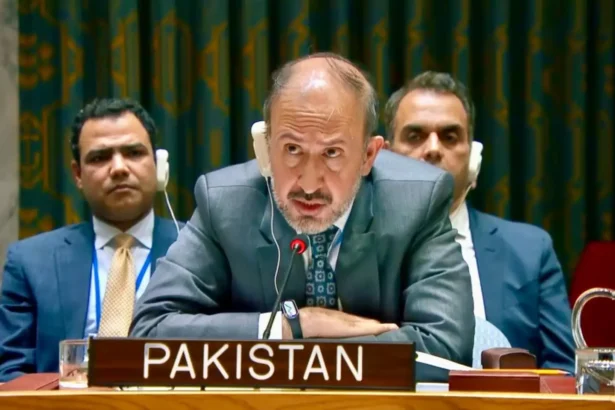
- Pakistan’s Permanent Representative to the United Nations, Ambassador Syed Haider Shah, made the remarks on Thursday while explaining Islamabad’s support for a new Security Council resolution aimed at tightening restrictions on the Houthis.
- The council urged the Houthis to end their military offensive, stop attacks against Saudi Arabia and refrain from threatening commercial shipping.
Pakistan has called for an immediate and unconditional end to Houthi attacks on Saudi Arabia, reaffirming its support for the kingdom as the United Nations Security Council (UNSC) renewed sanctions against individuals and groups threatening peace in Yemen.
Pakistan’s Permanent Representative to the United Nations, Ambassador Syed Haider Shah, made the remarks on Thursday while explaining Islamabad’s support for a new Security Council resolution aimed at tightening restrictions on the Houthis.
Shah strongly condemned the group’s continued attacks against Saudi Arabia and expressed Pakistan’s solidarity with the kingdom’s leadership, government and people. He reaffirmed Islamabad’s commitment to Saudi Arabia’s sovereignty, territorial integrity, security and stability.
He also said Saudi Arabia had a legitimate right under the UN Charter and international law to defend its territory and protect its citizens and residents. Pakistan demanded an immediate and unconditional cessation of all Houthi attacks.
The resolution was adopted unanimously by the 15-member Security Council. It extended targeted asset freezes and travel bans on individuals threatening peace in Yemen, including those linked to the Houthis, until November 14, 2027. It also renewed the mandate of the UN Panel of Experts monitoring the sanctions until December 15, 2027.
The council urged the Houthis to end their military offensive, stop attacks against Saudi Arabia and refrain from threatening commercial shipping. It also reaffirmed the arms embargo imposed under Resolution 2216 in April 2015.
The new measures seek to limit the group’s ability to manufacture missiles and drones using commercially available equipment, components and precursor chemicals. The Security Council also directed its members to determine by January 11 measures to prevent the Houthis from obtaining specified materials.
The expert panel has additionally been tasked with examining revenue generated by the group through its control of key economic sectors in Yemen and recommending ways to prevent those funds from financing military activities.
The resolution also warned that the arbitrary detention of UN, diplomatic and humanitarian personnel by the Houthis could provide grounds for further sanctions. The issue gained renewed attention following the death of Mohammad El-Shami, a Yemeni employee of the UN Human Rights Office who had been held in Houthi custody since June 2024.
Despite unanimous adoption, negotiations over the resolution exposed differences among council members. Britain initially sought to restore language describing the Houthis as a terrorist organisation, but withdrew the proposal following objections from Russia. Bahrain and the United States also supported stronger wording, while China and Russia raised concerns over restrictions on dual-use materials and the expanded mandate of the expert panel.
Pakistan, while supporting stronger international action against the Houthis, stressed that lasting peace in Yemen could only be achieved through a political settlement.
Ambassador Shah called for an inclusive, UN-led process owned and directed by the Yemeni people. He reaffirmed Pakistan’s willingness to support international efforts to restore stability and address the country’s worsening humanitarian crisis.
Pakistan also stressed that the sanctions monitoring panel must work impartially, professionally and strictly within the Security Council’s mandate.
The renewed diplomatic push comes amid escalating tensions between the Houthis and Saudi Arabia. The group has launched ballistic missiles and drone attacks targeting Saudi airports, ports and oil facilities in recent weeks.
The Houthis seized Yemen’s capital, Sanaa, in 2014, prompting Saudi Arabia to intervene militarily the following year in support of the internationally recognised government. A UN-brokered truce in 2022 largely reduced fighting, but hostilities have intensified again this year, with renewed Houthi attacks and Saudi airstrikes in Yemen.
We welcome your contributions! Submit your blogs, opinion pieces, press releases, news story pitches, and news features to opinion@minutemirror.com.pk and minutemirrormail@gmail.com