Summary
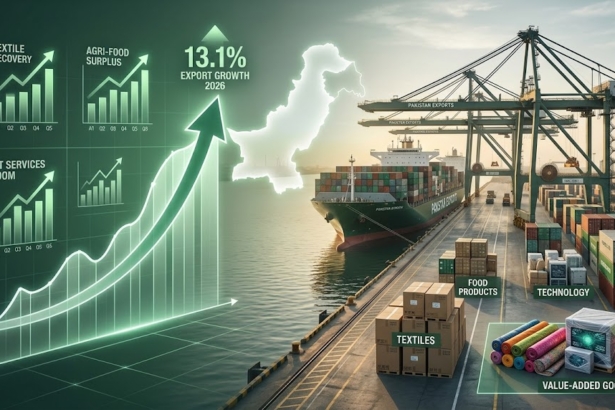
- ISLAMABAD: Pakistan’s exports of goods and services rose by 13.1 percent year-on-year to $3.94 billion in July 2026, providing an encouraging start to the new fiscal year and signalling continued improvement in the country’s external sector.
- According to the minister, merchandise exports increased by 9.4 percent to around $3 billion in July 2026 from $2.8 billion a year earlier.
- Federal Board of Revenue tax collection increased by 8.4 percent to Rs820.9 billion in July 2026, according to the minister.
ISLAMABAD: Pakistan’s exports of goods and services rose by 13.1 percent year-on-year to $3.94 billion in July 2026, providing an encouraging start to the new fiscal year and signalling continued improvement in the country’s external sector.
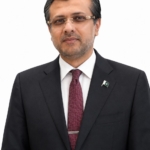
Federal Minister for Planning, Development and Special Initiatives Ahsan Iqbal shared the figures on Saturday while presenting the Monthly Development Update for August 2026. He said exports stood at $3.48 billion in July 2025, meaning the latest increase reflects stronger performance across several major export categories.
According to the minister, merchandise exports increased by 9.4 percent to around $3 billion in July 2026 from $2.8 billion a year earlier. When services exports are included, the combined figure reached approximately $3.9 billion, compared with $3.5 billion in July last year.
Key export sectors show growth
Ahsan Iqbal said the improvement in exports was supported by higher shipments across several important sectors. Surgical goods recorded the strongest growth among the highlighted export groups, increasing by 16.3 percent.
Food exports rose by 8 percent, while leather goods registered growth of 7.8 percent. Textile exports, one of Pakistan’s largest sources of foreign exchange, also increased by 3.9 percent during the month.
The minister said the figures indicated that Pakistan’s external sector had started the new fiscal year on a positive trajectory, although maintaining this momentum would require continued reforms, improved competitiveness and greater diversification of export products and markets.
Manufacturing sector stages strong recovery
The positive external-sector performance coincided with a broad-based recovery in domestic industrial activity.
According to Ahsan, Large-Scale Manufacturing (LSM) expanded by 5 percent during fiscal year 2025-26, reversing a 0.74 percent contraction recorded in the preceding fiscal year.
He said the recovery was spread across the industrial sector, with 16 of the 22 LSM sectors registering positive growth.
The automobile sector posted the highest increase at 57.8 percent, followed by transport equipment at 42.4 percent. Electrical equipment production grew by 14.3 percent, tobacco by 12.6 percent and food manufacturing by 7 percent.
The figures, he said, reflected an improvement in industrial activity and could provide support to investment, employment and overall economic growth if the recovery remains sustained.
FBR collection, remittances improve
The government also reported improvement in tax revenues at the beginning of FY2026-27.
Federal Board of Revenue tax collection increased by 8.4 percent to Rs820.9 billion in July 2026, according to the minister. He said stronger revenue mobilisation, together with fiscal discipline, was helping improve the country’s overall financial position.
Workers’ remittances also remained a major source of support for Pakistan’s external account. Remittance inflows reached $3.63 billion in July 2026, up 13 percent from approximately $3.2 billion in the same month of 2025.
Ahsan said the latest increase followed record remittances of $41.6 billion received during the previous fiscal year.
He noted that remittances not only strengthened Pakistan’s foreign exchange position but also provided direct financial support to millions of households across the country.
Current account deficit remains contained
Despite continued pressure on the external account, the current account deficit remained relatively contained.
The deficit stood at $328 million in July 2026, compared with $529 million during the same month of the previous year. The minister described the development as another indication of improved external-sector stability.
He also highlighted the growing contribution of Pakistan’s technology sector. Information and Communication Technology exports reached $417 million in July 2026, underlining the increasing role of digital services in generating foreign exchange.
The government has been seeking to expand technology exports as part of a broader strategy to diversify Pakistan’s sources of external earnings beyond traditional sectors such as textiles and agricultural products.
Inflation moderates
Ahsan Iqbal also pointed to a moderation in consumer price pressures at the start of the new fiscal year.
Consumer Price Index inflation eased to 9.2 percent in July 2026, compared with 11.7 percent in May 2026. The minister said the decline suggested that inflationary pressures were beginning to moderate.
He added that changes in the year-on-year inflation rate were also influenced by base effects as well as the impact of international food and energy prices.
The government is aiming to maintain price stability while supporting economic activity and protecting the purchasing power of households.
Fiscal position strengthens
The planning minister said Pakistan’s fiscal position had also improved significantly during FY2025-26.
The fiscal deficit narrowed to 2.6 percent of GDP from 5.4 percent in FY2024-25. According to Ahsan, this represented the lowest fiscal deficit recorded in two decades.
He said stronger fiscal management would remain essential during FY2026-27 as the government seeks to maintain macroeconomic stability while creating room for development spending and economic expansion.
Development spending and job creation
Public investment is another major component of the government’s economic strategy.
Projects approved during July 2026 are expected to create around 7,851 direct jobs and 14,053 indirect employment opportunities across different sectors. The minister said employment generation would remain an important objective of development planning, particularly as the country seeks to create greater opportunities for its young population.
He said Pakistan had undergone a difficult period of economic adjustment and that the stability achieved in recent years had required significant effort.
Under the government’s URAAN Pakistan initiative, the next phase would focus on converting macroeconomic stability into long-term economic transformation, with exports positioned as a key driver of growth.
According to Ahsan, higher exports could help generate employment, increase household incomes, expand opportunities for young people and improve living standards.
Rs211.3 billion authorised for development projects
The Ministry of Planning authorised Rs211.327 billion, equivalent to 21.1 percent of the relevant allocation, during July 2026 to facilitate timely financing for priority development projects.
The minister said the move was aimed at ensuring that strategically important schemes received funding without unnecessary delays.
During July, the Central Development Working Party (CDWP) also reviewed a number of development proposals. It approved nine projects, three position papers and one concept clearance proposal, while nine projects were recommended for consideration by the Executive Committee of the National Economic Council (ECNEC).
Three projects were deferred, while one project and one position paper were returned to their respective sponsoring agencies for further review and necessary amendments.
Government seeks more efficient development spending
Ahsan said the government had also undertaken a detailed review of projects considered by the CDWP in an effort to eliminate unnecessary components and improve the use of limited public funds.
The review resulted in the streamlining of non-essential components and generated savings of Rs1.02 billion during July 2026.
The minister said these savings would allow scarce development resources to be redirected towards projects with greater economic and social impact.
He maintained that the government’s focus in FY2026-27 would remain on sustaining the economic recovery, consolidating fiscal and external stability, accelerating structural reforms and improving the effectiveness of development expenditure.
We welcome your contributions! Submit your blogs, opinion pieces, press releases, news story pitches, and news features to opinion@minutemirror.com.pk and minutemirrormail@gmail.com