
Summary
- ISLAMABAD/KARACHI: Pakistan has extended its airspace restrictions on Indian aircraft for the 19th consecutive time, prolonging a measure that has significantly disrupted Indian aviation operations and increased costs for airlines operating long-haul international routes.
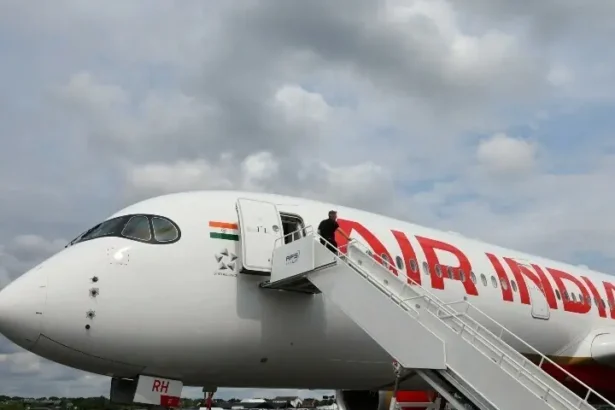
- Air India, which operates an extensive long-haul network, has reportedly informed the Indian government that the restrictions are affecting its profit before tax by approximately $455 million annually.
- Pakistan Also Faces Financial Losses Although the restrictions have placed considerable pressure on Indian aviation, Pakistan has also experienced financial consequences through reduced air transit activity.
ISLAMABAD/KARACHI: Pakistan has extended its airspace restrictions on Indian aircraft for the 19th consecutive time, prolonging a measure that has significantly disrupted Indian aviation operations and increased costs for airlines operating long-haul international routes.
According to the Pakistan Airports Authority (PAA), the latest Notice to Airmen (NOTAM), numbered A0590, will remain effective until 4:59 am on November 24, 2026.
The restrictions have remained in place since April 23, 2025, following heightened tensions between Pakistan and India after the Pahalgam incident. India subsequently imposed reciprocal restrictions on Pakistani aircraft on April 30, 2025, further limiting aviation connectivity between the two neighbouring countries.
Indian Airlines Face Mounting Financial Pressure
The closure of Pakistani airspace has created operational and financial challenges for Indian airlines, particularly those operating long-distance international services. Airlines have been forced to take alternative routes, increasing flight durations, fuel consumption and operating expenses.
Air India, which operates an extensive long-haul network, has reportedly informed the Indian government that the restrictions are affecting its profit before tax by approximately $455 million annually. On certain international routes, fuel expenses have reportedly increased by as much as 29 percent, while flight times have extended by up to three hours.
The financial pressure comes as Air India reported a loss of approximately $439 million for the 2024-25 financial year. According to the figures cited in reports, the estimated annual impact of the airspace restrictions exceeds the airline’s reported loss for that period.
Around 800 weekly flights operated by five major Indian carriers, including Air India, IndiGo, SpiceJet, Akasa Air and Air India Express, are reportedly affected. Delhi Airport accounts for approximately 640 of these flights.
Estimates cited in reports put the Indian aviation industry’s direct losses at nearly $2 billion, equivalent to approximately Rs17,600 crore. When indirect costs and wider economic effects are included, the overall financial impact has reportedly reached an estimated $5 billion, or Rs50,000 crore.
Indian media reports have also indicated that New Delhi is exploring alternative flight routes through China’s Xinjiang region, including the Hotan corridor, to reduce the operational difficulties caused by the restrictions.
Pakistan Also Faces Financial Losses
Although the restrictions have placed considerable pressure on Indian aviation, Pakistan has also experienced financial consequences through reduced air transit activity.
Defence Minister Khawaja Asif informed the National Assembly that the Pakistan Airports Authority suffered losses of Rs4.1 billion, approximately $14.39 million, during the 67-day period from April 24 to June 30, 2025. This represented an average daily loss of around Rs61 million.
Overall air transit traffic has reportedly declined by approximately 20 percent, affecting revenue generated through aircraft using Pakistani airspace.
Calculations based on the available figures suggest that Pakistan’s losses between April 2025 and October 17, 2026, may have reached approximately Rs33 billion, equivalent to $116 million. Pakistan also experienced financial losses during a similar airspace closure in 2019, when the PAA reportedly lost Rs7.6 billion.
Despite the economic implications, Pakistan’s Defence Ministry maintains that protecting national sovereignty and security remains the priority. The government has continued to uphold the restrictions despite the financial costs associated with reduced air transit traffic.
The prolonged closure highlights the wider economic consequences of strained relations between the two countries, particularly for commercial aviation, international connectivity and airline operating costs.
We welcome your contributions! Submit your blogs, opinion pieces, press releases, news story pitches, and news features to opinion@minutemirror.com.pk and minutemirrormail@gmail.com