
Summary
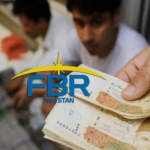
- ISLAMABAD: At a time when Pakistan is struggling with foreign-exchange pressures, rising living costs and repeated IMF-supported programmes, the government is spending an estimated Rs342.1 million annually to provide foreign-currency pension payments to 33 retired senior officials residing abroad, according to official records obtained by Minute Mirror.
- The payments have now raised questions about the authority under which pensions of retired officials are being paid in foreign currencies rather than Pakistani rupees.
- Individual payments reportedly range from approximately $2,800 to $5,200 a month, with some former ambassadors and senior Foreign Office officials receiving the highest amounts.
ISLAMABAD: At a time when Pakistan is struggling with foreign-exchange pressures, rising living costs and repeated IMF-supported programmes, the government is spending an estimated Rs342.1 million annually to provide foreign-currency pension payments to 33 retired senior officials residing abroad, according to official records obtained by Minute Mirror.
Documents from the Ministry of Foreign Affairs and parliamentary replies indicate that the payments, made through Pakistani diplomatic missions, amount to roughly $96,500 a month in dollar-equivalent terms. The beneficiaries are reportedly based mainly in the United States, Canada, Australia, Britain and other European destinations, with payments made in currencies including US dollars, Canadian dollars, Australian dollars and British pounds.
The records indicate that around Rs340 million has been disbursed over the past five years, while officials familiar with the arrangement claim the practice has continued for roughly two to three decades. The payments have now raised questions about the authority under which pensions of retired officials are being paid in foreign currencies rather than Pakistani rupees.
According to the available records, 11 former officials or their families in Washington collectively receive around $45,000 per month. Individual payments reportedly range from approximately $2,800 to $5,200 a month, with some former ambassadors and senior Foreign Office officials receiving the highest amounts.
In New York, 10 beneficiaries are said to receive approximately $33,000 every month. The recipients reportedly include former senior diplomatic and government officials, with individual payments ranging between about $2,500 and $4,500. Four beneficiaries in Australia collectively receive around $8,500 a month, while another eight recipients in Ottawa, London, Europe and other locations account for approximately $10,000 monthly.
The figures have prompted scrutiny because Pakistan’s ordinary pension system operates primarily in local currency, while these payments are reportedly linked to foreign currencies and disbursed through overseas missions.
Questions Over Legal Authority
The central issue is the legal and administrative basis of the arrangement. The documents and information reviewed for this report do not establish the existence of a specific Act of Parliament authorising foreign-currency pensions for retired officials living overseas.
Questions have also been raised over whether a formal Cabinet decision, Finance Division approval or relevant State Bank authorisation was obtained when the arrangement was introduced or subsequently expanded.
Sources familiar with the matter said the arrangement allegedly began in the early 1990s as a limited concession involving a small number of former ambassadors and was gradually extended to other senior officials. According to these accounts, the number of beneficiaries increased substantially between 2002 and 2014.
The long continuation of the practice, despite changes in governments and economic conditions, has intensified calls for the government to disclose the original notification, approval or administrative order under which the payments were initiated.
Foreign-Exchange Pressure Adds to Controversy
The issue has acquired greater significance amid Pakistan’s persistent balance-of-payments challenges and efforts to conserve foreign exchange.
Critics argue that continuing to remit pensions in foreign currencies creates an additional demand for scarce foreign exchange, while millions of ordinary pensioners inside Pakistan receive their retirement benefits in rupees.
A Finance Ministry source questioned the disparity between pension arrangements for ordinary government employees and those living abroad, asking why a retired senior official should continue receiving a foreign-currency-linked benefit when the overwhelming majority of Pakistani pensioners are paid in depreciating rupees.
The controversy has also prompted questions about equality and whether a special pension arrangement for a limited group of retired officials is consistent with the broader principles governing public-sector pensions.
Calls for a Forensic Review
Calls are growing for the government to conduct a comprehensive audit of the payments covering the entire period of the arrangement.
Those demanding scrutiny want the authorities to identify who originally authorised the scheme, determine how its scope was expanded, establish the total amount paid in foreign currency and examine whether all payments were made under valid financial rules.
There are also demands that the government consider converting the pensions into Pakistani rupees and review whether continuing foreign-currency payments remains financially and legally justified.
The controversy comes at a time when the government is pursuing expenditure controls and fiscal reforms while ordinary citizens face pressure from inflation and currency depreciation.
The Ministry of Finance and Ministry of Foreign Affairs did not respond to Minute Mirror’s requests for comment regarding the legal basis of the payments, the number of current beneficiaries and the approvals governing the scheme.
The government now faces mounting questions over whether a pension arrangement that reportedly began as a limited concession nearly three decades ago has evolved into a privileged system operating without sufficient transparency or parliamentary scrutiny.
We welcome your contributions! Submit your blogs, opinion pieces, press releases, news story pitches, and news features to opinion@minutemirror.com.pk and minutemirrormail@gmail.com