Summary
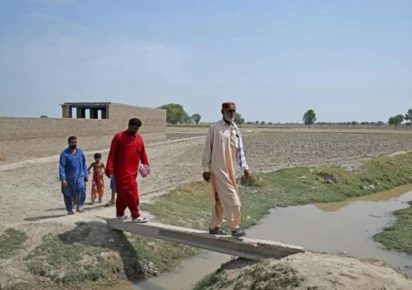
- Pakistani farmers affected by the devastating 2022 floods have taken their fight for compensation to German courts, seeking to hold major industrial companies accountable for their contribution to climate change.
- The lawsuit targets German energy giant RWE and cement manufacturer Heidelberg Materials, with the claimants arguing that the companies should bear responsibility for climate-related losses in proportion to their greenhouse gas emissions.
- German lawyer Roda Verheyen, who has been involved in both cases, said the latest lawsuit went further by accusing companies of failing to take adequate measures despite having knowledge of climate change for decades.
Pakistani farmers affected by the devastating 2022 floods have taken their fight for compensation to German courts, seeking to hold major industrial companies accountable for their contribution to climate change.
The lawsuit targets German energy giant RWE and cement manufacturer Heidelberg Materials, with the claimants arguing that the companies should bear responsibility for climate-related losses in proportion to their greenhouse gas emissions.
Climate litigation has gained momentum worldwide, although most legal cases have so far focused on governments. Only a limited number of major corporations, including Shell and Holcim, have faced lawsuits seeking compensation for climate-related damage.
Legal experts say a court ruling requiring companies to pay damages according to their contribution to global emissions could establish an important precedent for climate accountability.
The Pakistani farmers’ case draws on a previous legal development in Germany involving a Peruvian farmer who sued RWE over climate-related risks to his property. Although his compensation claim was rejected, the court proceedings left open the possibility that major emitters could be held legally responsible for climate damage.
German lawyer Roda Verheyen, who has been involved in both cases, said the latest lawsuit went further by accusing companies of failing to take adequate measures despite having knowledge of climate change for decades.
She argued that major corporations had been aware of the wider consequences of global warming since the 1960s and should have exercised due diligence to reduce their emissions.
The legal action is supported by research documenting the devastating impact of Pakistan’s 2022 floods, which submerged large parts of the country, killed around 1,700 people and affected approximately 30 million others.
For the farmers involved, the disaster continues to affect their livelihoods years after the floodwaters receded.
Munawar Khatoon, a 43-year-old landowner from Usman Samtio village, said the floods destroyed her family’s main source of income by submerging wheat seeds shortly before the harvest.
She said the recurring threat of extreme rainfall had left her family worried about the future, particularly the ability of younger generations to sustain their livelihoods.
Another claimant, 55-year-old Abdul Khalique Laghari from Dadu district, said his family was still struggling with debts accumulated after the disaster.
Laghari estimated that he had suffered losses worth $14,000, including damage to his home, 40 acres of agricultural land and livestock. He said the financial burden had continued for years, with creditors regularly demanding repayment.
He also described the emotional distress caused by the destruction of his property and the continuing pressure of unpaid debts.
Both companies have rejected the allegations. Heidelberg Materials maintained that its operations complied with German laws and argued that businesses should not be judged retroactively against standards that did not apply at the time.
RWE also dismissed the lawsuit, arguing that companies should not face retrospective civil liability for emissions that were permitted under existing government regulations.
The case is expected to proceed through lengthy civil litigation, meaning a final decision could take several years.
Pakistan remains among the countries most vulnerable to climate change, despite contributing less than one per cent of global greenhouse gas emissions.
For the affected farmers, however, the legal battle represents an attempt to secure accountability and financial relief for losses that have continued long after the 2022 disaster.
Khatoon said the lawsuit was ultimately about obtaining justice and holding the companies responsible for the destruction suffered by her community.
We welcome your contributions! Submit your blogs, opinion pieces, press releases, news story pitches, and news features to opinion@minutemirror.com.pk and minutemirrormail@gmail.com