Summary
- Islamabad: Pakistan has recorded a sharp increase in digital payments, with the number of businesses accepting electronic transactions rising from 500,000 to 2.03 million, while the total number of digital payments has doubled within just one year under the Prime Minister’s Cashless Pakistan initiative.
- The meeting was held as a follow up to the Prime Minister’s Cashless Pakistan meeting last Friday and focused on speeding up digital payment reforms, improving banking services and making electronic transactions easier for citizens and businesses.
- The committee was also informed that the overall number of digital payments in Pakistan had doubled within one year, reflecting the growing use of electronic payment systems across the country.
Islamabad: Pakistan has recorded a sharp increase in digital payments, with the number of businesses accepting electronic transactions rising from 500,000 to 2.03 million, while the total number of digital payments has doubled within just one year under the Prime Minister’s Cashless Pakistan initiative.
The government has also decided that all payments through Asaan Assignment Accounts across the country will be made using the Raast digital payment system from November 16, marking another step towards reducing the use of cash in government transactions.
These developments were reviewed during a meeting of the Cashless Pakistan Committee on Digital Payments, chaired by Minister of State for Railways and Finance Bilal Azhar Kayani at the Finance Division in Islamabad.
The meeting was held as a follow up to the Prime Minister’s Cashless Pakistan meeting last Friday and focused on speeding up digital payment reforms, improving banking services and making electronic transactions easier for citizens and businesses.
Officials informed the committee that the number of active merchants accepting digital payments had increased from 0.5 million to 2.03 million following measures introduced under the Cashless Pakistan initiative.
This means approximately 1.53 million additional businesses have started accepting digital payments, allowing more customers to pay through mobile banking applications and other electronic payment methods instead of carrying cash.
The committee was also informed that the overall number of digital payments in Pakistan had doubled within one year, reflecting the growing use of electronic payment systems across the country.
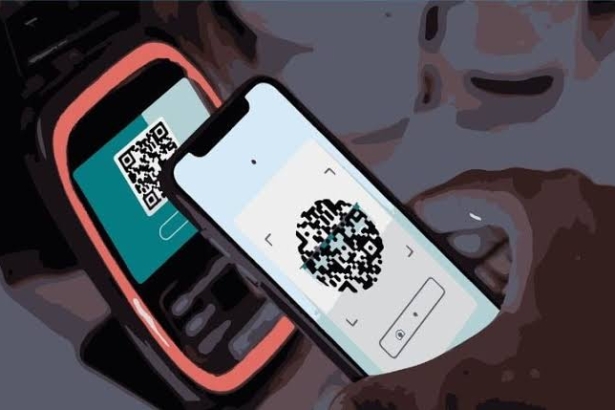
In another major development, Raast QR codes have been printed on more than 45 million electricity and gas bills, enabling consumers to pay their utility bills digitally from their homes.
Citizens can scan the QR codes using supported banking or payment applications to complete transactions without visiting banks or payment collection centres.
Officials further informed the meeting that all National Database and Registration Authority (NADRA) centres across Pakistan had been equipped with Raast QR payment facilities.
The new arrangement allows citizens visiting NADRA offices to pay fees for identity cards and other services through digital payment channels.
Regarding government payments, the committee was informed that all Drawing and Disbursing Officers (DDOs) had already been trained to implement the decision to shift Asaan Assignment Account payments to Raast from November 16.
The move is aimed at making government payments faster, more convenient and easier to track through the digital banking system.
During the meeting, Minister of State Bilal Azhar Kayani directed the State Bank of Pakistan to prepare a working paper for approval of the Raast QR Merchant Discount Rate (MDR) scheme.
The Merchant Discount Rate is a fee associated with payments that businesses receive through electronic payment systems.
The proposed scheme is intended to support the continued promotion and wider use of Raast QR payments across Pakistan.
The committee discussed the need to improve the scheme’s framework so that digital payment services can expand while encouraging more businesses to accept electronic transactions.
The meeting also reviewed the performance indicators used to monitor progress under the Prime Minister’s Cashless Pakistan initiative.
Bilal Azhar Kayani stressed that the government’s digital payment dashboard should not only show how many transactions are taking place but should also record the total value of money transferred through digital channels.
He directed that the dashboard should also include the number of unique account users to provide a clearer picture of how many people are actively using digital financial services.
The minister emphasized that measuring the actual impact of digital payments on the economy was important for evaluating the success of the initiative.
He also directed the State Bank of Pakistan to examine the possibility of including broader economic indicators, such as the ratio of payments processed through the Real Time Gross Settlement (RTGS) system to Pakistan’s Gross Domestic Product (GDP).
RTGS is a banking system used to transfer large amounts of money between financial institutions, while GDP measures the total value of goods and services produced in the country.
Officials said such indicators could help the government better understand the role of digital payments in the wider economy.
The minister also announced plans to meet presidents and chief executive officers of commercial banks in Karachi to discuss the Prime Minister’s Cashless Pakistan initiative.
The proposed meeting will focus on encouraging banks to play a stronger role in expanding digital payments and improving access to electronic financial services.
Bilal Azhar Kayani stressed that cooperation between banks, government departments and digital payment companies was necessary to achieve the targets set under the national initiative.
The meeting was attended by senior officials of the Finance Division, State Bank of Pakistan, Ministry of Information Technology and Telecommunication, and NADRA.
Representatives of the private financial sector also participated, including the President of Easypaisa Digital Bank, Chairman of JazzCash and Chief Digital Officer of Bank Alfalah.
Senior officials of JS Bank, Karandaaz Pakistan and other leading institutions working in the digital payments sector were also present.
The minister thanked participants for their contributions and directed government departments, banks and private companies to strengthen coordination and continue implementing measures aimed at expanding digital transactions.
We welcome your contributions! Submit your blogs, opinion pieces, press releases, news story pitches, and news features to opinion@minutemirror.com.pk and minutemirrormail@gmail.com