Summary
- Islamabad: Legal flaws in the proposed Petroleum Products (Petroleum Levy and Climate Support Levy) (Amendment) Bill, 2026, have prevented a National Assembly committee from finalizing the government legislation, while lawmakers also raised concerns over possible unauthorized diversion and adulteration of diesel, imported LPG procurement and delays in providing gas to villages near producing fields.
- The committee deferred consideration of three government bills relating to petroleum levies, natural gas development surcharge and gas infrastructure development cess.
- The committee examined the Petroleum Products (Petroleum Levy and Climate Support Levy) (Amendment) Bill, 2026, and identified several unresolved legal and drafting issues.
Islamabad: Legal flaws in the proposed Petroleum Products (Petroleum Levy and Climate Support Levy) (Amendment) Bill, 2026, have prevented a National Assembly committee from finalizing the government legislation, while lawmakers also raised concerns over possible unauthorized diversion and adulteration of diesel, imported LPG procurement and delays in providing gas to villages near producing fields.
The committee deferred consideration of three government bills relating to petroleum levies, natural gas development surcharge and gas infrastructure development cess.
The developments came during a meeting of the National Assembly Standing Committee on Petroleum Division, held at Parliament House under the chairmanship of Syed Mustafa Mehmood.
The committee examined the Petroleum Products (Petroleum Levy and Climate Support Levy) (Amendment) Bill, 2026, and identified several unresolved legal and drafting issues.
After detailed deliberations, members concluded that the proposed legislation could not be finalized in its existing form.
The committee directed the Petroleum Division to consult the Law and Justice Division and senior tax experts to remove legal inconsistencies, simplify the language and address the concerns raised by lawmakers.
The chairman stated that another meeting could be convened once the necessary changes had been completed. The committee deferred further consideration of the bill until its next meeting.
Two other government bills, the Natural Gas (Development Surcharge) (Amendment) Bill, 2026, and the Gas Infrastructure Development Cess (Amendment) Bill, 2026, were also deferred.
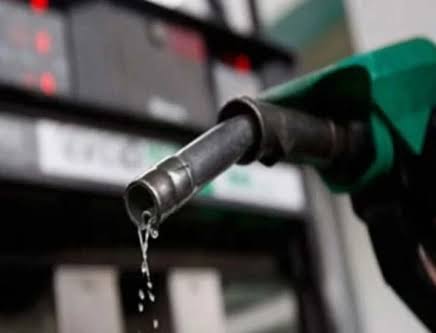
Another significant issue emerged when a committee member highlighted the substantial price difference between Light Diesel Oil (LDO) and High Speed Diesel (HSD), suggesting that cheaper diesel could be made available to farmers to reduce agricultural production costs.
However, the Petroleum Division informed the committee that Light Diesel Oil was produced in limited quantities and was mainly used for specific industrial purposes and engines with lower power requirements.
Officials explained that its higher sulphur content raised environmental concerns, while its suitability for conventional agricultural tractors remained questionable.
The discussion also raised concerns over the potential unauthorized diversion, blending and adulteration of cheaper diesel if its distribution was expanded without proper safeguards.
The chairman directed the Special Secretary of the Petroleum Division to provide comprehensive details regarding the production, distribution, prices, current users and industrial applications of Light Diesel Oil.
The division was also asked to examine its technical suitability for agricultural machinery and assess the possibility of unauthorized diversion and adulteration before any policy decision was taken.
The committee did not approve the provision of Light Diesel Oil to farmers, pending further technical examination and submission of the required information.
Another important matter concerned the pricing and procurement of Liquefied Petroleum Gas (LPG), particularly imported supplies.
A committee member sought complete details of LPG procurement arrangements, sources of imported supplies, prices paid and measures adopted by the government to safeguard its financial interests.
The questions raised concerns about transparency in fuel procurement and whether the government’s purchasing arrangements adequately protected public interests.
However, the matter was deferred until a subsequent meeting because of time constraints and the remaining agenda.
The committee also examined progress on the provision of natural gas to villages situated within a five kilometre radius of gas producing fields, in accordance with the relevant policy framework and directions of the Supreme Court of Pakistan.
The Managing Director of Sui Southern Gas Company Limited (SSGCL) informed the committee that the programme was being implemented in phases.
He briefed lawmakers on completed and ongoing schemes, availability of funds and future implementation plans.
Officials acknowledged that progress partly depended upon the release of funds by the federal government.
Committee members sought detailed information about individual villages, particularly those located in Sanghar district of Sindh.
Lawmakers stressed the need for clarity regarding villages where gas supply projects had been completed and those still awaiting implementation.
The committee directed the Managing Director of SSGCL to coordinate with MNA Salahuddin Junejo and provide complete information based on the approved implementation plan.
The report must identify villages where work has been completed, where development work is currently underway and where gas supply schemes are planned for subsequent phases.
Meanwhile, Chairman Syed Mustafa Mehmood emphasized that future committee meetings should have a limited and manageable agenda, preferably consisting of one or two major items, particularly when important legislation was under consideration.
We welcome your contributions! Submit your blogs, opinion pieces, press releases, news story pitches, and news features to opinion@minutemirror.com.pk and minutemirrormail@gmail.com