Summary
- Speaking at the Energy Conference 2026, he conceded that inconsistent policies discourage exploration, petroleum has been subjected to “exorbitant taxation”, domestic refineries remain in a dilapidated condition, gas-sector liquidity is impaired, circular debt remains a central concern, and structural reform requires competition, unbundling and private participation.
- Replacing sales tax with levy does not broaden the tax base or improve its progressivity [Bankruptcy of ideas—VII: The Petroleum (Levy) State, June 18, Minute Mirror, 2026].
- Sustainable reform demands a transparent reduction in petroleum dependence, progressive taxation of income and wealth, settlement of verified energy-chain liabilities, conditional refinery modernisation, competitive gas-market rules, independent regulation and complete disclosure of circular debt.
Federal Minister for Petroleum Ali Pervaiz Malik has made an unusually candid assessment of Pakistan’s energy sector. Speaking at the Energy Conference 2026, he conceded that inconsistent policies discourage exploration, petroleum has been subjected to “exorbitant taxation”, domestic refineries remain in a dilapidated condition, gas-sector liquidity is impaired, circular debt remains a central concern, and structural reform requires competition, unbundling and private participation.
These admissions deserve attention because they come from inside the government. They also raise an unavoidable question: if the government understands the structural weaknesses so clearly, why does its own fiscal and administrative policy continue to aggravate them?
The minister’s strongest observation was that the Petroleum Division cannot remain the instrument upon which excessive taxation and financial interventions are loaded merely to meet budgetary requirements. The diagnosis is correct; the choice of victim is not. A government division does not bear taxation. Consumers, farmers, transporters, manufacturers and exporters do.
Pakistan collected a record Rs. 1.567 trillion through petroleum levy during the fiscal year (FY) 2025-26, exceeding the budgeted target by about Rs. 99 billion. Petroleum products are nominally exempt from general sales tax, but motorists should not confuse exemption with relief. The levy, customs duty and the new climate support levy together impose an enormous burden at the pump.
An analysis of notified prices and consumption estimated that these petroleum charges generated around Rs. 166 billion in July 2026 alone—equivalent to roughly one-fifth of that month’s collection of Federal Board of Revenue (FBR). On petrol, government imposts exceeded Rs. 100 per litre during parts of August. [Ministry of Finance fiscal operations; OGRA notified prices]
This is not energy policy. It is fiscal opportunism. Petroleum levy is especially attractive to Islamabad because, unlike federal taxes included in the divisible pool, its proceeds are retained by the federal government. Replacing sales tax with levy does not broaden the tax base or improve its progressivity [Bankruptcy of ideas—VII: The Petroleum (Levy) State, June 18, Minute Mirror, 2026]. It merely enables the federation to collect revenue without sharing it under the National Finance Commission mechanism. Provinces lose their constitutional share while the entire economy absorbs higher transport, agricultural and production costs.
The levy is also excessively regressive. A litre consumed by a motorcyclist, rickshaw driver or small farmer attracts the same fixed charge as one consumed by the owner of a luxury vehicle. Diesel taxation travels through freight into the price of flour, vegetables, medicines and construction materials. The poorest household may not own a vehicle, but it still pays petroleum levy indirectly on almost everything it buys.
The minister should have said plainly that Pakistan’s narrow and inequitable tax system is being sustained by taxing mobility and production. Powerful retailers, speculative real-estate interests, large landowners and beneficiaries of untaxed or lightly taxed wealth remain inadequately documented. The salaried class, formal businesses and petroleum consumers are repeatedly squeezed because they are visible and collection is easy.
The minister also called for consistent and predictable policies to attract investment in high-risk onshore and offshore exploration. No serious investor can disagree. Exploration requires large sunk expenditure, long lead times and the possibility of complete failure. Pakistan cannot invite investors with one policy, reinterpret its terms through another notification, delay payments, restrict remittances and then wonder why exploration interest remains weak.
The Pakistan Economic Survey 2025-26 acknowledges constrained domestic petroleum production, continued import dependence, suboptimal refinery utilisation and the effect of international instability on the import bill. These are not new discoveries. Governments have been promising energy security, refinery upgrading and accelerated exploration for decades. The institutional cycle remains familiar: announce a policy, delay agreements, accumulate liabilities, offer concessions, change fiscal terms and launch another policy.
Offshore exploration is important, but it must not become another slogan. A dry well is a commercial risk; unstable contracts, delayed decisions and politicised administration are sovereign risks created by the state. Pakistan cannot remove geological uncertainty, but it can remove bureaucratic caprice. That requires published contractual frameworks, credible dispute resolution, transparent bidding, assured repatriation rules and protection against retrospective fiscal changes.
The minister’s claim that the flow of circular debt has been maintained near zero without increasing consumer prices also needs closer examination. Circular debt is not eliminated merely because its current flow is temporarily contained. Arrears can be shifted through subsidies, delayed payments, financing arrangements, tariff adjustments, accounting recognition or government guarantees. The stock remains a claim on citizens even when it disappears from a ministry’s preferred flow indicator.
Gas-sector circular debt reflects delayed tariff adjustments, expensive imported LNG, diversion of gas between consumer categories, distribution losses, theft, weak recoveries, unpaid subsidies and government-directed supplies without timely budgetary compensation. It impairs the liquidity of exploration and production companies, which then lack funds for new exploration. The state taxes petroleum to repair its budget while withholding or delaying money owed within the energy chain. This is fiscal cannibalism: one part of the sector is consumed to keep another functioning.
The condition of local refineries provides another indictment. The minister rightly asked why they remain “dilapidated” and have not become deep-conversion facilities. Old hydro skimming refineries produce an output mix increasingly misaligned with domestic demand, including excess furnace oil and insufficient quantities of cleaner, higher-value fuels. Modernisation requires billions of dollars, technological planning and certainty over tariffs, duties, pricing and product specifications.
Refineries, however, have enjoyed various forms of protection and deemed-duty support in the past. Any new incentive must be conditional. Public support cannot become a permanent reward for postponing investment.
Each refinery agreement should disclose the investment commitment, financing plan, completion milestones, product-quality improvements, environmental obligations and consequences of default. Consumers should not finance refinery upgrades through protected margins without enforceable delivery.
The proposed unbundling of the gas sector—separating infrastructure from commodity trading—can improve transparency. An independent network operator, regulated access charges and genuine third-party access could allow producers and large consumers to contract without forcing every transaction through an opaque state monopoly. But changing organisational boxes will not cure political pricing, excessive losses, poor metering or regulatory capture.
Competition requires more than announcing deregulation. Pipeline access must be nondiscriminatory; capacity allocation and tariffs must be public; OGRA must possess real autonomy; dominant incumbents must not decide which competitors receive access; and low-income consumers must be protected through direct, budgeted assistance. Deregulation without these safeguards can replace a public monopoly with a private oligopoly.
The minister thanked the World Bank for supporting unbundling and reform. Technical assistance can help, but Pakistan has accumulated shelves of donor-financed energy studies. Its principal deficit is not diagnosis. It is political willingness to confront beneficiaries of inefficiency, disclose contractual obligations, stop using tariffs and levies as off-budget fiscal instruments, and subject every subsidy to parliamentary scrutiny.
A Cabinet Committee on Energy meeting every two months may improve coordination between petroleum, power and finance authorities. Committees, however, cannot substitute for an integrated energy policy approved after public consultation and supported by measurable targets.
Petroleum, gas and electricity cannot be managed as separate ministerial estates. Pricing decisions in one segment create liabilities in another; imported LNG affects electricity costs; rooftop solar alters grid demand; refinery configuration influences imports; and petroleum taxation affects the entire productive economy.
Ali Pervaiz Malik has identified much of the disease. His government now stands accused by its own diagnosis. Sustainable reform demands a transparent reduction in petroleum dependence, progressive taxation of income and wealth, settlement of verified energy-chain liabilities, conditional refinery modernisation, competitive gas-market rules, independent regulation and complete disclosure of circular debt.
Future generations, whom the minister invoked, will not judge this government by the number of committees it revived or policies it announced. They will ask whether it dismantled the system that taxes energy to conceal fiscal failure, socialises institutional losses and calls the resulting burden reform.
________________________________________________________________
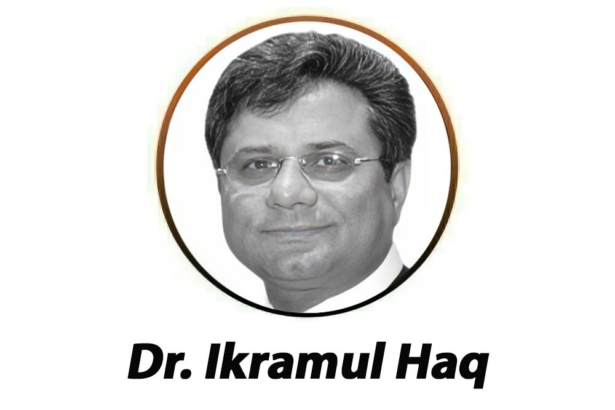
Dr. Ikramul Haq, Advocate Supreme Court, writer, literary critic, Adjunct Faculty at Lahore University of Management Sciences (LUMS), member Advisory Board and Visiting Senior Fellow of Pakistan Institute of Development Economics (PIDE), holds an LLD in tax laws. He was full-time journalist from 1979 to 1984 with Viewpoint and Dawn. He also served Civil Services of Pakistan from 1984 to 1996.
We welcome your contributions! Submit your blogs, opinion pieces, press releases, news story pitches, and news features to opinion@minutemirror.com.pk and minutemirrormail@gmail.com