Summary
- Petroleum Minister Ali Pervaiz Malik informed the Senate that the committee is examining the legal, financial and energy implications of the project.
- Pakistan has also indicated that it could move ahead with the project if the United States provides a waiver allowing energy cooperation with Iran despite Washington’s sanctions regime.
- The latest move indicates that Islamabad is attempting to balance its obligations under the Iran gas project with its financial constraints, international commitments and changing energy requirements.
Prime Minister Shehbaz Sharif has formed a high-level committee to find a mutually acceptable solution to the long-delayed Pakistan-Iran gas pipeline project, which has remained stuck for more than a decade.
Petroleum Minister Ali Pervaiz Malik informed the Senate that the committee is examining the legal, financial and energy implications of the project. It will assess Pakistan’s potential financial exposure in the ongoing arbitration process while also considering the country’s future energy requirements.
The minister was responding to a calling-attention notice raised by Senator Talha Mahmood. He said the government was seeking a negotiated solution rather than allowing the dispute to become more complicated through prolonged litigation.
Describing Iran as a “brotherly country”, Malik said the leadership of Pakistan and Iran remained in contact and was working towards an amicable settlement.
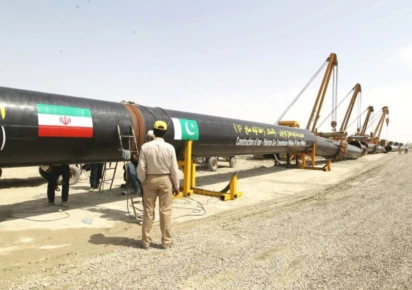
He noted that Iran had already completed substantial infrastructure on its side of the project. Iranian authorities have brought gas from the South Pars field towards a major city close to the Pakistani border.
The dispute over the pipeline has reached international arbitration in Paris. Pakistan is therefore assessing the possible financial consequences of the project delays and the legal proceedings before deciding its next course of action.
The government is also reviewing whether the pipeline can be made commercially viable. Pakistan has previously asked Iran to cut its gas price by around 50 per cent and reduce the proposed supply volume because several domestic sectors have shown limited interest in purchasing Iranian gas at existing prices.
Officials have said that domestic consumers and fertiliser plants are currently receiving gas at significantly lower prices than the cost at which imported gas could be supplied through the project.
Power producers have also indicated that purchasing imported gas at prices above Rs2,000 per million British thermal units would not be commercially feasible. The government has therefore been considering a lower price as a potential benchmark for making the pipeline economically sustainable.
Pakistan has also indicated that it could move ahead with the project if the United States provides a waiver allowing energy cooperation with Iran despite Washington’s sanctions regime.
The Iran-Pakistan pipeline, commonly known as the Peace Pipeline, was originally designed to transport Iranian natural gas to Pakistan and help address the country’s long-term energy needs.
Iran completed a substantial portion of the pipeline within its territory. Pakistan, however, did not complete its section by the agreed deadline, leaving the project largely dormant.
US sanctions against Iran, difficulties in securing financing and wider geopolitical tensions have complicated Pakistan’s efforts to complete the project.
The issue has also resulted in legal disputes between the two countries. Iran initiated international arbitration proceedings in Paris over delays in the implementation of the project.
Meanwhile, the petroleum minister told the Senate that the government was separately addressing gas-related problems in Balochistan.
He said Prime Minister Shehbaz Sharif had instructed him to engage with provincial stakeholders. Another high-level committee, headed by Deputy Prime Minister and Foreign Minister Ishaq Dar, is examining gas-related issues in the province, including technical and payment-related matters.
The latest move indicates that Islamabad is attempting to balance its obligations under the Iran gas project with its financial constraints, international commitments and changing energy requirements.
We welcome your contributions! Submit your blogs, opinion pieces, press releases, news story pitches, and news features to opinion@minutemirror.com.pk and minutemirrormail@gmail.com