Summary
- Prime Minister Shehbaz Sharif has called for national harmony and dialogue to address Pakistan’s economic, social and security challenges, stressing that sustainable progress requires collective efforts from parliament, the government, political parties and all segments of society.
- Addressing participants of the National Security Workshop in Islamabad on Sunday, the prime minister said the country’s development goals could not be achieved through individual efforts.
- The prime minister said the government had helped bring the economy out of instability through collective efforts involving federal and provincial governments and coordination between political and military leadership.
Prime Minister Shehbaz Sharif has called for national harmony and dialogue to address Pakistan’s economic, social and security challenges, stressing that sustainable progress requires collective efforts from parliament, the government, political parties and all segments of society.
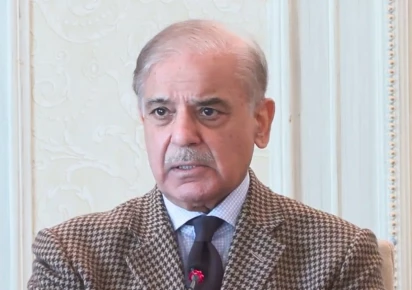
Addressing participants of the National Security Workshop in Islamabad on Sunday, the prime minister said the country’s development goals could not be achieved through individual efforts. He emphasised the need for teamwork, coordinated planning and effective implementation to strengthen the federation and relations between the federal and provincial governments.
He said meaningful dialogue conducted in an atmosphere of harmony could help resolve even the country’s most difficult problems.
PM stresses merit and economic reforms
Responding to a question about the most important reform needed to change Pakistan’s future, Shehbaz highlighted the importance of establishing a merit-based system.
He said opportunities should be determined by hard work, honesty, integrity and competence rather than a person’s family or financial background.
The prime minister said the government had helped bring the economy out of instability through collective efforts involving federal and provincial governments and coordination between political and military leadership.
He acknowledged that difficult economic decisions and structural reforms had placed a considerable burden on ordinary citizens, including labourers, shopkeepers and street vendors.
He stressed that Pakistan must continue its reform programme and avoid returning to previous cycles of economic instability.
Exports, FBR reforms and privatisation
Shehbaz said the Federal Board of Revenue had recovered Rs900 billion through enforcement measures during the 2025-26 financial year as part of efforts to tackle corruption and tax evasion.
He added that exports increased by eight per cent during the first quarter of the current financial year, while information technology exports reached $4.6 billion in the previous financial year.
The prime minister said Pakistan needed to achieve economic growth of at least six per cent and called for modernising agriculture and expanding technical and vocational training.
Referring to Pakistan International Airlines, he said the national carrier had been suffering annual losses of around Rs30 billion. He described its privatisation as an example of the financial burden created by loss-making state-owned enterprises.
Pakistan’s diplomatic and defence cooperation
The prime minister highlighted Pakistan’s diplomatic role in bringing the United States and Iran to the negotiating table in Islamabad after 47 years.
He praised Chief of Defence Forces and Chief of Army Staff Field Marshal Asim Munir and Deputy Prime Minister Ishaq Dar for their contributions to the diplomatic efforts.
He also discussed Pakistan’s relations with the United States and Gulf countries, particularly Saudi Arabia. Referring to the defence agreement signed with Riyadh last year, he said Pakistan was also pursuing trilateral defence cooperation involving Saudi Arabia and Türkiye.
Shehbaz maintained that these partnerships were not directed against any country.
He also referred to the conflict with India, saying Pakistan had responded decisively during Marka-e-Haq.
Illegal mining and local mineral processing
Discussing mineral resources in Khyber-Pakhtunkhwa, the prime minister said illegal gold mining in rivers had been stopped and cartels involved in the activity had been restricted through legal measures.
He said the government was also working with federal authorities to address terrorism in the province, acknowledging the sacrifices of security personnel.
Shehbaz stressed that Pakistan must move beyond exporting raw minerals and establish domestic processing and manufacturing facilities.
He reiterated the policy of “mine in Pakistan, process in Pakistan, manufacture in Pakistan”, saying the objective was to increase local value addition and develop downstream industries.
He added that companies would be required to establish smelters within agreed timeframes under their contractual obligations.
Energy crisis and fuel subsidies
The prime minister identified Pakistan’s dependence on imported energy as a major economic challenge, saying the country spent billions of dollars annually on LNG, LPG, crude oil, petroleum products and gas.
He said the federal government initially absorbed a financial burden of Rs28 billion during the early weeks of the energy crisis and introduced subsidies to provide relief.
According to Shehbaz, around Rs50 billion was spent on fuel subsidies for the four provinces, Azad Jammu and Kashmir and Gilgit-Baltistan.
He also highlighted the government’s efforts to expand access to education and technology, including plans for artificial intelligence-enabled schools in Bhimber and Bagh in Azad Jammu and Kashmir.
Fuel subsidy beneficiaries exceed 18.4 million
Separately, the prime minister expressed satisfaction over the progress of the Prime Minister’s Fuel Subsidy Scheme, saying more than 100 million tokens had been used under the programme.
According to the Prime Minister’s Office, individual beneficiaries had exceeded 18.4 million, while more than Rs52 billion had been distributed among eligible consumers.
Shehbaz said around 150,000 new consumers were registering daily and directed relevant departments to ensure transparency, effective monitoring and convenient access to subsidies.
Launched in September, the programme aims to protect low-income households from rising fuel prices amid tensions in the Middle East.
Under the scheme, owners of motorcycles, Qingqi rickshaws and small cars with engine capacities of up to 800cc receive targeted financial assistance.
The prime minister said public welfare remained a government priority and called for further improvements to ensure that eligible citizens could benefit from the programme.
We welcome your contributions! Submit your blogs, opinion pieces, press releases, news story pitches, and news features to opinion@minutemirror.com.pk and minutemirrormail@gmail.com