Summary
- This version is the most commonly used one to this day— Research on manuscripts puts Rahman Baba in different perspective, Dawn, April 21, 2025 “…in 1664 during the days of Emperor Aurangzeb, Khushal Khan was imprisoned which was politically a disaster for the Mughals.
- A new era of Pakhtuns’ resistance started which took a terrifying turn—Khushal Khan Khattak and the Mughals: The Phase of Blissful Honeymoon (1641-1664) by Himayatullah Yaqubi, Shahbaz Khan Khattak & Fazal Rabbi,The three articles published under Urdu Poetry, Neoliberalism & Worship of Power explored the evolution of modern poetic consciousness through the works of Majid Amjad, Jaun Elia, Mohsin Naqvi and Ahmad Salman.
- The journey begins in Khyber Pakhtunkhwa with two towering but contrasting personalities: Rahman Baba and Khushal Khan Khattak.
The old libraries in and around London preserved more than 300 Pashto manuscripts having religious contents, history, grammar, poetry and prose through different catalogues. The first ever printed version of Rahman Baba’s anthology was collected by TP Hughes and published in Lahore in 1877. This version is the most commonly used one to this day— Research on manuscripts puts Rahman Baba in different perspective, Dawn, April 21, 2025
“…in 1664 during the days of Emperor Aurangzeb, Khushal Khan was imprisoned which was politically a disaster for the Mughals. Afterwards, Khushal Khan rebelled against the Mughals and raised the standard of rebellion. A new era of Pakhtuns’ resistance started which took a terrifying turn—Khushal Khan Khattak and the Mughals: The Phase of Blissful Honeymoon (1641-1664) by Himayatullah Yaqubi, Shahbaz Khan Khattak & Fazal Rabbi,
The three articles published under Urdu Poetry, Neoliberalism & Worship of Power explored the evolution of modern poetic consciousness through the works of Majid Amjad, Jaun Elia, Mohsin Naqvi and Ahmad Salman. They examined suffering, self-destruction, betrayal and resistance as distinct responses to the human condition while drawing upon the psychological insights of Erich Fromm and Wilhelm Reich and the humanistic scholarship of Annemarie Schimmel.
That discussion naturally leads to a broader question. Can the moral and philosophical imagination of the peoples of Pakistan be understood through the prism of Urdu poetry alone? The answer is necessarily in the negative.
Every major literary tradition of this land has grappled with the same enduring questions. What does it mean to be human? How should power be confronted? What is freedom? Why do human beings repeatedly surrender to domination? How should temptation be restrained? Can suffering become a source of wisdom rather than despair? The language changes. The landscape changes. The metaphors change. The questions remain remarkably constant.
This new series moves beyond Urdu poetry to explore the great poetic traditions of Pakistan as a shared civilisational inheritance. Sindhi, Pashto, Punjabi, Balochi, many local languages, including but not restricted to Urdu poets, despite their linguistic diversity, repeatedly illuminate the same moral universe. Their differences enrich that universe; they do not divide it.
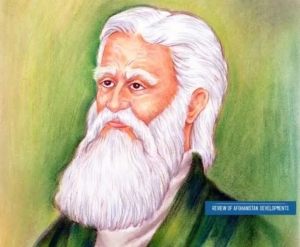
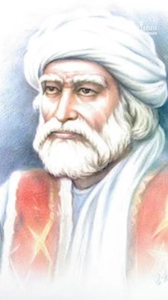
The journey begins in Khyber Pakhtunkhwa with two towering but contrasting personalities: Rahman Baba and Khushal Khan Khattak. At first sight, they appear to represent opposing worlds. Rahman Baba speaks softly of humility, compassion, simplicity and self-restraint. Khushal Khan Khattak speaks with the confidence of a warrior defending dignity, honour and freedom. Yet beneath these differences lies a profound unity.
Both reject submission, oppose injustice and insist that genuine freedom begins with mastery over the self. Modern societies frequently define freedom as the absence of restraint. The great Pashto poets understood freedom differently.
Freedom without character becomes licence. Power without morality becomes tyranny. Prosperity without justice becomes exploitation. This distinction has acquired renewed significance in an age dominated by market fundamentalism. Contemporary culture encourages endless acquisition, limitless consumption and perpetual competition.
Human worth is increasingly measured by wealth, influence and visibility. The temptation to possess gradually overwhelms the aspiration to become. Rahman Baba offers a radically different vision. His poetry repeatedly reminds us that arrogance diminishes humanity while humility enlarges it.
Wealth without compassion is poverty of the soul. Knowledge without wisdom is incomplete. Faith without kindness is hollow. He understood, centuries before modern psychology, that the greatest battles are fought within the human heart. The temptation to dominate others begins with the failure to govern oneself.
Khushal Khan Khattak approached the same truth from another direction. Living in an age of imperial expansion and political conflict, he refused to separate moral courage from political freedom. His poetry rejects subjugation not because power itself is evil, but because domination destroys both the oppressor and the oppressed.
A people deprived of dignity eventually lose confidence in themselves, while rulers intoxicated with authority become prisoners of their own ambition. In this respect, Khushal Khan and Rahman Baba complement one another. One teaches inner freedom. The other defends outer freedom. One reminds us that societies cannot become just unless individuals cultivate restraint. The other reminds us that individuals cannot flourish where injustice prevails. Together they reveal a principle running throughout the poetic heritage of Pakistan.
Human civilisation survives not through wealth or military power but through the delicate balance between temptation and restraint. This insight links the Pashto tradition with the wider literary heritage of the subcontinent.
Shah Abdul Latif Bhittai celebrated perseverance rather than possession. Sachal Sarmast challenged orthodoxy in the name of universal humanity [Urdu Poetry, Neoliberalism & Worship of Power—III: Pain, grace & lost humanism of subcontinent, Minute Mirror, June 30, 2026].
Bulleh Shah dismantled hierarchy through the language of love. Waris Shah transformed romance into social criticism. Faiz Ahmad Faiz united personal sorrow with collective emancipation. Despite their diversity, these poets belong to the same moral conversation.
Annemarie Schimmel recognised this unity better than most modern scholars did. Her writings consistently demonstrated that the great poets of South Asia could not be understood merely as mystics, romantics or political voices. They were interpreters of civilisation itself. Their poetry addressed questions that transcend geography and chronology: freedom, dignity, suffering, justice and the perpetual search for meaning. This broader perspective is particularly relevant today.
The crises confronting Pakistan are not merely constitutional or economic. They are also moral and cultural. Public discourse increasingly revolves around power while neglecting wisdom. Success is admired more readily than integrity. Spectacle frequently replaces substance. The poets anticipated these dangers long before economists, political theorists and psychologists gave them modern names. They understood that every civilisation eventually confronts the same choice. Whether to worship power or preserve humanity. Whether to surrender to temptation or cultivate restraint. Whether to dominate or to serve.
The remaining parts of this series will continue this journey across the literary traditions of Pakistan. From the humanism of Sindh, Khyber Pakhtunkhwa and Balochistan to the rebellious love of Punjab, we shall explore how our greatest poets developed a shared ethical vocabulary capable of speaking not only to their own age but also to ours. Their message remains remarkably contemporary. Humanity endures only where power accepts limits, freedom embraces responsibility and compassion triumphs over domination.
________________________________________________________________
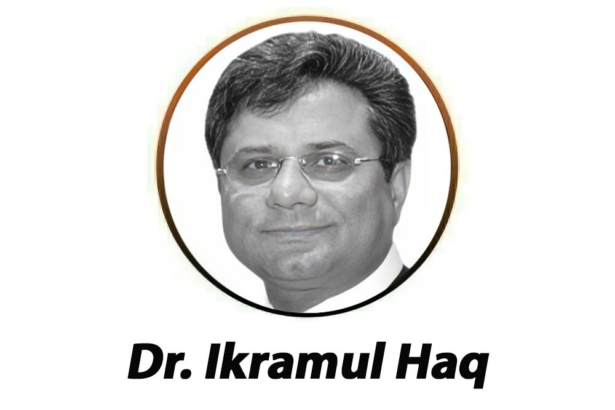
Dr. Ikramul Haq, Advocate Supreme Court, writer, literary critic, Adjunct Faculty at Lahore University of Management Sciences (LUMS), member Advisory Board and Visiting Senior Fellow of Pakistan Institute of Development Economics (PIDE), holds an LLD in tax laws. He was full-time journalist from 1979 to 1984 with Viewpoint and Dawn. He also served Civil Services of Pakistan from 1984 to 1996.
We welcome your contributions! Submit your blogs, opinion pieces, press releases, news story pitches, and news features to opinion@minutemirror.com.pk and minutemirrormail@gmail.com