Summary
- The proposed appointments involve the Lahore High Court, Sindh High Court, Balochistan High Court and Islamabad High Court.
- His proposed list included 16 candidates for the Sindh High Court, 10 for the Lahore High Court, five for the Balochistan High Court and two for the Islamabad High Court.
- Last year, the PPP was able to influence appointments in several high courts, including the Sindh High Court, Peshawar High Court and Lahore High Court.
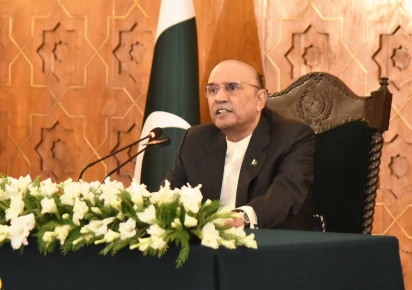
The appointment of 19 additional judges to four high courts remains pending as President Asif Ali Zardari has yet to approve the summary.
The Judicial Commission of Pakistan (JCP) approved the nominations during meetings held on July 20 and 21.
The proposed appointments involve the Lahore High Court, Sindh High Court, Balochistan High Court and Islamabad High Court.
Nine days have passed since the JCP approved the nominations. However, the president has not yet given his assent to the summary.
The delay has caused concern within the government. A senior cabinet member questioned why the approval had not yet been granted.
The official argued that the summary was initiated by the JCP rather than the prime minister. Therefore, according to the government’s position, the president could not send it back to the prime minister for reconsideration.
The official also warned that continued inaction could create further tension within the superior judiciary.
The government’s legal team is reportedly examining possible options to address the issue.
The matter has also exposed differences between the government and the Pakistan Peoples Party (PPP).
According to government officials, the PPP leadership is unhappy with the JCP because some of its preferred nominees were not considered for judicial appointments.
The PPP had shown particular interest in securing the appointment of two candidates to the Sindh High Court.
However, neither the judicial nor executive members of the JCP supported their nominations.
Officials said the candidates were below the age of 45. Both government and judicial representatives reportedly agreed that nominees below that age should not be approved.
PPP Senator Farooq H Naek, a senior legal figure and member of the JCP, had proposed 33 candidates for the four high courts.
His proposed list included 16 candidates for the Sindh High Court, 10 for the Lahore High Court, five for the Balochistan High Court and two for the Islamabad High Court.
A member of the commission said the PPP could potentially have secured appointments for other candidates from interior Sindh.
Some of those candidates were considered sympathetic to the party.
However, the commission member claimed that the party’s insistence on its two preferred nominees affected the outcome.
The dispute comes amid wider political and judicial developments involving Sindh.
JCP judicial members have already reached a consensus on the performance of constitutional benches in the Sindh High Court.
The judges serving on those benches were given three months to demonstrate their performance.
The commission’s judicial members also opposed the confirmation of Sindh High Court Additional Judge Syed Fiaz ul Hassan Shah.
The development was viewed by some political circles as another setback for the PPP.
The party has historically sought influence over judicial appointments in Sindh and other provinces.
Last year, the PPP was able to influence appointments in several high courts, including the Sindh High Court, Peshawar High Court and Lahore High Court.
The judicial landscape has also changed following the 27th Constitutional Amendment.
After the amendment, Justice K K Agha was elevated to the newly established Federal Constitutional Court.
Another judge of the Sindh High Court was transferred to the Islamabad High Court.
We welcome your contributions! Submit your blogs, opinion pieces, press releases, news story pitches, and news features to opinion@minutemirror.com.pk and minutemirrormail@gmail.com