Summary
- KARACHI: Selling pressure intensified at the Pakistan Stock Exchange (PSX) on Tuesday, with the benchmark KSE-100 Index suffering a sharp decline as investors turned cautious amid growing uncertainty surrounding the prospects of a near-term peace agreement between the United States and Iran.
- The decline reflected widespread profit-taking and fresh selling across several key sectors of the market.
- The latest decline came after the KSE-100 ended the previous trading session at 180,502.44, leaving the index vulnerable to profit-taking following its recent strong performance.
KARACHI: Selling pressure intensified at the Pakistan Stock Exchange (PSX) on Tuesday, with the benchmark KSE-100 Index suffering a sharp decline as investors turned cautious amid growing uncertainty surrounding the prospects of a near-term peace agreement between the United States and Iran.
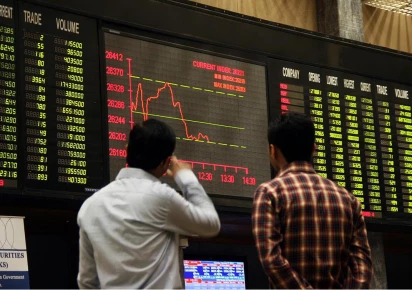
By 1:24pm, the benchmark index had dropped 1,806.12 points, or 0.89%, to 178,896.29, compared with the previous close of 180,502.44. The decline reflected widespread profit-taking and fresh selling across several key sectors of the market.
The KSE-100 started the session at 180,502.44 and initially moved higher, reaching an intraday peak of 180,602.44. However, the early gains failed to hold as investors began offloading positions, pushing the index steadily lower.
During the session, the benchmark touched an intraday low of 178,488.91, highlighting the intensity of selling activity. At one stage, the index was down 1,545.52 points, or 0.86%, at 178,956.92, before losses widened further.
Market sentiment was affected by renewed uncertainty over the possibility of a diplomatic breakthrough between Washington and Tehran. Investors remained concerned that prolonged tensions could create additional risks for energy supplies and regional trade, particularly if disruptions affect major oil-producing and transportation routes.
The rise in international oil prices added another layer of concern for investors. Higher crude prices can increase Pakistan’s import bill and place additional pressure on external-sector balances, while also raising concerns about inflationary pressures and corporate costs.
The selling was not confined to a single segment. Significant weakness was witnessed in automobile assemblers, cement manufacturers, commercial banks, oil and gas exploration companies, oil marketing companies and power generation firms.
The broad-based nature of the decline suggested that investors were adopting a cautious stance rather than selectively rotating into individual sectors. Market participants appeared particularly sensitive to developments in global geopolitics and their potential implications for commodity prices and Pakistan’s macroeconomic outlook.
Trading activity, meanwhile, remained robust despite the decline in the benchmark. Around 358.21 million shares had changed hands by midday, while the total traded value stood at approximately Rs22.47 billion, indicating considerable participation from investors.
The latest decline came after the KSE-100 ended the previous trading session at 180,502.44, leaving the index vulnerable to profit-taking following its recent strong performance. Tuesday’s movement therefore reflected a combination of investor caution, external geopolitical concerns and selling in major market segments.
Analysts and market participants are expected to closely monitor developments on the US-Iran front, movements in international crude oil prices and domestic economic indicators for direction in the coming sessions.
Any improvement in geopolitical sentiment or a renewed expectation of progress toward a peace agreement could help restore confidence, while further escalation and sustained increases in global oil prices could continue to weigh on equities.
We welcome your contributions! Submit your blogs, opinion pieces, press releases, news story pitches, and news features to opinion@minutemirror.com.pk and minutemirrormail@gmail.com