Summary
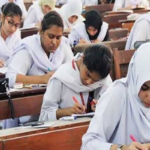
- LAHORE: In a move aimed at giving minority students greater choice in religious education, Punjab has introduced dedicated religious education textbooks for students belonging to seven minority faiths from the academic session 2026-27.
- The students will also be able to sit annual examinations in their chosen religious education subjects, making the initiative a formal part of their academic studies.
- Arthur said representatives of minority communities had welcomed the decision, describing it as a move towards greater equality in education and recognition of religious diversity.
LAHORE: In a move aimed at giving minority students greater choice in religious education, Punjab has introduced dedicated religious education textbooks for students belonging to seven minority faiths from the academic session 2026-27.
The development was announced by Pakistan Muslim League-Nawaz MPA and Member of the Punjab Education Curriculum, Training and Assessment Authority (PECTAA) Shakeela Javed Arthur during a press conference at the Lahore Press Club.
Appearing alongside authors involved in preparing the new textbooks, including Sardar Prashant Singh, Professor Ashok Kumar Khatri, Professor James Anjum Paul, Augustine George and Saiban-e-Pakistan member Iqbal Khokhar, Arthur described the initiative as an important step towards educational inclusion.
She said the textbooks were designed to allow non-Muslim students to receive religious education according to their own beliefs rather than studying ethics as an alternative subject.
Previously, students from minority communities were generally offered ethics in place of Islamic Studies. Under the new arrangement, students belonging to Christianity, Hinduism, Sikhism, Kailash, Baha’i, Parsi and Buddhism will have access to textbooks based on their respective faiths.
The students will also be able to sit annual examinations in their chosen religious education subjects, making the initiative a formal part of their academic studies.
Arthur said representatives of minority communities had welcomed the decision, describing it as a move towards greater equality in education and recognition of religious diversity.
She said the initiative could also contribute to promoting tolerance, religious harmony, brotherhood and peaceful coexistence among different communities.
The PECTAA member linked the development with broader national efforts to promote social cohesion. She said the introduction of religious education had also been discussed in the context of the National Action Plan, which stresses coordination and consensus among state institutions.
The initiative has also been incorporated into the “Peegham-e-Pakistan” programme of Saiban Pakistan, according to Arthur.
She said the Punjab government implemented the measure on the special instructions of Chief Minister Maryam Nawaz Sharif, with the attention of Education Minister Rana Iskander Hayat.
Arthur also praised those who contributed to developing the textbooks, saying the authors and education officials involved in the process deserved recognition for their efforts.
The introduction of the books marks a significant change in how religious education is offered to minority students in Punjab. By providing faith-specific curriculum and examinations, the province aims to give students an opportunity to learn about their own religious traditions within the formal education system.
The initiative is expected to remain closely watched as schools begin implementing the new curriculum during the 2026-27 academic year.
We welcome your contributions! Submit your blogs, opinion pieces, press releases, news story pitches, and news features to opinion@minutemirror.com.pk and minutemirrormail@gmail.com